Reading PassagePremium

Plessy v. Ferguson

Interactive passage with audio narration, comprehension questions, and printable PDF.

No ratings yet
Grades 6–8ElaSocial-studiesHistoryEnglish · SpanishInteractive · Printable
Just this resource
$1.50
One-time purchase
Best value
Unlock everything
$49.99$29.99/yr
40% off until Aug 1 — 10,000+ resources
Renews at $49.99/year.
Unlock above to use these actions

What's included

Reading passage
Audio narration
Comprehension quiz
Writing activity
Glossary & flashcards
Differentiated version
Spanish translation

Plessy v. Ferguson preview and details

About this printable Plessy v. Ferguson reading passage (Grades 6-8)

This passage explores the landmark Supreme Court case Plessy v. Ferguson, which established the doctrine of 'separate but equal' and allowed legal segregation across the United States. Students will analyze the causes and effects of the case, understand perspectives from both supporters and opponents of segregation, and examine the impact on American society, especially African Americans. The passage uses complex academic vocabulary, integrates a primary source quote, and encourages students to analyze history using evidence and reasoning. The lesson includes a full Spanish translation, an audio read-aloud, a differentiated version for accessibility, a glossary, timelines, and multiple activities such as a quiz, writing prompts, and graphic organizers. This resource aligns with CA HSS 8.11.3, 8.11.4, and Common Core RI.6.3, W.6.2 to support rigorous historical inquiry and literacy skills.
Written by Workybooks TeamPublished by Workybooks
Preview

Sample passage and quiz from Plessy v. Ferguson

Reading passage and comprehension quiz preview

Plessy v. Ferguson: Supreme Court Approves 'Separate but Equal'
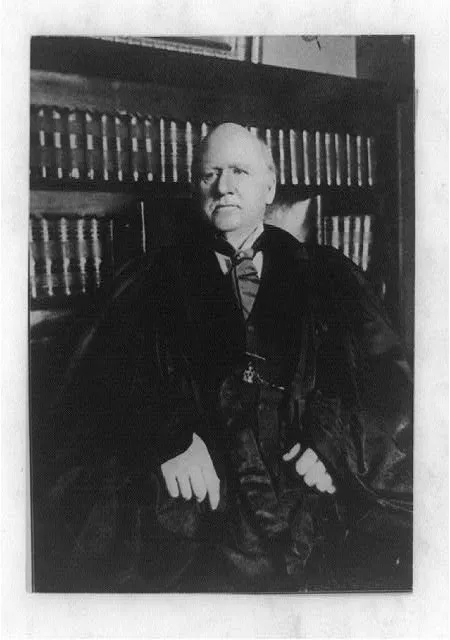
John Marshall Harlan

"John Marshall Harlan" / Library of Congress.

In 1896, the United States Supreme Court made a decision in the case of Plessy v. Ferguson that had a lasting impact on American society. The Court ruled that laws requiring separate facilities for Black and white Americans were constitutional, as long as those facilities were "equal." This became known as the 'separate but equal' doctrine. The decision allowed states to pass and enforce segregation laws, which kept people of different races apart in public places like schools, trains, and restaurants.

The origins of Plessy v. Ferguson can be traced to the Reconstruction era after the Civil War. During this time, the 14th Amendment was added to the Constitution, promising "equal protection of the laws" to all citizens. However, many Southern states disagreed with integration and created new laws, called Jim Crow laws, to keep Black and white people separate. In 1892, Homer Plessy, a man of mixed race, challenged one of these laws in Louisiana by refusing to leave a whites-only train car. He was arrested, and his case eventually reached the Supreme Court.

Supporters of segregation argued that separating races was necessary to maintain social order. They claimed that as long as the separate facilities were equal, this did not violate the Constitution. However, many Black Americans and civil rights activists believed that segregation was unfair and humiliating. They pointed out that, in practice, the facilities for Black people were almost always inferior. The Supreme Court majority sided with the state of Louisiana. In the majority opinion, Justice Henry Billings Brown wrote, "Laws permitting, and even requiring, their separation... do not necessarily imply the inferiority of either race to the other." This quote reveals how the Court tried to justify segregation as lawful and neutral, even though it caused harm.

The decision was not unanimous. Justice John Marshall Harlan disagreed strongly. He wrote a famous dissent, stating, "Our Constitution is color-blind, and neither knows nor tolerates classes among citizens." Harlan's argument became an important inspiration for future civil rights leaders who fought against segregation.

The consequences of Plessy v. Ferguson were far-reaching. The ruling gave legal approval to segregation for nearly sixty years. Throughout the South, states created more laws to separate Black and white Americans, affecting schools, transportation, housing, and more. This system of discrimination and exclusion shaped life for millions of people, deepening social inequality and injustice. Eventually, the Supreme Court reversed Plessy v. Ferguson in 1954 with the case Brown v. Board of Education, declaring that "separate educational facilities are inherently unequal."

The legacy of Plessy v. Ferguson demonstrates how Supreme Court decisions can either support or limit civil rights. It also shows the importance of challenging unfair laws and fighting for equality, even when change is slow.

Interesting Fact: Homer Plessy was chosen to challenge the law because he was only one-eighth Black, showing how arbitrary and unfair racial categories were under segregation laws.

Comprehension quiz (8 questions)

1. When was Plessy v. Ferguson decided?

1896
1868
1954
1920

2. Who was Homer Plessy?

A Supreme Court judge
A train conductor
A man arrested for sitting in a whites-only car
A lawyer in Brown v. Board

3. What did the 14th Amendment promise?

Freedom of speech
Equal protection of the laws
Voting rights for all men
No taxes

4. What did 'separate but equal' allow?

Integrated schools
Segregation if facilities were equal
No segregation
Voting for all

5. Why did many Black Americans oppose segregation?

Facilities for them were usually worse
They preferred separate schools
They wanted more laws
They supported the Supreme Court

6. What did Justice Harlan's dissent argue?

The Constitution is color-blind
Segregation is necessary
Separate is always equal
Only whites can vote

7. Plessy v. Ferguson was reversed in 1954. True or false?

True
False

8. What is 'discrimination'?

Unfair treatment based on differences
A type of train
A Supreme Court judge
A new law
Who it's for

Perfect for the way you teach

Teachers
  • Build comprehension skills
  • Auto-graded quiz
  • Differentiated reading
Parents
  • Read together at home
  • Improve fluency
  • Quiet reading time
Homeschoolers
  • Reading curriculum support
  • Independent practice
  • Track Lexile growth
Topics

Reviews & Ratings

No reviews yet. Be the first to share your experience!

More reading you might love

20 more
Passage
Civil War Causes - reading educational content

Civil War Causes

Reading Passage · D2.HIS.2.3-5

$1.50
Passage
Women's Roles in Civil War - reading educational content

Women's Roles in Civil War

Reading Passage · HSS 8.10.7

$1.50
Passage
Challenges After the Civil War - reading educational content

Challenges After the Civil War

Reading Passage · D2.HIS.1-6.3-5RI.4.3

$1.50
Passage
African American Soldiers in Civil War - reading educational content

African American Soldiers in Civil War

Reading Passage · D2.HIS.2.3-5

$1.50
Passage
Children and Women During the Civil War - reading educational content

Children and Women During the Civil War

Reading Passage · D2.HIS.2.3-5

Free
Passage
Sharecropping System After Civil War - reading educational content

Sharecropping System After Civil War

Reading Passage · D2.HIS.2.3-5

$1.50
Passage
Home Front Life Civil War - reading educational content

Home Front Life Civil War

Reading Passage

$1.50
Passage
The Civil War Finally Ends - reading educational content

The Civil War Finally Ends

Reading Passage · D2.HIS.1-6.3-5

Free
Passage
Fort Sumter 1861: Civil War Begins - reading educational content

Fort Sumter 1861: Civil War Begins

Reading Passage · D2.HIS.2.3-5

$1.50
Passage
Clara Barton: Civil War Nurse and Founder - reading educational content

Clara Barton: Civil War Nurse and Founder

Reading Passage · D2.HIS.2.3-5

$1.50
Passage
Surrender at Appomattox - reading educational content

Surrender at Appomattox

Reading Passage · HSS 8.10.7

$1.50
Passage
Reconstruction Era After Civil War: American History Reading - reading educational content

Reconstruction Era After Civil War: American History Reading

Reading Passage · RH.9-10.2

Free
Passage
Rebuilding the South - reading educational content

Rebuilding the South

Reading Passage

$1.50
Passage
Civil Rights Act of 1964 - reading educational content

Civil Rights Act of 1964

Reading Passage · HSS 11.10.5

$1.50
Passage
Advantages and Disadvantages: North vs. South - reading educational content

Advantages and Disadvantages: North vs. South

Reading Passage · HSS 8.10.5

$1.50
Passage
Segregation in America After World War II - reading educational content

Segregation in America After World War II

Reading Passage · D2.HIS.2.3-5

$1.50
Passage
New York Draft Riots 1863 - reading educational content

New York Draft Riots 1863

Reading Passage · D2.HIS.2.3-5

$1.50
Passage
Reconstruction Era: Rebuilding America After Civil War - 9-1 - reading educational content

Reconstruction Era: Rebuilding America After Civil War - 9-1

Reading Passage · RH.9-10.2

Free
Passage
African Americans Fight for the Union - reading educational content

African Americans Fight for the Union

Reading Passage · HSS 5.10.3

$1.50
Passage
New Schools in the South - reading educational content

New Schools in the South

Reading Passage

$1.50
Copyright © 2026 Workybooks. Made with ♥ in California.