Rebuilding the South
Interactive passage with audio narration, comprehension questions, and printable PDF.
By completing this purchase you agree to our Terms of Use and Privacy Policy. Your subscription renews automatically until you cancel. You can cancel anytime from your account settings. All sales are final and non-refundable. Digital content is available for download in your account immediately upon purchase.
What's included
Rebuilding the South preview and details
About this printable Rebuilding the South reading passage (Grades 6-8)
Sample passage and quiz from Rebuilding the South
Reading passage and comprehension quiz preview
Rebuilding the South
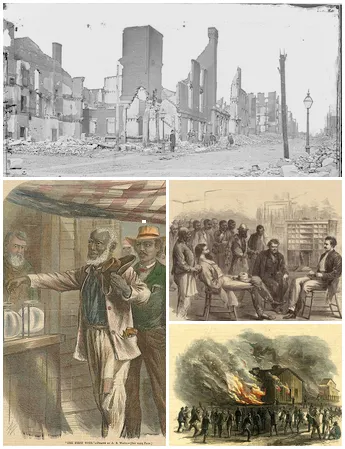
"ReconstructionEraColl" by Excel23 /
Source: Wikimedia Commons (CC0).
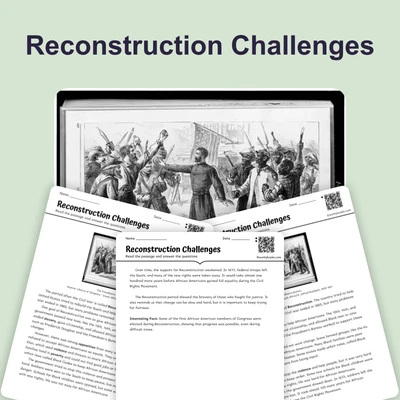
The end of the Civil War in 1865 left the southern United States in ruins. Many cities, farms, and railroads had been destroyed. The process of restoring the South was known as Reconstruction. This period lasted from 1865 to 1877 and brought major changes to the country’s laws, economy, and society.
One of the biggest problems during Reconstruction was rebuilding the South’s infrastructure. Bridges, roads, and railways were essential for trade and travel, but many had been damaged or destroyed in the war. The federal government and local leaders worked to repair these systems. Workers, including formerly enslaved people, helped clear debris and lay new tracks. However, the costs were high and progress was slow.
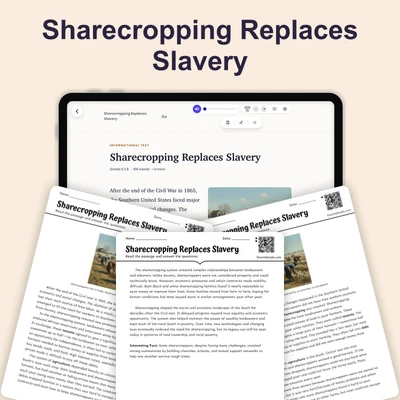
The end of slavery created another huge challenge. Four million freedmen—formerly enslaved African Americans—needed jobs, homes, and education. The old plantation system was gone, so new labor systems developed. Sharecropping became common. In this system, landowners allowed freedmen to farm small plots of land in exchange for a share of the crops. While this gave freed people more freedom, it also kept many families in poverty and debt.
Reconstruction also meant a political transition. Congress passed new laws, including the 13th, 14th, and 15th Amendments to the Constitution. These laws abolished slavery, granted citizenship, and gave African American men the right to vote. The federal government created the Freedmen’s Bureau to provide food, education, and legal help to African Americans and poor whites.
Not everyone in the South supported these changes. Some white southerners resisted integration and formed groups like the Ku Klux Klan to intimidate African Americans and prevent them from voting. This led to violence and fear. Despite these dangers, many African Americans became teachers, business owners, and politicians during Reconstruction.
As time passed, support for Reconstruction weakened. By 1877, federal troops withdrew from the South, and many rights gained during Reconstruction were slowly taken away through new laws called Black Codes and Jim Crow laws. The South continued to face struggles with equality and civil rights for decades.
Interesting Fact: The first African American senators and representatives served in Congress during Reconstruction, breaking barriers in American government for the first time.
Comprehension quiz (8 questions)
1. What was Reconstruction?
2. When did Reconstruction happen?
3. Who were freedmen?
4. Why was rebuilding infrastructure important?
5. What did the Freedmen’s Bureau do?
6. How did some white southerners resist changes?
7. Federal troops left the South in 1877.
8. What is infrastructure?
Perfect for the way you teach
- Build comprehension skills
- Auto-graded quiz
- Differentiated reading
- Read together at home
- Improve fluency
- Quiet reading time
- Reading curriculum support
- Independent practice
- Track Lexile growth