Sharecropping System After Civil War — Reading Comprehension
Rate this
Premium Resource
Present
Present in classroom. No work saved
Assign
Classroom with student accounts, Track progress
Quick Play
No student accounts, assign with a link
Grades
6
7
8
Standards
D2.HIS.2.3-5
D2.HIS.3.3-5
RI.4.3
RI.4.4
W.4.2
PRINT+DIGITAL RESOURCE
This learning resource is available in interactive and printable formats. The interactive worksheet can be played online and assigned to students. The Printable PDF version can be downloaded and printed for completion by hand.
This engaging U.S. history reading passage examines the rise of the sharecropping system in the South after the Civil War. Students will analyze the causes, motivations, and consequences of sharecropping, comparing perspectives of freedmen and landowners. The passage integrates a primary source quote, academic vocabulary, and a timeline of key events. Students can deepen their understanding with a glossary, multiple-choice quiz, writing prompts, and a graphic organizer. The resource aligns with C3 Framework and Common Core ELA standards and supports critical thinking in history. Read aloud audio and a Spanish translation are included for accessibility. Ideal for exploring the complexities of Reconstruction-era agriculture and economic change.
CONTENT PREVIEW
Expand content preview
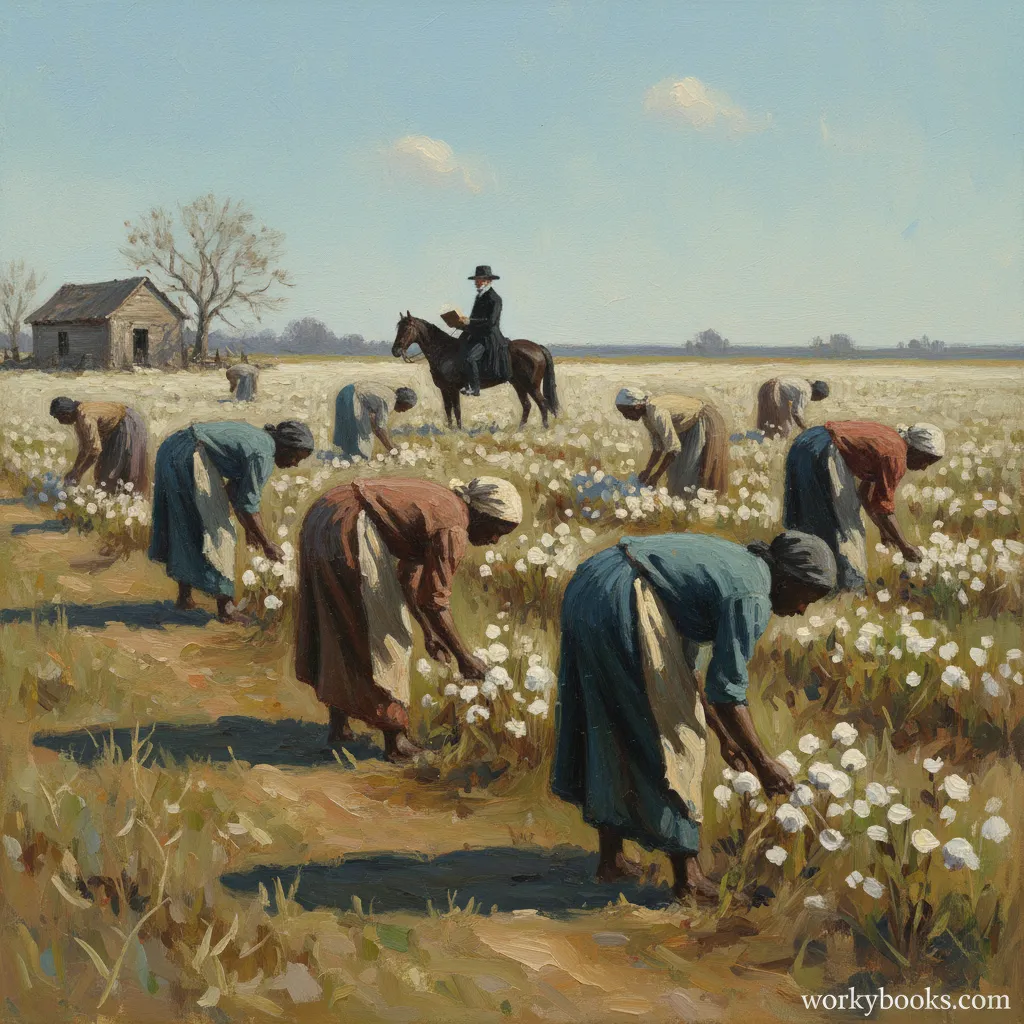
Sharecroppers toil in fields, observed by an overseer on horseback.
After the end of the Civil War in 1865, the Southern United States faced major economic and social changes. The abolition of slavery meant that plantation owners lost their main source of free labor. As a result, a new system called sharecropping emerged to fill the need for workers on Southern farms. Although it was different from slavery, sharecropping created new problems for both landowners and workers.
In the sharecropping system, landowners allowed poor farmers, often formerly enslaved African Americans and some poor white families, to use small plots of land. In exchange, these tenants agreed to give a significant portion of their crop—sometimes up to half—to the landowner as rent. While this arrangement seemed like an opportunity for independence, it often led to cycles of debt and poverty. Poor farmers needed to borrow money or supplies from landowners or local merchants to buy seeds, tools, and food. High interest rates, unpredictable weather, and low crop prices made it difficult to pay off these debts.
This system of agriculture depended heavily on cotton, which remained the South’s main cash crop. Both landowners and sharecroppers hoped for a good harvest, but bad weather or falling prices meant that many sharecroppers ended each year owing more money than they earned. The constant struggle to pay off debts trapped families in a system that was hard to escape. Landowners used legal contracts and local laws to keep sharecroppers tied to their land.
The sharecropping system created complex relationships between landowners and laborers. Unlike slavery, sharecroppers were not considered property and could technically leave. However, economic pressures and unfair contracts made mobility difficult. Both Black and white sharecropping families found it nearly impossible to save money or improve their lives. Some families moved from farm to farm, hoping for better conditions, but most stayed stuck in similar arrangements year after year.
Sharecropping shaped the social and economic landscape of the South for decades after the Civil War. It delayed progress toward true equality and economic opportunity. The system also helped maintain the power of wealthy landowners and kept much of the rural South in poverty. Over time, new technologies and changing laws eventually reduced the need for sharecropping, but its legacy can still be seen today in patterns of land ownership and rural poverty.
Interesting Fact: Some sharecroppers, despite facing many challenges, created strong communities by building churches, schools, and mutual support networks to help one another survive tough times.
What year did the Civil War end?
1865190017761850
Who were most sharecroppers?
Former slaves and poor whitesWealthy landownersMerchantsGovernment officials
Which crop was most important in sharecropping?
CottonCornTobaccoWheat
Why did landowners prefer sharecropping?
They needed workers after slaveryIt paid higher taxesIt lowered crop pricesIt was required by law
What often happened to sharecroppers financially?
They fell into debtThey got richThey owned landThey moved north
How did sharecropping affect Southern society?
Kept many people poorEnded all povertyCreated new citiesEliminated landowners
Sharecroppers were considered property. True or false?
TrueFalse
What is "sharecropping"?
Farming land for a share of cropsOwning a plantationTrading suppliesWorking in a factory
Perfect For:
👩🏫 Teachers
• Reading comprehension practice
• Auto-graded assessments
• Literacy skill development
👨👩👧👦 Parents
• Reading practice at home
• Comprehension improvement
• Educational reading time
🏠 Homeschoolers
• Reading curriculum support
• Independent reading practice
• Progress monitoring
Reading Features:
📖
Reading Passage
Engaging fiction or nonfiction text
❓
Comprehension Quiz
Auto-graded questions
📊
Instant Feedback
Immediate results and scoring
📄
Printable Version
Download for offline reading
🔊
Read Aloud
Voice-over with word highlighting
Reviews & Ratings
No reviews yet. Be the first to share your experience!
Related Content
Native American Tribes Across America
This engaging history reading passage introduces students to Native American tribes across America, focusing on their da...
D2.HIS.1.3-5D2.HIS.2.3-5RI.4.1RI.4.2
Teepees: Homes on the Great Plains
This engaging history reading passage introduces students to teepees, the unique homes of Native American tribes on the ...
D2.HIS.2.3-5D2.HIS.14.3-5RI.4.1RI.4.2RI.4.4
Traditional Native American Clothing
This engaging history passage explores traditional Native American clothing and how it reflected the environment, values...
D2.HIS.2.3-5D2.HIS.3.3-5RI.4.3RI.4.4
The Iroquois Confederacy: A System of Peace
This engaging U.S. History reading passage introduces students to the Iroquois Confederacy, a powerful alliance of Nativ...
D2.HIS.2.3-5D2.HIS.3.3-5RI.4.3RI.4.4
The Cherokee Nation: History and Culture
This reading passage explores the rich history and culture of the Cherokee Nation, one of the largest Native American tr...
D2.HIS.2.3-5D2.HIS.14.3-5RI.4.3RI.4.4RI.4.10
The Sioux: Warriors and Tribal Leaders
This history reading passage explores the Sioux Nation, focusing on their roles as warriors and tribal leaders. Students...
D2.HIS.1.3-5D2.HIS.2.3-5RI.4.1RI.4.3
Native American Respect for Nature
This engaging history reading passage explores Native American respect for nature, emphasizing the close relationship be...
D2.HIS.2.3-5D2.HIS.3.3-5RI.4.3RI.4.4
Jamestown: The First Permanent English Colony
This engaging history passage explores the founding of Jamestown, the first permanent English colony in America. Aligned...
D2.HIS.1.3-5D2.HIS.2.3-5RI.4.3RI.4.4
Pocahontas and the Powhatan People
This engaging reading passage explores the life of Pocahontas and the Powhatan people and their important role in early ...
D2.HIS.1.3-5D2.HIS.2.3-5RI.4.1RI.4.3
Colonial Children: School and Chores
This reading passage explores the daily lives of colonial children, focusing on their experiences at school and their ma...
D2.HIS.2.3-5D2.HIS.3.3-5RI.4.1RI.4.2RI.4.4
Colonial Clothing and Homemade Goods
This engaging U.S. history passage explores the daily life of early American colonists with a focus on colonial clothing...
D2.HIS.2.3-5RI.4.3RI.4.4
Colonial Jobs: Blacksmiths, Bakers, and Craftsmen
This engaging history reading passage explores the vital roles of blacksmiths, bakers, and craftsmen in colonial America...
D2.HIS.2.3-5D2.HIS.3.3-5RI.4.3RI.4.4
Colonial Towns and Village Life
This engaging history reading passage explores the daily life, work, and unity found in colonial towns and villages. Ali...
D2.HIS.1.3-5D2.HIS.2.3-5RI.4.3RI.4.4
Colonial Trade with England and Africa
This history reading passage explores colonial trade between the American colonies, England, and Africa, focusing on the...
D2.HIS.2.3-5D2.HIS.14.3-5RI.4.3RI.4.4
Benjamin Franklin: Printer, Inventor, and Leader
This history reading passage explores the life and achievements of Benjamin Franklin, one of America's most important ea...
D2.HIS.2.3-5D2.HIS.3.3-5RI.4.1RI.4.3
George Washington Leads the Army
This engaging history reading passage explores how George Washington bravely led the Continental Army during the America...
D2.HIS.1.3-5D2.HIS.2.3-5RI.4.3RI.4.4
Women and Children During the Revolutionary War
This reading passage explores the important roles women and children played during the Revolutionary War. Students will ...
D2.HIS.2.3-5RI.4.3RI.5.3
African Americans Fight for Freedom
This educational passage explores the brave and inspiring story of how African Americans fought for freedom in the Unite...
D2.HIS.2.3-5D2.HIS.3.3-5RI.4.3RI.4.4
The Battle of Yorktown Ends War
This engaging U.S. history reading passage explores the Battle of Yorktown, a key event that ended the American Revoluti...
D2.HIS.1.3-5D2.HIS.2.3-5RI.4.1RI.4.3
Loyalists vs. Patriots: Divided Families
This engaging U.S. history reading passage explores the division between Loyalists and Patriots during the American Revo...