Prohibition 1920-1933: Consequences
Interactive passage with audio narration, comprehension questions, and printable PDF.
By completing this purchase you agree to our Terms of Use and Privacy Policy. Your subscription renews automatically until you cancel. You can cancel anytime from your account settings. All sales are final and non-refundable. Digital content is available for download in your account immediately upon purchase.
What's included
Prohibition 1920-1933: Consequences preview and details
About this printable Prohibition 1920-1933: Consequences reading passage (Grades 6-8)
Sample passage and quiz from Prohibition 1920-1933: Consequences
Reading passage and comprehension quiz preview
Prohibition 1920-1933: Consequences
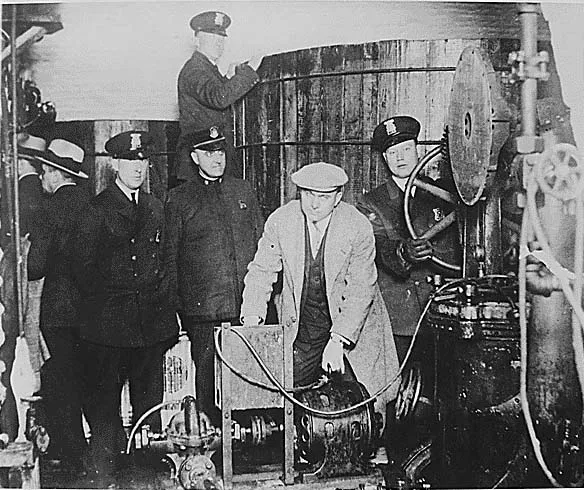
"Detroit police prohibition" by Unknown author (not listed).
Source: Wikimedia Commons (Public domain).
The period from 1920 to 1933 in the United States is known as Prohibition. During this time, the 18th Amendment to the Constitution made it illegal to produce, sell, or transport alcoholic beverages. Supporters of Prohibition believed that banning alcohol would improve society by reducing crime, poverty, and family issues. However, the actual consequences were far more complex and unexpected.
One major consequence was the rapid growth of illegal alcohol production and distribution. People created secret bars called "speakeasies" where alcohol was sold in secret. Bootleggers and smugglers transported alcohol across state lines or from other countries. The government tried to stop these activities, but enforcement of the law proved extremely difficult. There were not enough agents to police every city and rural area, and many people, including police officers, sometimes ignored or secretly broke the law themselves.
Prohibition also led to the rise of organized crime. Criminal groups saw an opportunity to make huge profits by controlling the production and sale of illegal alcohol. Famous crime leaders, such as Al Capone in Chicago, built powerful criminal empires. These groups often used violence to protect their businesses and fight with rivals. As a result, crime rates in some cities actually increased, which was the opposite of what Prohibition supporters had expected.
Another problem was that the government lost money that it used to collect from taxes on alcohol. This loss of revenue became a serious issue, especially during the Great Depression in the 1930s when the country needed more funds to support people and government programs. Many citizens also became angry or frustrated with the government's attempts to control personal choices.
Eventually, the government and the public realized that Prohibition had failed to achieve its goals and had caused more problems. In 1933, the 21st Amendment was passed, which repealed the 18th Amendment and ended Prohibition. This allowed alcohol to be legally produced, sold, and taxed again. The repeal of Prohibition is an example of how a major law can be changed when it does not work as intended and causes negative consequences for society.
Prohibition is often studied as a lesson in the unintended impacts of government policy. It demonstrates the challenges of enforcement and the importance of considering both the intended and unintended effects of new laws. By examining this period, historians learn how decisions made by leaders can shape a nation's history in surprising ways.
Interesting Fact: During Prohibition, doctors could legally prescribe whiskey for certain illnesses, and pharmacies sometimes became some of the busiest places in town.
Comprehension quiz (8 questions)
1. When did Prohibition begin?
2. Which amendment ended Prohibition?
3. Who was a famous crime leader during Prohibition?
4. Why was enforcement difficult?
5. What happened to crime rates in some cities?
6. How did Prohibition affect government revenue?
7. Prohibition was easy to enforce. True or false?
8. What is a bootlegger?
Common Core standards for Prohibition 1920-1933: Consequences
Explain events, procedures, ideas, or concepts in a historical, scientific, or technical text, including what happened and why, based on specific information in the text.
Determine the meaning of general academic and domain-specific words or phrases in a text relevant to a grade 4 topic or subject area.
Write informative/explanatory texts to examine a topic and convey ideas and information clearly.
Perfect for the way you teach
- Build comprehension skills
- Auto-graded quiz
- Differentiated reading
- Read together at home
- Improve fluency
- Quiet reading time
- Reading curriculum support
- Independent practice
- Track Lexile growth