Quakers in Colonial America — Reading Comprehension
Rate this
Premium Resource
Present
Present in classroom. No work saved
Assign
Classroom with student accounts, Track progress
Quick Play
No student accounts, assign with a link
Grades
6
7
8
Standards
D2.HIS.2.3-5
D2.HIS.3.3-5
RI.4.3
RI.4.4
W.4.2
PRINT+DIGITAL RESOURCE
This learning resource is available in interactive and printable formats. The interactive worksheet can be played online and assigned to students. The Printable PDF version can be downloaded and printed for completion by hand.
This passage explores the role of the Quakers in Colonial America, focusing on their pursuit of peace, religious freedom, and equality. Students learn about the motivations that led Quakers to leave England, the founding of Pennsylvania by William Penn, and the challenges they faced from both English authorities and other colonists. The text analyzes causes, consequences, and multiple perspectives, integrating primary source evidence and key academic vocabulary. The reading passage models historical reasoning and evidence use, supporting the C3 Framework and Common Core standards (D2.His.2.3-5, D2.His.3.3-5, RI.4.3, RI.4.4, W.4.2). Activities include a timeline, glossary, multiple-choice quiz, writing prompts, and a graphic organizer. Spanish translation and read aloud audio are provided, making it accessible for diverse learners. This resource is ideal for classrooms studying early American history, religious diversity, and the development of democratic principles in the colonies.
CONTENT PREVIEW
Expand content preview
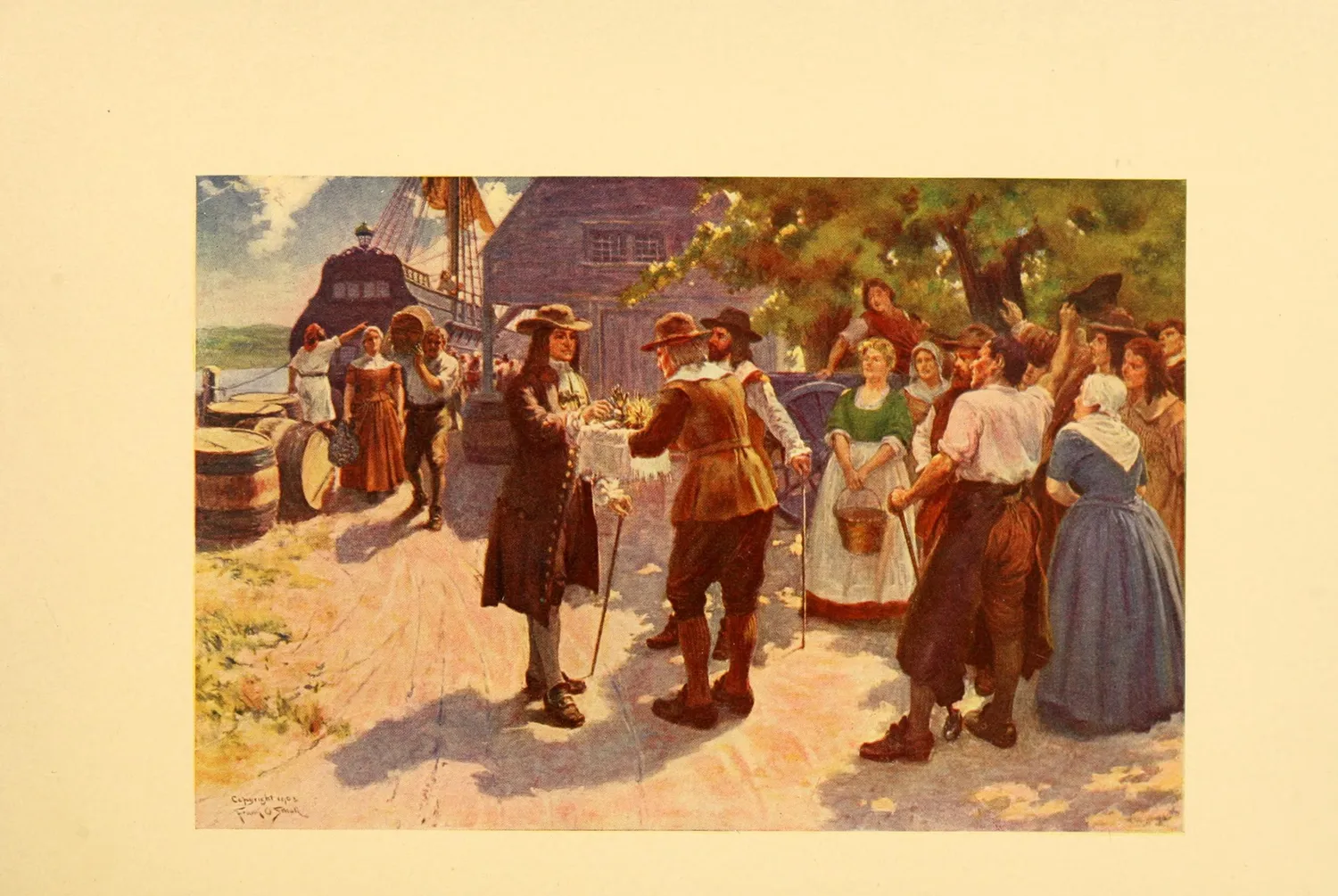
"William penn being presented with the emblems of possession of the quaker colony" by Frank O. Small (1860-1915) Source: Wikimedia Commons (Public domain).
The Quakers, formally known as the Society of Friends, arrived in colonial America during the 17th century. Their beliefs in equality, pacifism, and tolerance stood in sharp contrast to the strict religious and social structures of the time. Quakers rejected violence and refused to take oaths or pay taxes that funded wars. These radical ideas alarmed colonial leaders, who felt threatened by such challenges to authority and order.
As a result, Quakers faced significant persecution in English colonies. In Massachusetts Bay Colony, officials passed harsh laws against them. Quakers were fined, whipped, imprisoned, and even executed for their beliefs. Mary Dyer, for example, was hanged in Boston in 1660 for defying a law banning Quakers. Colonial governments saw Quaker beliefs as dangerous because they questioned the religious and political power structure.
Despite such severe punishments, Quakers continued to practice their faith. They held secret meetings and relied on a strong sense of community to survive. Their emphasis on the "Inner Light"—the idea that everyone has a direct connection to God—reinforced their commitment to spiritual equality. These beliefs inspired Quakers to oppose slavery and treat Native Americans with greater fairness than most colonists.
The situation changed dramatically when William Penn, a wealthy Englishman and a Quaker, received a land grant from King Charles II. In 1681, Penn founded Pennsylvania as a "holy experiment" based on religious freedom and fair treatment for all. Pennsylvania quickly became a refuge for Quakers and other groups facing persecution in Europe. Unlike other colonies, Pennsylvania's government allowed for more participation and granted rights to different religious groups.
Quakers shaped Pennsylvania's laws and culture. Their belief in simple living and nonviolence influenced everything from architecture to criminal justice. They established fair treaties with Native Americans and avoided armed conflicts. This approach led to more peaceful relations in Pennsylvania than in neighboring colonies. However, their refusal to use violence sometimes made it difficult to defend the colony, especially during times of war.
Over time, the Quaker commitment to justice and equality contributed to broader changes in American society. Their early opposition to slavery influenced later abolitionist movements. Although Quakers remained a minority, their actions demonstrated how religious beliefs could promote social change and challenge established norms.
Interesting Fact: The first written protest against slavery in America was created by four Pennsylvania Quakers in 1688, decades before abolition became a major movement.
Who founded Pennsylvania?
William PennMary DyerJohn SmithKing Charles II
What did Quakers believe in?
Violence and warStrict lawsPacifism and equalityRoyal power
Which colony did Quakers face harsh laws?
VirginiaMassachusettsGeorgiaMaryland
Why were Quakers persecuted?
They were wealthyThey refused to fightThey followed colonial rulesThey built churches
How did Pennsylvania differ from other colonies?
Only one religion allowedNo governmentMore rights for religious groupsNo farms
What was the "Inner Light"?
A new lawA connection to GodA military weaponA type of clothing
Quakers were always treated fairly. True or false?
TrueFalse
What does "persecution" mean?
Kind treatmentUnfair treatmentReligious freedomEqual rights
Perfect For:
👩🏫 Teachers
• Reading comprehension practice
• Auto-graded assessments
• Literacy skill development
👨👩👧👦 Parents
• Reading practice at home
• Comprehension improvement
• Educational reading time
🏠 Homeschoolers
• Reading curriculum support
• Independent reading practice
• Progress monitoring
Reading Features:
📖
Reading Passage
Engaging fiction or nonfiction text
❓
Comprehension Quiz
Auto-graded questions
📊
Instant Feedback
Immediate results and scoring
📄
Printable Version
Download for offline reading
🔊
Read Aloud
Voice-over with word highlighting
Reviews & Ratings
No reviews yet. Be the first to share your experience!
Related Content
Native American Tribes Across America
This engaging history reading passage introduces students to Native American tribes across America, focusing on their da...
D2.HIS.1.3-5D2.HIS.2.3-5RI.4.1RI.4.2
Teepees: Homes on the Great Plains
This engaging history reading passage introduces students to teepees, the unique homes of Native American tribes on the ...
D2.HIS.2.3-5D2.HIS.14.3-5RI.4.1RI.4.2RI.4.4
Traditional Native American Clothing
This engaging history passage explores traditional Native American clothing and how it reflected the environment, values...
D2.HIS.2.3-5D2.HIS.3.3-5RI.4.3RI.4.4
The Iroquois Confederacy: A System of Peace
This engaging U.S. History reading passage introduces students to the Iroquois Confederacy, a powerful alliance of Nativ...
D2.HIS.2.3-5D2.HIS.3.3-5RI.4.3RI.4.4
The Cherokee Nation: History and Culture
This reading passage explores the rich history and culture of the Cherokee Nation, one of the largest Native American tr...
D2.HIS.2.3-5D2.HIS.14.3-5RI.4.3RI.4.4RI.4.10
The Sioux: Warriors and Tribal Leaders
This history reading passage explores the Sioux Nation, focusing on their roles as warriors and tribal leaders. Students...
D2.HIS.1.3-5D2.HIS.2.3-5RI.4.1RI.4.3
Native American Respect for Nature
This engaging history reading passage explores Native American respect for nature, emphasizing the close relationship be...
D2.HIS.2.3-5D2.HIS.3.3-5RI.4.3RI.4.4
Jamestown: The First Permanent English Colony
This engaging history passage explores the founding of Jamestown, the first permanent English colony in America. Aligned...
D2.HIS.1.3-5D2.HIS.2.3-5RI.4.3RI.4.4
Pocahontas and the Powhatan People
This engaging reading passage explores the life of Pocahontas and the Powhatan people and their important role in early ...
D2.HIS.1.3-5D2.HIS.2.3-5RI.4.1RI.4.3
Colonial Children: School and Chores
This reading passage explores the daily lives of colonial children, focusing on their experiences at school and their ma...
D2.HIS.2.3-5D2.HIS.3.3-5RI.4.1RI.4.2RI.4.4
Colonial Clothing and Homemade Goods
This engaging U.S. history passage explores the daily life of early American colonists with a focus on colonial clothing...
D2.HIS.2.3-5RI.4.3RI.4.4
Colonial Jobs: Blacksmiths, Bakers, and Craftsmen
This engaging history reading passage explores the vital roles of blacksmiths, bakers, and craftsmen in colonial America...
D2.HIS.2.3-5D2.HIS.3.3-5RI.4.3RI.4.4
Colonial Towns and Village Life
This engaging history reading passage explores the daily life, work, and unity found in colonial towns and villages. Ali...
D2.HIS.1.3-5D2.HIS.2.3-5RI.4.3RI.4.4
Colonial Trade with England and Africa
This history reading passage explores colonial trade between the American colonies, England, and Africa, focusing on the...
D2.HIS.2.3-5D2.HIS.14.3-5RI.4.3RI.4.4
Benjamin Franklin: Printer, Inventor, and Leader
This history reading passage explores the life and achievements of Benjamin Franklin, one of America's most important ea...
D2.HIS.2.3-5D2.HIS.3.3-5RI.4.1RI.4.3
George Washington Leads the Army
This engaging history reading passage explores how George Washington bravely led the Continental Army during the America...
D2.HIS.1.3-5D2.HIS.2.3-5RI.4.3RI.4.4
Women and Children During the Revolutionary War
This reading passage explores the important roles women and children played during the Revolutionary War. Students will ...
D2.HIS.2.3-5RI.4.3RI.5.3
African Americans Fight for Freedom
This educational passage explores the brave and inspiring story of how African Americans fought for freedom in the Unite...
D2.HIS.2.3-5D2.HIS.3.3-5RI.4.3RI.4.4
The Battle of Yorktown Ends War
This engaging U.S. history reading passage explores the Battle of Yorktown, a key event that ended the American Revoluti...
D2.HIS.1.3-5D2.HIS.2.3-5RI.4.1RI.4.3
Loyalists vs. Patriots: Divided Families
This engaging U.S. history reading passage explores the division between Loyalists and Patriots during the American Revo...