Reconstruction: Rebuilding the South
Interactive passage with audio narration, comprehension questions, and printable PDF.
By completing this purchase you agree to our Terms of Use and Privacy Policy. Your subscription renews automatically until you cancel. You can cancel anytime from your account settings. All sales are final and non-refundable. Digital content is available for download in your account immediately upon purchase.
What's included
Part of this bundle

Reconstruction: Rebuilding the South preview and details
About this printable Reconstruction: Rebuilding the South reading passage (Grades 3-5)
Sample passage and quiz from Reconstruction: Rebuilding the South
Reading passage and comprehension quiz preview
Reconstruction Era
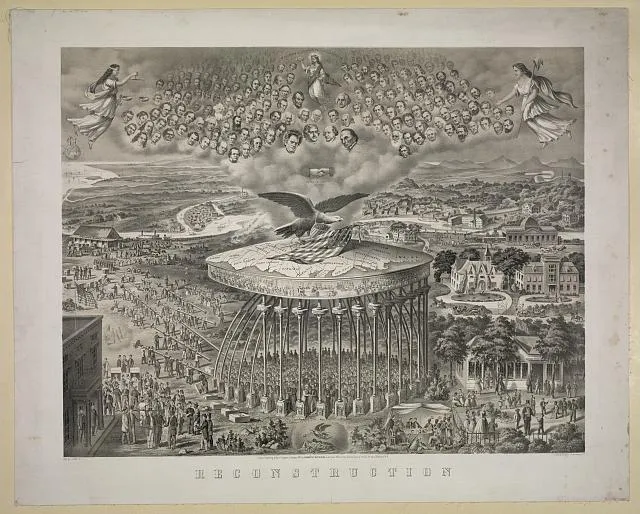
Source: Library of Congress - Giles, J. L. (John Lawrence)
The Reconstruction Era began in 1865, right after the Civil War ended. The United States faced the huge task of rebuilding the South, which had been badly damaged. The government also wanted to help millions of newly freed African Americans start new lives. This time was called "Reconstruction" because the country was trying to put itself back together.
President Abraham Lincoln wanted to reunite the country quickly. He believed the South should return to the Union as soon as possible. Sadly, President Lincoln was killed in 1865. His ideas were continued by President Andrew Johnson, but not everyone agreed with his plans.
Many people in Congress thought the South needed stricter rules. They passed new laws to protect the rights of freedmen, or former slaves. One important group was the Freedmen's Bureau. The Freedmen's Bureau helped African Americans find jobs, learn to read, and get food and shelter.
During Reconstruction, three important amendments were added to the Constitution. The 13th amendment ended slavery. The 14th amendment made African Americans citizens. The 15th amendment gave African American men the right to vote. These changes were big steps toward equality.
However, rebuilding the South was not easy. Many Southern states did not want to accept the new laws. Some people tried to stop freedmen from voting or going to school. Groups like the Ku Klux Klan used fear and violence against African Americans. The government sent soldiers to the South to protect people's rights.
Over time, the country started to heal, but there were still problems. By 1877, Reconstruction ended. Many of the promises for equality were not fully kept. But the changes made during this era were important steps for the future.
Interesting Fact: During Reconstruction, more than 2,000 African Americans held public office in the South for the first time in U.S. history!
Comprehension quiz (8 questions)
1. When did the Reconstruction Era begin?
2. Who became president after Lincoln?
3. What did the 13th amendment do?
4. Why was the Freedmen's Bureau important?
5. What problem did the South face after the war?
6. How did Congress try to help freedmen?
7. Reconstruction ended in 1877. True or false?
8. What is an amendment?
Common Core standards for Reconstruction: Rebuilding the South
Explain events, procedures, ideas, or concepts in a historical, scientific, or technical text, including what happened and why, based on specific information in the text.
Determine the meaning of general academic and domain-specific words or phrases in a text relevant to a grade 4 topic or subject area.
Perfect for the way you teach
- Build comprehension skills
- Auto-graded quiz
- Differentiated reading
- Read together at home
- Improve fluency
- Quiet reading time
- Reading curriculum support
- Independent practice
- Track Lexile growth