Removal or Coexistence: Early Policy Debates
Interactive passage with audio narration, comprehension questions, and printable PDF.
What's included
Removal or Coexistence: Early Policy Debates preview and details
About this printable Removal or Coexistence: Early Policy Debates reading passage (Grades 6-8)
Sample passage and quiz from Removal or Coexistence: Early Policy Debates
Reading passage and comprehension quiz preview
Native American Removal Policy
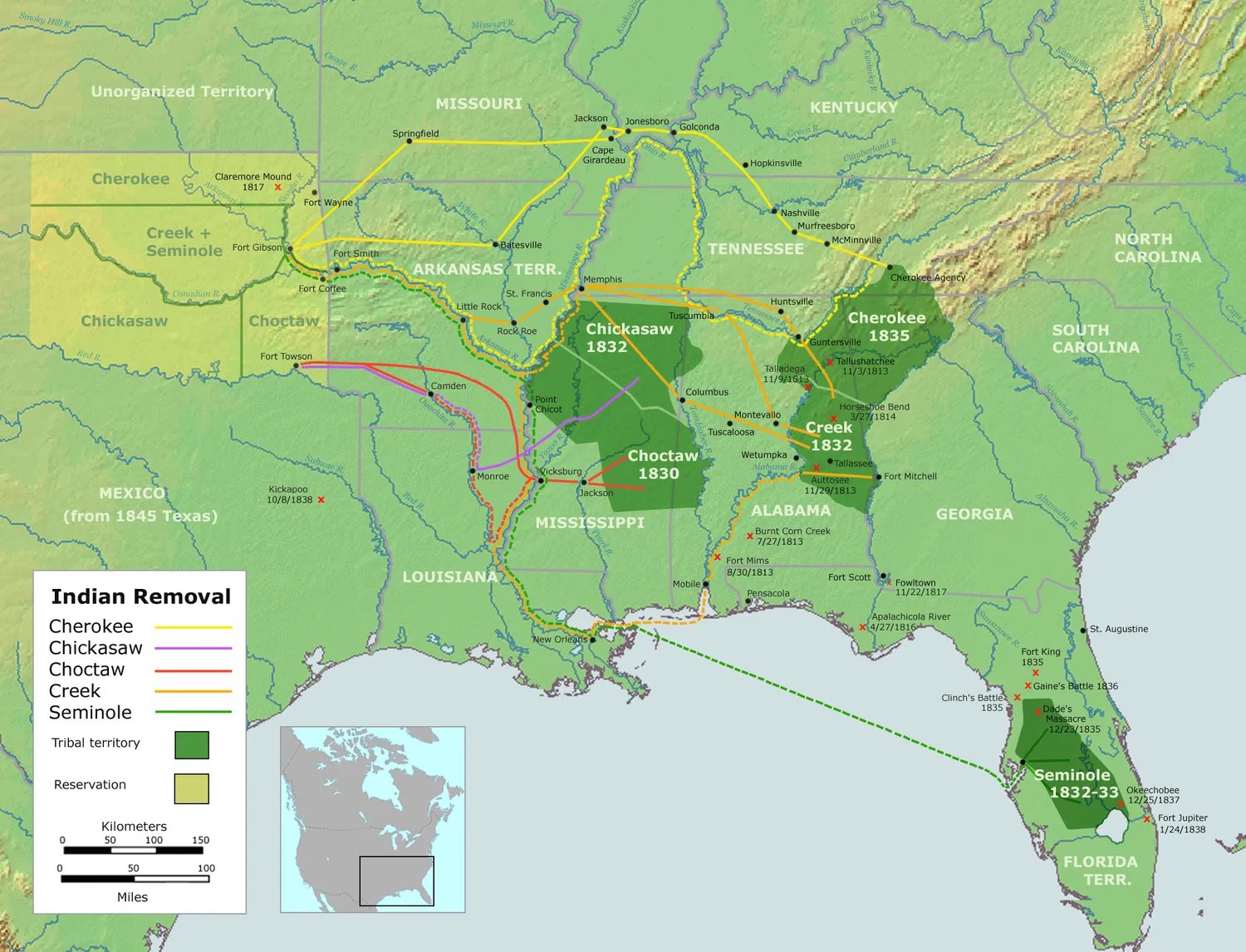
Source: Wikimedia Commons - User:Nikater
The question of how the United States should treat Native American nations became a major issue in the early 1800s. American leaders disagreed about whether Native peoples should be forced to leave their ancestral lands or allowed to remain and assimilate into American society. These debates shaped U.S. policy for decades and had lasting consequences for Native communities.
Some politicians, especially in the South, believed in removal. They argued that Native Americans could not coexist with the rapid expansion of American settlers. As settlers moved west, land became more valuable and conflicts increased. Supporters of removal claimed that relocating tribes to western territories would prevent violence and open land for farming. This point of view led to laws like the Indian Removal Act of 1830.
Other leaders, including some government officials and missionaries, promoted coexistence and assimilation. They believed that Native Americans could adopt American customs, such as English language, Christianity, and private land ownership. Supporters of this idea saw it as a way for Native peoples to survive as part of the growing United States. However, assimilation often required Native Americans to give up their traditional cultures and ways of life.
The U.S. government sometimes tried to negotiate treaties with Native nations. These agreements were supposed to protect Native lands, but they were often broken or ignored when settlers wanted more territory. The debate between removal and coexistence became more urgent as the population of settlers grew and demand for land increased.
Ultimately, the policy of removal became dominant. The Indian Removal Act allowed the government to force Native tribes from their homelands in the Southeast to areas west of the Mississippi River. This process, known as the Trail of Tears, caused enormous suffering and loss of life. Many tribes, such as the Cherokee, resisted removal in court and through peaceful protests, but most were eventually displaced.
After removal, the U.S. government created the reservation system. Reservations were specific areas of land set aside for Native Americans. Living on reservations meant that tribes lost most of their traditional territory and were forced to adapt to new environments. The reservation system was supposed to protect Native communities, but it often led to poverty and hardship.
The early debates between removal and coexistence shaped the future of Native American policy in the United States. These choices reflected broader conflicts about land, culture, and power. They also set the stage for ongoing struggles over Native rights and sovereignty that continue today.
Interesting Fact: In 1832, the U.S. Supreme Court ruled in Worcester v. Georgia that states could not enforce laws on Native lands, but the decision was not enforced by President Andrew Jackson.
Comprehension quiz (8 questions)
1. When was the Indian Removal Act passed?
2. What was the Trail of Tears?
3. What did some leaders want Native Americans to do?
4. Why did some support removal?
5. What happened after removal?
6. What did treaties with tribes often do?
7. The Supreme Court protected Native lands in 1832. True or false?
8. What is a reservation?
Common Core standards for Removal or Coexistence: Early Policy Debates
Explain events, procedures, ideas, or concepts in a historical, scientific, or technical text, including what happened and why, based on specific information in the text.
Determine the meaning of general academic and domain-specific words or phrases in a text relevant to a grade 4 topic or subject area.
Write informative/explanatory texts to examine a topic and convey ideas and information clearly.
Perfect for the way you teach
- Build comprehension skills
- Auto-graded quiz
- Differentiated reading
- Read together at home
- Improve fluency
- Quiet reading time
- Reading curriculum support
- Independent practice
- Track Lexile growth