Robber Barons Debate
Interactive passage with audio narration, comprehension questions, and printable PDF.
By completing this purchase you agree to our Terms of Use and Privacy Policy. Your subscription renews automatically until you cancel. You can cancel anytime from your account settings. All sales are final and non-refundable. Digital content is available for download in your account immediately upon purchase.
What's included
Robber Barons Debate preview and details
About this printable Robber Barons Debate reading passage (Grades 6-8)
Sample passage and quiz from Robber Barons Debate
Reading passage and comprehension quiz preview
Robber Barons Debate
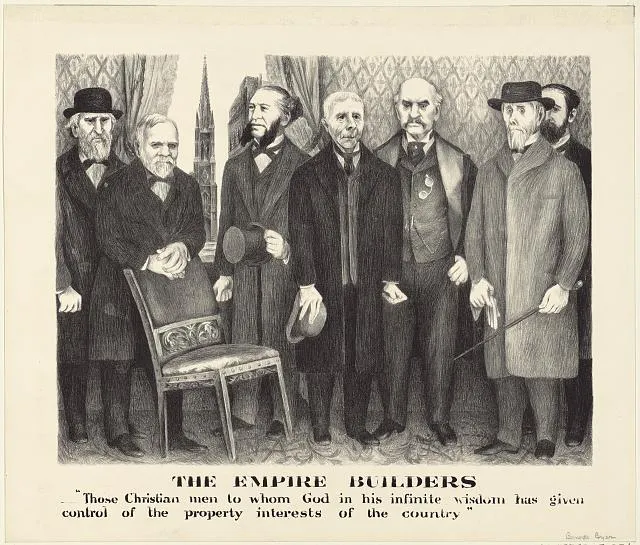
Source: Library of Congress - Bryson, Bernarda
During the Progressive Era in the late 1800s and early 1900s, the United States experienced rapid industrialization. This period was marked by the rise of powerful businessmen, often called either robber barons or captains of industry. These leaders, such as Andrew Carnegie and John D. Rockefeller, built huge companies in steel, oil, and railroads. However, their actions sparked a major debate among Americans about whether they helped or harmed society.
Supporters of the 'captain of industry' viewpoint argued that these men were innovative builders. They introduced new technologies, created jobs, and helped the United States become an economic powerhouse. Carnegie, for example, used the Bessemer process to make steel production faster and cheaper, which led to the growth of cities and the construction of skyscrapers. Rockefeller improved efficiency in the oil industry and lowered prices for consumers. Supporters also note that many of these men gave away much of their wealth to fund libraries, schools, and museums, a practice known as philanthropy.
On the other hand, critics called these men 'robber barons' because they believed the businessmen became rich by unfair means. Many of these leaders formed monopolies, or companies that controlled an entire industry, which limited competition. They sometimes used harsh tactics, such as driving competitors out of business or lowering wages for workers. Laborers often worked long hours in dangerous conditions for very low pay. Critics argued that this allowed a small group of people to gain enormous power and wealth, while many Americans struggled in poverty.
The public debate over these figures reflects larger questions about perspective in history. Some historians argue that both views have truth. While industrial leaders did push the country forward, their actions sometimes hurt workers and limited opportunities for others. The government eventually responded by passing new regulations to prevent unfair business practices and improve working conditions. These reforms, such as the Sherman Antitrust Act and labor laws, aimed to balance economic growth with fairness and safety.
Understanding the robber barons debate helps students see how history is shaped by different points of view and the use of evidence. By examining multiple sides, historians can better understand the complex impact of industrial leaders on American society. It also shows the importance of asking questions and using evidence to form opinions about the past.
Interesting Fact: Andrew Carnegie donated over $350 million to good causes, helping to build more than 2,500 public libraries around the world.
Comprehension quiz (8 questions)
1. Who used the Bessemer process?
2. What did critics call powerful businessmen?
3. What law limited monopolies in 1890?
4. Why did some support industrial leaders?
5. What is philanthropy?
6. How did some businessmen hurt workers?
7. The government passed new regulations. True or false?
8. What is a monopoly?
Common Core standards for Robber Barons Debate
Explain events, procedures, ideas, or concepts in a historical, scientific, or technical text, including what happened and why, based on specific information in the text.
Determine the meaning of general academic and domain-specific words or phrases in a text relevant to a grade 4 topic or subject area.
Write informative/explanatory texts to examine a topic and convey ideas and information clearly.
Perfect for the way you teach
- Build comprehension skills
- Auto-graded quiz
- Differentiated reading
- Read together at home
- Improve fluency
- Quiet reading time
- Reading curriculum support
- Independent practice
- Track Lexile growth