Route 66: The Road to Hope
Interactive passage with audio narration, comprehension questions, and printable PDF.
By completing this purchase you agree to our Terms of Use and Privacy Policy. Your subscription renews automatically until you cancel. You can cancel anytime from your account settings. All sales are final and non-refundable. Digital content is available for download in your account immediately upon purchase.
What's included
Route 66: The Road to Hope preview and details
About this printable Route 66: The Road to Hope reading passage (Grades 3-5)
Sample passage and quiz from Route 66: The Road to Hope
Reading passage and comprehension quiz preview
Route 66: The Road to Hope
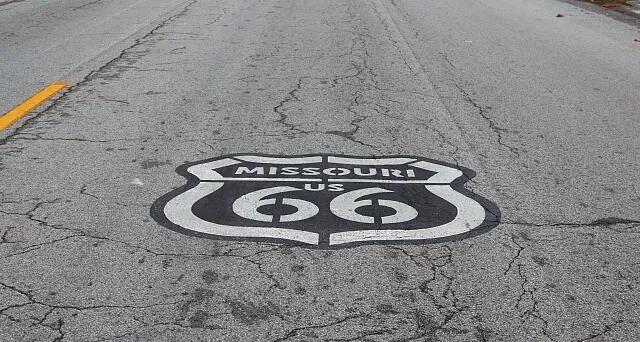
Source: Library of Congress - Highsmith, Carol M., 1946-
Route 66 was a famous highway that stretched across the United States, from Chicago to California. During the Great Depression, many families lost their farms and homes because of the Dust Bowl. The Dust Bowl was a time when huge dust storms ruined crops on the Great Plains. This forced thousands of people to leave in search of a better life.
Families packed up everything they owned into old cars and trucks. They drove west on Route 66, hoping to find jobs and new beginnings in California. This journey was not easy. The road was long and often very hot. Many cars broke down along the way. People had to be brave and work together to keep going.
Route 66 became known as the Mother Road. John Steinbeck, a famous writer, called it this in his book "The Grapes of Wrath." The name showed how important the highway was to the people who traveled it. For them, Route 66 was more than just a road. It was a path toward hope and a better future.
Along the way, families saw new towns, gas stations, and roadside diners. Some people found help from others who gave food or fixed cars. Everyone on the road shared the same dream of finding work and a safe place to live.
Many of these families were called migrants or refugees. They came from states like Oklahoma, Texas, and Kansas. When they reached California, life was not always easy, but many found jobs in fields and farms. Some even helped during World War II by working in factories.
Route 66 stayed important for many years. It showed how people can be strong, work together, and never give up. The story of Route 66 teaches us about hope, courage, and the power of community in hard times.
Interesting Fact: Route 66 is sometimes called "The Main Street of America" because it connected so many towns and cities across the country.
Comprehension quiz (8 questions)
1. Where did Route 66 start?
2. Why did people leave the Great Plains?
3. What was Route 66's nickname?
4. Who called Route 66 the 'Mother Road'?
5. What was a challenge on Route 66?
6. What did families hope to find in California?
7. Route 66 is called 'The Main Street of America.' True or false?
8. What is a migrant?
Common Core standards for Route 66: The Road to Hope
Explain events, procedures, ideas, or concepts in a historical, scientific, or technical text, including what happened and why, based on specific information in the text.
Determine the meaning of general academic and domain-specific words or phrases in a text relevant to a grade 4 topic or subject area.
Write informative/explanatory texts to examine a topic and convey ideas and information clearly.
Perfect for the way you teach
- Build comprehension skills
- Auto-graded quiz
- Differentiated reading
- Read together at home
- Improve fluency
- Quiet reading time
- Reading curriculum support
- Independent practice
- Track Lexile growth