Salem Witch Trials 1692: Causes and Consequences
Interactive passage with audio narration, comprehension questions, and printable PDF.
By completing this purchase you agree to our Terms of Use and Privacy Policy. Your subscription renews automatically until you cancel. You can cancel anytime from your account settings. All sales are final and non-refundable. Digital content is available for download in your account immediately upon purchase.
What's included
Salem Witch Trials 1692: Causes and Consequences preview and details
About this printable Salem Witch Trials 1692: Causes and Consequences reading passage (Grades 6-8)
Sample passage and quiz from Salem Witch Trials 1692: Causes and Consequences
Reading passage and comprehension quiz preview
Salem Witch Trials 1692
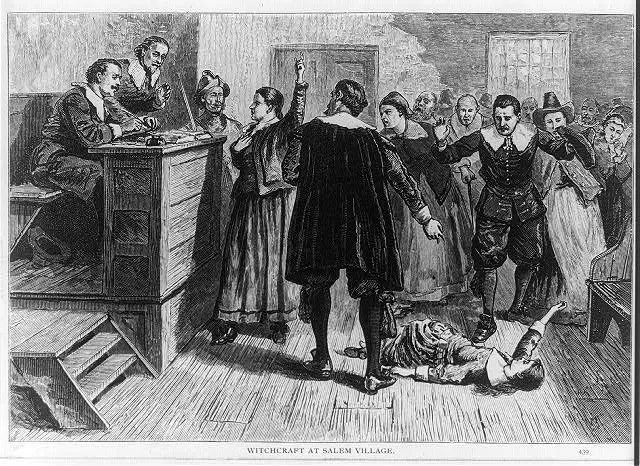
Source: Library of Congress
In 1692, a small Puritan community in Salem, Massachusetts, became the center of one of the most infamous events in American colonial history: the Salem Witch Trials. Over several months, more than 200 people were accused of practicing witchcraft—a crime that Puritans believed threatened their society. The fear and suspicion that took hold created an environment where mass hysteria spread rapidly. This passage will analyze how fear, superstition, and deep community tensions led to tragic consequences during this period.
The origins of the Salem Witch Trials can be traced to a combination of social, religious, and economic pressures. The Puritans in Salem lived under strict religious rules and believed that evil forces could infiltrate their community. When a group of young girls in Salem Village began to show strange behaviors, such as fits and screaming, some residents suspected witchcraft. The girls accused several local women of being witches, sparking a wave of accusations that quickly grew beyond control. The authorities relied on questionable testimony, including so-called "spectral evidence"—the claim that the accused appeared as spirits in the girls' dreams.
As the trials continued, fear and suspicion overwhelmed reason. Neighbors turned against each other, and anyone who was different or unpopular became a target. The court accepted weak evidence, and those accused were pressured to confess or name others. Some confessed in hopes of saving themselves, while others refused and faced execution. In total, twenty people were executed, and several others died in jail. The community was divided, with many later realizing the grave injustice that had occurred.
Historians have debated the causes of the Salem Witch Trials. Some point to local rivalries and property disputes as motivations for accusations. Others emphasize the impact of isolation, fear of Native American attacks, and the rigid Puritan worldview. The combination of fear, religious belief, and lack of reliable evidence created a perfect storm for the outbreak of hysteria. Over time, leaders in Salem and throughout Massachusetts began to question the fairness of the trials and the use of spectral evidence.
Eventually, the colonial government halted the trials and declared the use of spectral evidence illegal. In the years that followed, many involved expressed regret and tried to repair the damage caused by the accusations. The Salem Witch Trials remain a powerful example of how fear and mass hysteria can override justice, leading to the persecution of innocent people. Today, historians use the Salem Witch Trials to teach about the dangers of superstition, the importance of due process, and the need to question authority when injustice occurs.
Interesting Fact: One man, Giles Corey, was pressed to death with heavy stones after refusing to enter a plea, making him the only person in American history to die this way during a legal proceeding.
Comprehension quiz (8 questions)
1. What year did the Salem Witch Trials occur?
2. How many people were executed?
3. Where did the Salem Witch Trials take place?
4. Why did fear spread quickly in Salem?
5. What was 'spectral evidence'?
6. What lesson do the trials teach?
7. Giles Corey was pressed to death. True or false?
8. What does 'accusation' mean?
Common Core standards for Salem Witch Trials 1692: Causes and Consequences
Explain events, procedures, ideas, or concepts in a historical, scientific, or technical text, including what happened and why, based on specific information in the text.
Determine the meaning of general academic and domain-specific words or phrases in a text relevant to a grade 4 topic or subject area.
Write informative/explanatory texts to examine a topic and convey ideas and information clearly.
Perfect for the way you teach
- Build comprehension skills
- Auto-graded quiz
- Differentiated reading
- Read together at home
- Improve fluency
- Quiet reading time
- Reading curriculum support
- Independent practice
- Track Lexile growth