Skilled Craftspeople of the Town — Reading Comprehension
Rate this
Premium Resource
Present
Present in classroom. No work saved
Assign
Classroom with student accounts, Track progress
Quick Play
No student accounts, assign with a link
Grades
3
4
5
Standards
D2.HIS.2.3-5
D2.HIS.3.3-5
RI.4.3
RI.4.4
W.4.2
PRINT+DIGITAL RESOURCE
This learning resource is available in interactive and printable formats. The interactive worksheet can be played online and assigned to students. The Printable PDF version can be downloaded and printed for completion by hand.
This passage, 'Skilled Craftspeople of the Town,' explores the important roles of craftspeople in New England colonial towns. Students will discover how blacksmiths, coopers, and other skilled workers shaped daily life, supported their communities, and helped build the foundation of early America. The passage uses a clear, chronological structure and includes key historical vocabulary, a glossary, and activities that align with D2.His.2.3-5, D2.His.3.3-5, RI.4.3, RI.4.4, W.4.2. In addition to the main text, students can access a Spanish translation, a timeline, a multiple-choice quiz, writing prompts, and a graphic organizer to support comprehension. The resource also features a read aloud audio and a public domain image, making it accessible and engaging for all learners. Ideal for building history and literacy skills through the lens of colonial American life.
CONTENT PREVIEW
Expand content preview
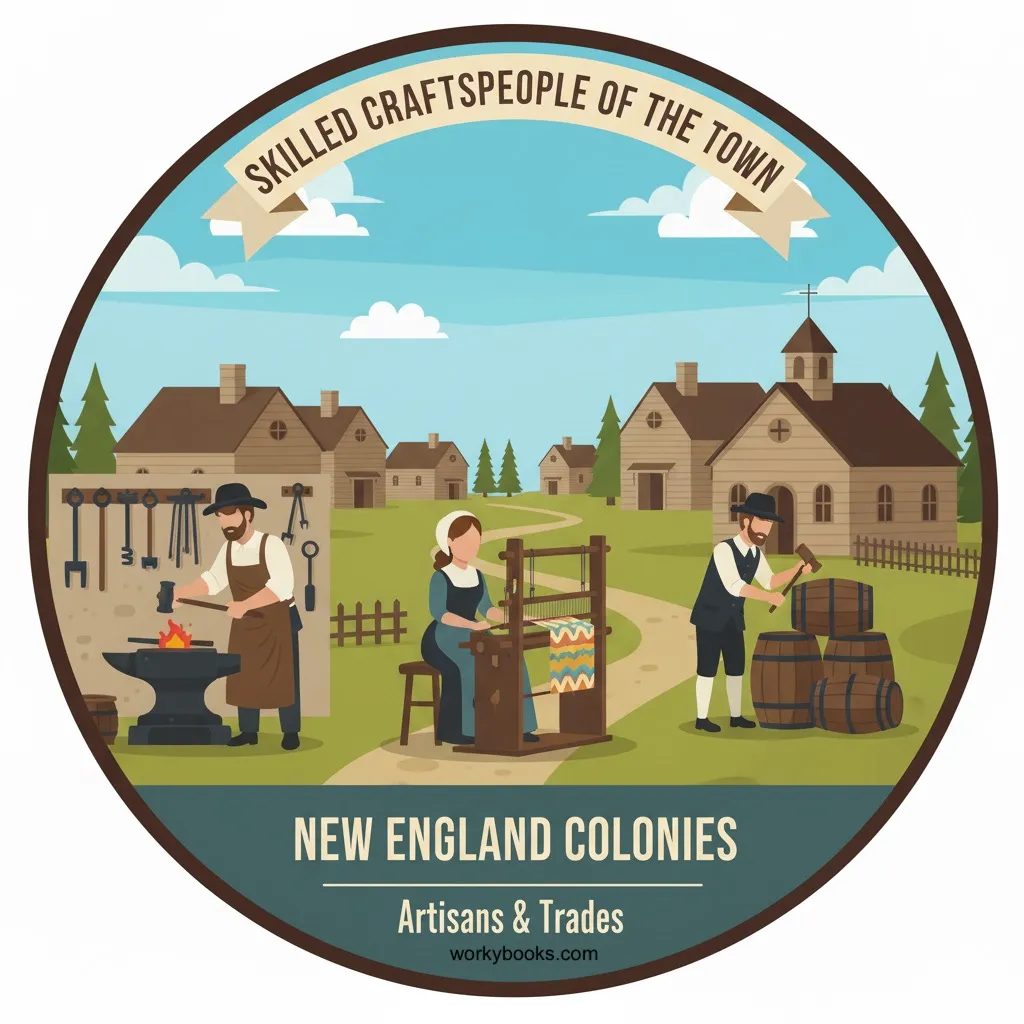
Blacksmiths, women textile workers and coopers working in New England colonial towns.
New England craftspeople were important to colonial America. These skilled workers were called artisans. Artisans made things by hand that the community needed. Their work helped towns grow and survive.
In New England, shipbuilders were some of the most important craftspeople. The region had many forests with tall, strong trees. Shipbuilders used these trees to make large ships. These ships carried goods and people across the ocean. Shipbuilding became a major business and provided jobs for many families.
Another key craft was blacksmithing. A blacksmith used fire and tools to shape metal. Blacksmiths made nails, horseshoes, tools, and even parts for wagons. Without blacksmiths, towns would not have the tools they needed for farming and building.
Silversmiths were also important. These silversmiths melted and shaped silver to make spoons, cups, and jewelry. Their work was often beautiful and showed great skill. Many people wanted to own handmade silver items.
Coopers were craftspeople who made barrels and containers from wood. Barrels were used to store food, water, and supplies. Good barrels kept things safe and fresh during long journeys or cold winters.
To become a craftsperson, a young person worked as an apprentice. An apprentice learned by watching and helping a master. Training could take years. After much practice, the apprentice became a journeyman. Journeymen traveled and worked for different masters to improve their skills. Only after many years could they become a master and open their own shop.
New England craftspeople worked hard. They used local materials and traditional methods. Their handmade goods were strong and useful. These skilled trades helped towns succeed.
Handmade goods from New England were traded with other colonies and even sent to England. Craftspeople brought pride and prosperity to their communities by solving problems and meeting daily needs.
Interesting Fact: Some colonial apprentices started learning their trade as young as 10 years old.
Who were New England craftspeople?
Skilled workers making things by handFarmers growing cropsLeaders of the colonySailors on ships
What did blacksmiths make?
Metal tools and nailsWooden barrelsPaintingsBooks
What did coopers make?
Barrels and containersSilver cupsShipsClothes
Why were shipbuilders important?
Built ships for tradeMade jewelryWrote lawsPlanted trees
How did apprentices learn?
By watching and helping mastersBy reading books onlyBy playing gamesBy traveling to cities
What was an effect of handmade goods?
Town could trade and prosperPeople stopped workingTowns became emptyPeople lost skills
Silversmiths made things from wood. (True/False)
TrueFalse
What is an apprentice?
A young person learning a tradeA ship captainA town leaderA teacher
Perfect For:
👩🏫 Teachers
• Reading comprehension practice
• Auto-graded assessments
• Literacy skill development
👨👩👧👦 Parents
• Reading practice at home
• Comprehension improvement
• Educational reading time
🏠 Homeschoolers
• Reading curriculum support
• Independent reading practice
• Progress monitoring
Reading Features:
📖
Reading Passage
Engaging fiction or nonfiction text
❓
Comprehension Quiz
Auto-graded questions
📊
Instant Feedback
Immediate results and scoring
📄
Printable Version
Download for offline reading
🔊
Read Aloud
Voice-over with word highlighting
Reviews & Ratings
No reviews yet. Be the first to share your experience!
Related Content
Native American Tribes Across America
This engaging history reading passage introduces students to Native American tribes across America, focusing on their da...
D2.HIS.1.3-5D2.HIS.2.3-5RI.4.1RI.4.2
Teepees: Homes on the Great Plains
This engaging history reading passage introduces students to teepees, the unique homes of Native American tribes on the ...
D2.HIS.2.3-5D2.HIS.14.3-5RI.4.1RI.4.2RI.4.4
Traditional Native American Clothing
This engaging history passage explores traditional Native American clothing and how it reflected the environment, values...
D2.HIS.2.3-5D2.HIS.3.3-5RI.4.3RI.4.4
The Iroquois Confederacy: A System of Peace
This engaging U.S. History reading passage introduces students to the Iroquois Confederacy, a powerful alliance of Nativ...
D2.HIS.2.3-5D2.HIS.3.3-5RI.4.3RI.4.4
The Cherokee Nation: History and Culture
This reading passage explores the rich history and culture of the Cherokee Nation, one of the largest Native American tr...
D2.HIS.2.3-5D2.HIS.14.3-5RI.4.3RI.4.4RI.4.10
The Sioux: Warriors and Tribal Leaders
This history reading passage explores the Sioux Nation, focusing on their roles as warriors and tribal leaders. Students...
D2.HIS.1.3-5D2.HIS.2.3-5RI.4.1RI.4.3
Native American Respect for Nature
This engaging history reading passage explores Native American respect for nature, emphasizing the close relationship be...
D2.HIS.2.3-5D2.HIS.3.3-5RI.4.3RI.4.4
Jamestown: The First Permanent English Colony
This engaging history passage explores the founding of Jamestown, the first permanent English colony in America. Aligned...
D2.HIS.1.3-5D2.HIS.2.3-5RI.4.3RI.4.4
Pocahontas and the Powhatan People
This engaging reading passage explores the life of Pocahontas and the Powhatan people and their important role in early ...
D2.HIS.1.3-5D2.HIS.2.3-5RI.4.1RI.4.3
Colonial Children: School and Chores
This reading passage explores the daily lives of colonial children, focusing on their experiences at school and their ma...
D2.HIS.2.3-5D2.HIS.3.3-5RI.4.1RI.4.2RI.4.4
Colonial Clothing and Homemade Goods
This engaging U.S. history passage explores the daily life of early American colonists with a focus on colonial clothing...
D2.HIS.2.3-5RI.4.3RI.4.4
Colonial Jobs: Blacksmiths, Bakers, and Craftsmen
This engaging history reading passage explores the vital roles of blacksmiths, bakers, and craftsmen in colonial America...
D2.HIS.2.3-5D2.HIS.3.3-5RI.4.3RI.4.4
Colonial Towns and Village Life
This engaging history reading passage explores the daily life, work, and unity found in colonial towns and villages. Ali...
D2.HIS.1.3-5D2.HIS.2.3-5RI.4.3RI.4.4
Colonial Trade with England and Africa
This history reading passage explores colonial trade between the American colonies, England, and Africa, focusing on the...
D2.HIS.2.3-5D2.HIS.14.3-5RI.4.3RI.4.4
Benjamin Franklin: Printer, Inventor, and Leader
This history reading passage explores the life and achievements of Benjamin Franklin, one of America's most important ea...
D2.HIS.2.3-5D2.HIS.3.3-5RI.4.1RI.4.3
George Washington Leads the Army
This engaging history reading passage explores how George Washington bravely led the Continental Army during the America...
D2.HIS.1.3-5D2.HIS.2.3-5RI.4.3RI.4.4
Women and Children During the Revolutionary War
This reading passage explores the important roles women and children played during the Revolutionary War. Students will ...
D2.HIS.2.3-5RI.4.3RI.5.3
African Americans Fight for Freedom
This educational passage explores the brave and inspiring story of how African Americans fought for freedom in the Unite...
D2.HIS.2.3-5D2.HIS.3.3-5RI.4.3RI.4.4
The Battle of Yorktown Ends War
This engaging U.S. history reading passage explores the Battle of Yorktown, a key event that ended the American Revoluti...
D2.HIS.1.3-5D2.HIS.2.3-5RI.4.1RI.4.3
Loyalists vs. Patriots: Divided Families
This engaging U.S. history reading passage explores the division between Loyalists and Patriots during the American Revo...