Sputnik 1957: Soviet Satellite Shocks America — Reading Comprehension
Rate this
Premium Resource
Present
Present in classroom. No work saved
Assign
Classroom with student accounts, Track progress
Quick Play
No student accounts, assign with a link
Grades
6
7
8
Standards
D2.HIS.2.3-5
D2.HIS.3.3-5
RI.4.3
RI.4.4
W.4.2
PRINT+DIGITAL RESOURCE
This learning resource is available in interactive and printable formats. The interactive worksheet can be played online and assigned to students. The Printable PDF version can be downloaded and printed for completion by hand.
This reading passage examines the momentous event of Sputnik's launch in 1957 by the Soviet Union and its profound impact on the United States and the world. Students will analyze the causes and consequences of this event and explore the multiple perspectives and technological rivalries that defined the early Space Race. The passage features academic vocabulary, a primary source quote, and problem/solution analysis to help students think critically about historical change. Aligned to C3 standards D2.His.2.3-5 and D2.His.3.3-5, as well as Common Core RI.4.3, RI.4.4, and W.4.2, this resource includes a glossary, timeline, reading comprehension quiz, writing prompts, a T-Chart graphic organizer, read-aloud audio, and a full Spanish translation. It is designed to help students build historical reasoning skills, master complex vocabulary, and understand the global impact of the Space Race.
CONTENT PREVIEW
Expand content preview
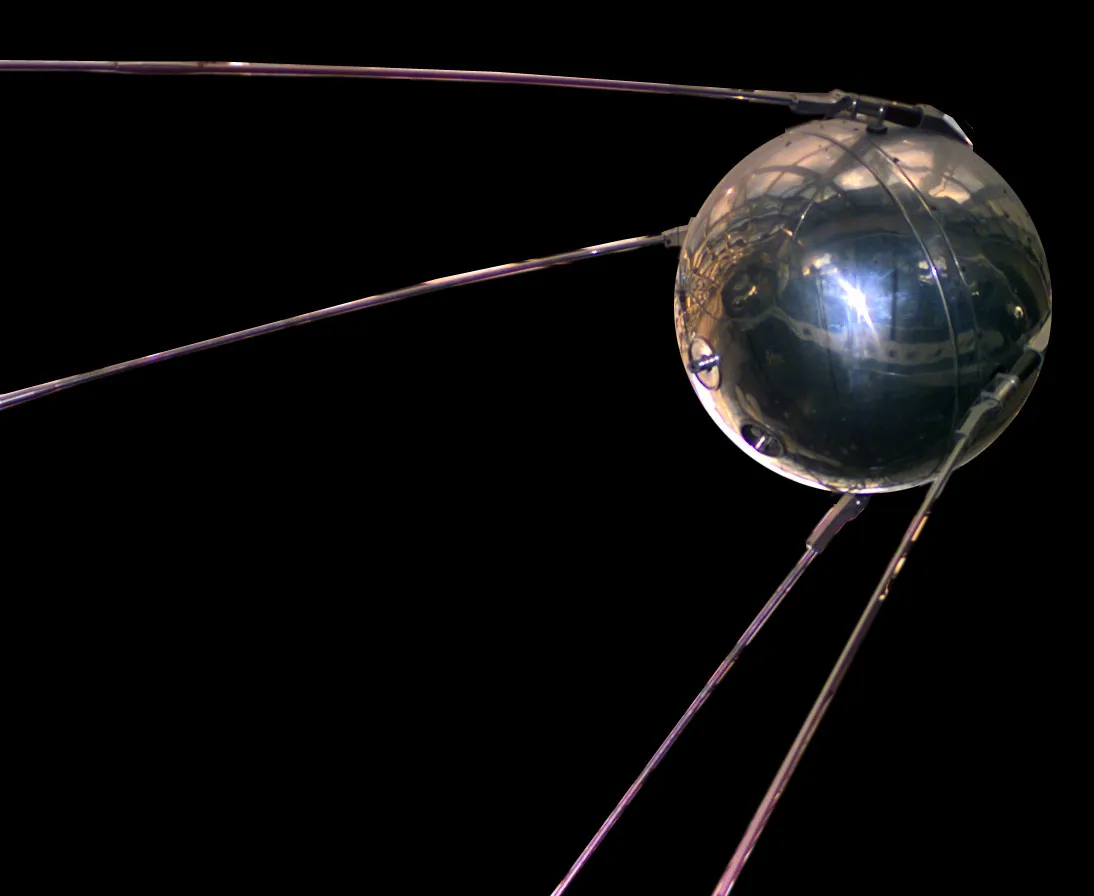
"Sputnik asm" by NSSDC, NASA[1] Source: Wikimedia Commons (Public domain).
On October 4, 1957, the Soviet Union launched Sputnik, the world’s first artificial satellite, into orbit around Earth. This event stunned the United States and the rest of the world. Before Sputnik, many Americans believed their country led the world in science and technology. The successful launch by the Soviet Union showed that another nation could achieve remarkable innovation and scientific progress.
The word satellite refers to an object that orbits another object in space. Sputnik was a shiny metal sphere about the size of a basketball, with four long antennae. Although simple in design and weighing about 184 pounds, Sputnik’s beeping radio signals could be detected all over Earth. Its launch marked a turning point, demonstrating Soviet capabilities and raising U.S. fears about military and scientific competition.
In response, the U.S. government saw Sputnik as both a challenge and a warning. Many leaders worried that the Soviet Union might use space technology to launch weapons or gain strategic advantages. This anxiety led to the beginning of the “space race,” a period of intense rivalry between the two superpowers to achieve major milestones in space exploration. The U.S. quickly increased funding for science and math education, hoping to foster greater expertise and prepare the next generation of scientists and engineers.
President Dwight D. Eisenhower responded by creating the National Aeronautics and Space Administration (NASA) in 1958. NASA’s mission was to coordinate American space efforts and regain leadership in aerospace research. The U.S. also passed the National Defense Education Act, which provided money to schools for science and language programs. This was seen as necessary to close the “technology gap” between the U.S. and the Soviet Union.
The launch of Sputnik affected everyday life in America. News reports and public discussions often focused on the need for improvement in education and innovation. The event inspired many young people to pursue careers in science, engineering, and research. Over time, American investments paid off, leading to achievements like the Apollo moon landing in 1969.
Sputnik’s launch was not just about technology. It was a symbol of competition, national pride, and the struggle between two different political systems. Both countries tried to prove the superiority of their way of life through scientific achievement. The “space race” influenced global politics and shaped the modern world.
Interesting Fact: Sputnik orbited Earth every 96 minutes and its radio signals could be picked up by anyone with a simple radio receiver.
When was Sputnik launched?
October 4, 1957July 20, 1969November 22, 1963August 15, 1945
Which country launched Sputnik?
United StatesSoviet UnionChinaFrance
What is a satellite?
A space shuttleA planetAn orbiting objectA star
Why did Sputnik worry Americans?
It was very largeIt showed Soviet science powerIt played musicIt was invisible
How did the U.S. respond to Sputnik?
Ignored itDecreased science educationIncreased science fundingStopped space research
What organization did the U.S. create in 1958?
FBINASACIAEPA
Sputnik was the first satellite. True or false?
TrueFalse
What does 'innovation' mean?
A type of planetA new idea or methodA space stationA rocket part
Perfect For:
👩🏫 Teachers
• Reading comprehension practice
• Auto-graded assessments
• Literacy skill development
👨👩👧👦 Parents
• Reading practice at home
• Comprehension improvement
• Educational reading time
🏠 Homeschoolers
• Reading curriculum support
• Independent reading practice
• Progress monitoring
Reading Features:
📖
Reading Passage
Engaging fiction or nonfiction text
❓
Comprehension Quiz
Auto-graded questions
📊
Instant Feedback
Immediate results and scoring
📄
Printable Version
Download for offline reading
🔊
Read Aloud
Voice-over with word highlighting
Reviews & Ratings
No reviews yet. Be the first to share your experience!
Related Content
Native American Tribes Across America
This engaging history reading passage introduces students to Native American tribes across America, focusing on their da...
D2.HIS.1.3-5D2.HIS.2.3-5RI.4.1RI.4.2
Teepees: Homes on the Great Plains
This engaging history reading passage introduces students to teepees, the unique homes of Native American tribes on the ...
D2.HIS.2.3-5D2.HIS.14.3-5RI.4.1RI.4.2RI.4.4
Traditional Native American Clothing
This engaging history passage explores traditional Native American clothing and how it reflected the environment, values...
D2.HIS.2.3-5D2.HIS.3.3-5RI.4.3RI.4.4
The Iroquois Confederacy: A System of Peace
This engaging U.S. History reading passage introduces students to the Iroquois Confederacy, a powerful alliance of Nativ...
D2.HIS.2.3-5D2.HIS.3.3-5RI.4.3RI.4.4
The Cherokee Nation: History and Culture
This reading passage explores the rich history and culture of the Cherokee Nation, one of the largest Native American tr...
D2.HIS.2.3-5D2.HIS.14.3-5RI.4.3RI.4.4RI.4.10
The Sioux: Warriors and Tribal Leaders
This history reading passage explores the Sioux Nation, focusing on their roles as warriors and tribal leaders. Students...
D2.HIS.1.3-5D2.HIS.2.3-5RI.4.1RI.4.3
Native American Respect for Nature
This engaging history reading passage explores Native American respect for nature, emphasizing the close relationship be...
D2.HIS.2.3-5D2.HIS.3.3-5RI.4.3RI.4.4
Jamestown: The First Permanent English Colony
This engaging history passage explores the founding of Jamestown, the first permanent English colony in America. Aligned...
D2.HIS.1.3-5D2.HIS.2.3-5RI.4.3RI.4.4
Pocahontas and the Powhatan People
This engaging reading passage explores the life of Pocahontas and the Powhatan people and their important role in early ...
D2.HIS.1.3-5D2.HIS.2.3-5RI.4.1RI.4.3
Colonial Children: School and Chores
This reading passage explores the daily lives of colonial children, focusing on their experiences at school and their ma...
D2.HIS.2.3-5D2.HIS.3.3-5RI.4.1RI.4.2RI.4.4
Colonial Clothing and Homemade Goods
This engaging U.S. history passage explores the daily life of early American colonists with a focus on colonial clothing...
D2.HIS.2.3-5RI.4.3RI.4.4
Colonial Jobs: Blacksmiths, Bakers, and Craftsmen
This engaging history reading passage explores the vital roles of blacksmiths, bakers, and craftsmen in colonial America...
D2.HIS.2.3-5D2.HIS.3.3-5RI.4.3RI.4.4
Colonial Towns and Village Life
This engaging history reading passage explores the daily life, work, and unity found in colonial towns and villages. Ali...
D2.HIS.1.3-5D2.HIS.2.3-5RI.4.3RI.4.4
Colonial Trade with England and Africa
This history reading passage explores colonial trade between the American colonies, England, and Africa, focusing on the...
D2.HIS.2.3-5D2.HIS.14.3-5RI.4.3RI.4.4
Benjamin Franklin: Printer, Inventor, and Leader
This history reading passage explores the life and achievements of Benjamin Franklin, one of America's most important ea...
D2.HIS.2.3-5D2.HIS.3.3-5RI.4.1RI.4.3
George Washington Leads the Army
This engaging history reading passage explores how George Washington bravely led the Continental Army during the America...
D2.HIS.1.3-5D2.HIS.2.3-5RI.4.3RI.4.4
Women and Children During the Revolutionary War
This reading passage explores the important roles women and children played during the Revolutionary War. Students will ...
D2.HIS.2.3-5RI.4.3RI.5.3
African Americans Fight for Freedom
This educational passage explores the brave and inspiring story of how African Americans fought for freedom in the Unite...
D2.HIS.2.3-5D2.HIS.3.3-5RI.4.3RI.4.4
The Battle of Yorktown Ends War
This engaging U.S. history reading passage explores the Battle of Yorktown, a key event that ended the American Revoluti...
D2.HIS.1.3-5D2.HIS.2.3-5RI.4.1RI.4.3
Loyalists vs. Patriots: Divided Families
This engaging U.S. history reading passage explores the division between Loyalists and Patriots during the American Revo...