This learning resource is available in interactive and printable formats. The interactive worksheet can be played online and assigned to students. The Printable PDF version can be downloaded and printed for completion by hand.
This passage explores the complex history of the Star-Spangled Banner, focusing on its origins during the War of 1812, the perspectives of those involved, and the song's eventual adoption as the U.S. national anthem. Students will analyze causes and effects, consider multiple viewpoints, and engage with a primary source excerpt. The reading passage, timeline, and activities align with C3 Framework and Common Core standards, fostering historical reasoning and critical thinking. This resource includes a glossary of key academic vocabulary, a Spanish translation, and a relevant primary source image. Additional comprehension and writing activities challenge students to explain causation, provide evidence, and articulate the significance of this national symbol. Read aloud audio and graphic organizers support multiple learning modalities.
CONTENT PREVIEW
Expand content preview
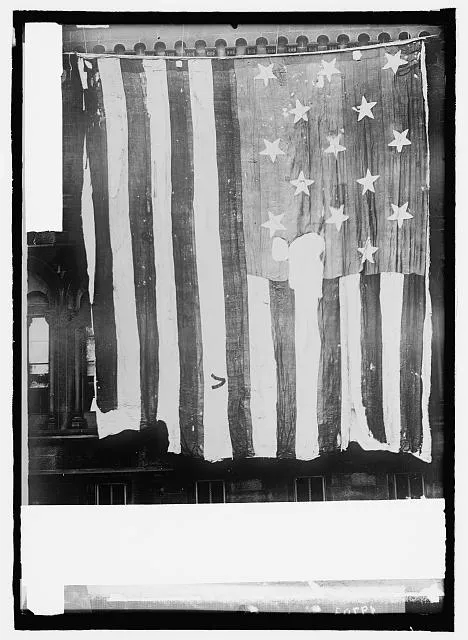
The original Star Spangled Banner "Museum". Source: Library of Congress
The Star-Spangled Banner is the national anthem of the United States. Its origins trace back to a critical moment during the War of 1812, when British forces launched a fierce bombardment against Fort McHenry in Baltimore Harbor on September 13-14, 1814. Francis Scott Key, a lawyer and amateur poet, witnessed these events from a ship. Key was negotiating the release of an American prisoner when the attack began, forcing him to remain aboard a British vessel overnight. The experience inspired him to write a poem that captured the powerful emotions of hope, fear, and patriotism he felt as he watched the outcome unfold.
Throughout the night, the British navy fired hundreds of shells and rockets at Fort McHenry. The defenders inside the fort, led by Major George Armistead, bravely resisted the attack. The American flag—a massive, specially-made banner—flew above the fort through the chaos, becoming a visible symbol of the nation's resilience. Key anxiously awaited sunrise, unsure if the fort would survive. At dawn, he saw the flag still flying, signaling that the Americans had withstood the assault. This moment of relief and pride became the heart of Key's poem, originally titled 'Defence of Fort M'Henry.'
Key’s words spread quickly. Newspapers published the poem, and it was soon set to the tune of a popular British song, 'To Anacreon in Heaven.' The resulting song, 'The Star-Spangled Banner,' resonated with many Americans. Its references to the flag, courage, and national identity helped unite citizens during a time of uncertainty. Still, not everyone agreed on what the flag or the anthem should represent. Some Americans, especially those critical of the war, viewed these symbols differently, highlighting the complexities of national unity.
For decades, 'The Star-Spangled Banner' was one of several patriotic songs used at public events. It was performed at military ceremonies, political rallies, and baseball games. However, it took more than a century for Congress to officially adopt it as the national anthem in 1931. This decision was influenced by growing public support, the anthem’s use in the military, and the sense that it captured essential American values.
The story of the anthem reveals how history, music, and collective memory shape national symbols. The flag at Fort McHenry, now known as the Star-Spangled Banner, was preserved as a treasured artifact. Today, Key’s anthem is sung at major national events, reminding Americans of both their shared struggles and their hopes for the future. Examining its origins helps us understand how symbols evolve and why they matter in shaping a nation’s identity.
Interesting Fact: The original Star-Spangled Banner flag measured 30 by 42 feet. It is now displayed at the Smithsonian National Museum of American History in Washington, D.C.
Who wrote 'The Star-Spangled Banner'?
Francis Scott KeyGeorge ArmisteadAbraham LincolnJames Madison
When was Fort McHenry attacked?
1812181417761931
What city is Fort McHenry near?
BostonBaltimorePhiladelphiaWashington
Why did Key write his poem?
He felt patriotism seeing the flagHe was angry at CongressHe wanted to be famousHe liked British music
What did the flag represent?
DefeatSymbol of resilienceBritish ruleA new state
When did the anthem become official?
1814186519312001
The anthem was always official. True or false?
TrueFalse
What does 'patriotism' mean?
Love for countryFear of warMaking lawsWriting music
Perfect For:
👩🏫 Teachers
• Reading comprehension practice
• Auto-graded assessments
• Literacy skill development
👨👩👧👦 Parents
• Reading practice at home
• Comprehension improvement
• Educational reading time
🏠 Homeschoolers
• Reading curriculum support
• Independent reading practice
• Progress monitoring
Reading Features:
📖
Reading Passage
Engaging fiction or nonfiction text
❓
Comprehension Quiz
Auto-graded questions
📊
Instant Feedback
Immediate results and scoring
📄
Printable Version
Download for offline reading
🔊
Read Aloud
Voice-over with word highlighting
Reviews & Ratings
No reviews yet. Be the first to share your experience!
Related Content
Native American Tribes Across America
This engaging history reading passage introduces students to Native American tribes across America, focusing on their da...
D2.HIS.1.3-5D2.HIS.2.3-5RI.4.1RI.4.2
Teepees: Homes on the Great Plains
This engaging history reading passage introduces students to teepees, the unique homes of Native American tribes on the ...
D2.HIS.2.3-5D2.HIS.14.3-5RI.4.1RI.4.2RI.4.4
Traditional Native American Clothing
This engaging history passage explores traditional Native American clothing and how it reflected the environment, values...
D2.HIS.2.3-5D2.HIS.3.3-5RI.4.3RI.4.4
The Iroquois Confederacy: A System of Peace
This engaging U.S. History reading passage introduces students to the Iroquois Confederacy, a powerful alliance of Nativ...
D2.HIS.2.3-5D2.HIS.3.3-5RI.4.3RI.4.4
The Cherokee Nation: History and Culture
This reading passage explores the rich history and culture of the Cherokee Nation, one of the largest Native American tr...
D2.HIS.2.3-5D2.HIS.14.3-5RI.4.3RI.4.4RI.4.10
The Sioux: Warriors and Tribal Leaders
This history reading passage explores the Sioux Nation, focusing on their roles as warriors and tribal leaders. Students...
D2.HIS.1.3-5D2.HIS.2.3-5RI.4.1RI.4.3
Native American Respect for Nature
This engaging history reading passage explores Native American respect for nature, emphasizing the close relationship be...
D2.HIS.2.3-5D2.HIS.3.3-5RI.4.3RI.4.4
Jamestown: The First Permanent English Colony
This engaging history passage explores the founding of Jamestown, the first permanent English colony in America. Aligned...
D2.HIS.1.3-5D2.HIS.2.3-5RI.4.3RI.4.4
Pocahontas and the Powhatan People
This engaging reading passage explores the life of Pocahontas and the Powhatan people and their important role in early ...
D2.HIS.1.3-5D2.HIS.2.3-5RI.4.1RI.4.3
Colonial Children: School and Chores
This reading passage explores the daily lives of colonial children, focusing on their experiences at school and their ma...
D2.HIS.2.3-5D2.HIS.3.3-5RI.4.1RI.4.2RI.4.4
Colonial Clothing and Homemade Goods
This engaging U.S. history passage explores the daily life of early American colonists with a focus on colonial clothing...
D2.HIS.2.3-5RI.4.3RI.4.4
Colonial Jobs: Blacksmiths, Bakers, and Craftsmen
This engaging history reading passage explores the vital roles of blacksmiths, bakers, and craftsmen in colonial America...
D2.HIS.2.3-5D2.HIS.3.3-5RI.4.3RI.4.4
Colonial Towns and Village Life
This engaging history reading passage explores the daily life, work, and unity found in colonial towns and villages. Ali...
D2.HIS.1.3-5D2.HIS.2.3-5RI.4.3RI.4.4
Colonial Trade with England and Africa
This history reading passage explores colonial trade between the American colonies, England, and Africa, focusing on the...
D2.HIS.2.3-5D2.HIS.14.3-5RI.4.3RI.4.4
Benjamin Franklin: Printer, Inventor, and Leader
This history reading passage explores the life and achievements of Benjamin Franklin, one of America's most important ea...
D2.HIS.2.3-5D2.HIS.3.3-5RI.4.1RI.4.3
George Washington Leads the Army
This engaging history reading passage explores how George Washington bravely led the Continental Army during the America...
D2.HIS.1.3-5D2.HIS.2.3-5RI.4.3RI.4.4
Women and Children During the Revolutionary War
This reading passage explores the important roles women and children played during the Revolutionary War. Students will ...
D2.HIS.2.3-5RI.4.3RI.5.3
African Americans Fight for Freedom
This educational passage explores the brave and inspiring story of how African Americans fought for freedom in the Unite...
D2.HIS.2.3-5D2.HIS.3.3-5RI.4.3RI.4.4
The Battle of Yorktown Ends War
This engaging U.S. history reading passage explores the Battle of Yorktown, a key event that ended the American Revoluti...
D2.HIS.1.3-5D2.HIS.2.3-5RI.4.1RI.4.3
Loyalists vs. Patriots: Divided Families
This engaging U.S. history reading passage explores the division between Loyalists and Patriots during the American Revo...