Starting a New Life in America
Interactive passage with audio narration, comprehension questions, and printable PDF.
By completing this purchase you agree to our Terms of Use and Privacy Policy. Your subscription renews automatically until you cancel. You can cancel anytime from your account settings. All sales are final and non-refundable. Digital content is available for download in your account immediately upon purchase.
What's included
Part of this bundle

Starting a New Life in America preview and details
About this printable Starting a New Life in America reading passage (Grades 3-5)
Sample passage and quiz from Starting a New Life in America
Reading passage and comprehension quiz preview
Immigrant Life America
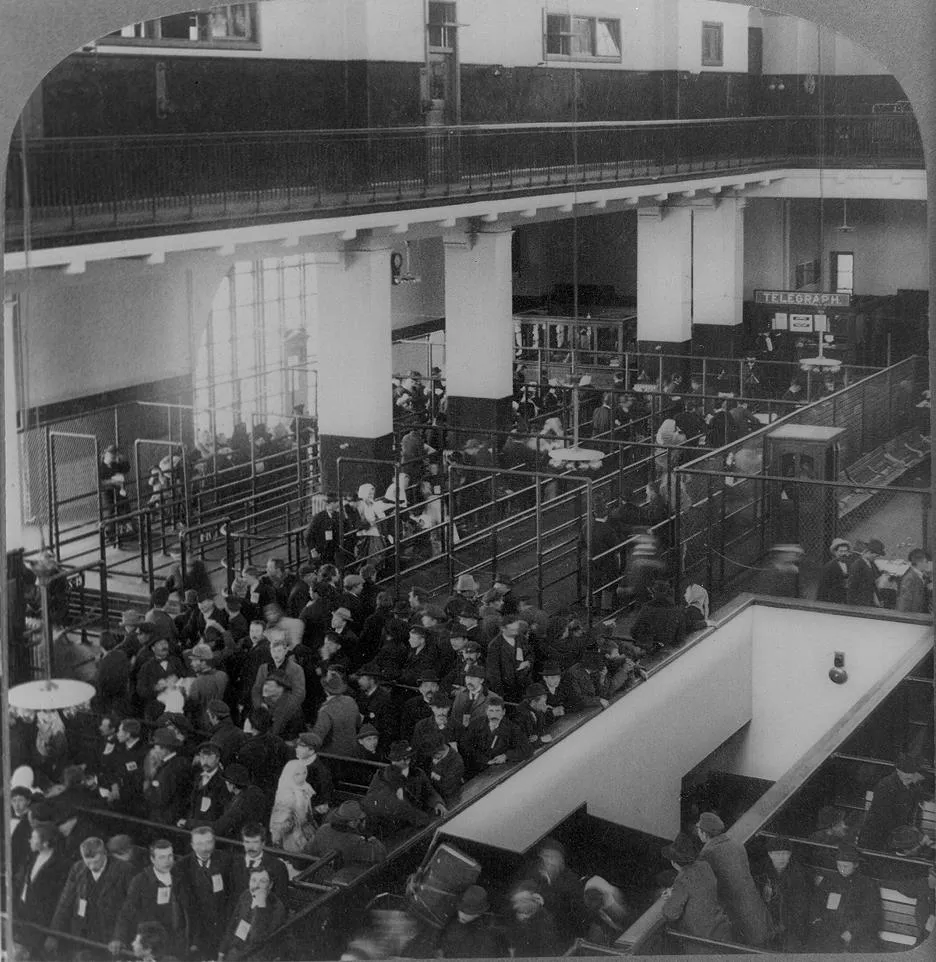
Source: Wikimedia Commons - Underwood & Underwood
During the Progressive Era, millions of immigrants arrived in the United States from countries like Italy, Russia, China, and Ireland. Many came to look for a better life. They hoped for jobs, freedom, and new beginnings.
At Ellis Island in New York, families waited in long lines to be checked by officials. Some were nervous because they did not speak English. Others worried they might be sent back if they were sick. Most passed the inspection and started their lives in America.
Finding work was often hard. Immigrants took jobs in factories, mines, and on farms. Many worked long hours for little pay. Whole families, including children, sometimes worked to help make enough money. Workplaces were crowded and sometimes unsafe. Still, people worked hard to build a better future.
Learning a new language was another big challenge. Adults went to night school after work to learn English. Children picked it up faster in school. Knowing English helped families find better jobs and join their new communities.
Immigrants faced **discrimination**. Some Americans did not trust or respect people from different countries. Immigrants had to be brave and strong. Many formed their own neighborhoods, such as Chinatown or Little Italy, to feel safe and stay together.
Even as they adapted, immigrants kept their traditions alive. They cooked foods from their home countries, celebrated holidays, and practiced their religions. Churches, temples, and community centers helped families feel at home. These traditions became part of American culture.
Over time, immigrants became citizens. They voted, opened businesses, and helped build cities. Their hard work and ideas made America stronger and more diverse.
Interesting Fact: By 1924, more than 12 million immigrants had entered America through Ellis Island.
Comprehension quiz (8 questions)
1. Where did many immigrants enter America?
2. What was a big challenge for immigrants?
3. Which jobs did many immigrants take?
4. Why did immigrants form neighborhoods?
5. How did children help their families adapt?
6. What is a tradition?
7. Immigrants kept their traditions alive. True or false?
8. What does 'discrimination' mean?
Common Core standards for Starting a New Life in America
Explain events, procedures, ideas, or concepts in a historical, scientific, or technical text, including what happened and why, based on specific information in the text.
Determine the meaning of general academic and domain-specific words or phrases in a text relevant to a grade 4 topic or subject area.
Explain the relationships or interactions between two or more individuals, events, ideas, or concepts in a historical, scientific, or technical text based on specific information in the text.
Perfect for the way you teach
- Build comprehension skills
- Auto-graded quiz
- Differentiated reading
- Read together at home
- Improve fluency
- Quiet reading time
- Reading curriculum support
- Independent practice
- Track Lexile growth