This learning resource is available in interactive and printable formats. The interactive worksheet can be played online and assigned to students. The Printable PDF version can be downloaded and printed for completion by hand.
This engaging history reading passage explores the life and legacy of Susan B. Anthony, a leading activist for women's suffrage during the Progressive Era. Students will analyze Anthony's contributions, the obstacles she faced, and the broader context of the women's rights movement in the United States. The passage encourages critical thinking about historical change and evidence, while integrating academic vocabulary such as suffrage, advocate, and movement. Supporting activities include a multiple-choice quiz, writing prompts, graphic organizers, and a chronological timeline to help students understand cause and effect. The passage is available in both English and Spanish, with a differentiated version for accessible learning. Designed to align with HSS 8.6.6 and CCSS.RI.6-8.1, RI.6-8.6, this resource is ideal for supporting historical analysis skills and ELA standards. Audio read-aloud and Spanish translation support language learners and diverse classrooms.
CONTENT PREVIEW
Expand content preview
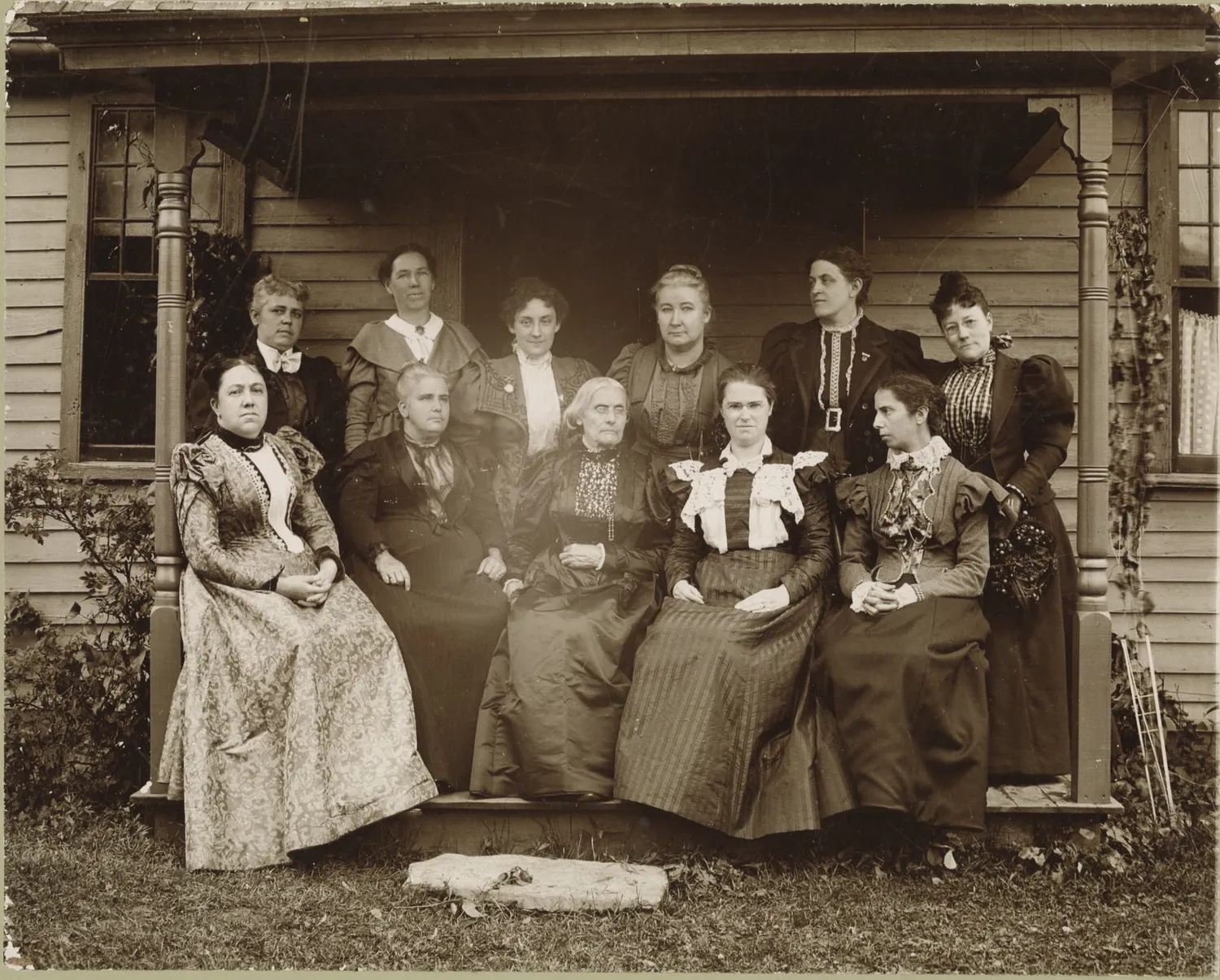
"Susan B. Anthony with Woman's Rights Leaders, 1896" by unattributed. Source: Wikimedia Commons (Public domain).
Susan B. Anthony was a key activist in the fight for women's suffrage in the United States. Born in 1820 in Massachusetts, Anthony dedicated her life to seeking equal rights for women, especially the right to vote. During the 19th century, women were not allowed to participate in elections, which shaped the major problem Anthony worked to solve.
Throughout her life, Anthony used speeches, articles, and organized events to raise public awareness about the importance of women's rights. She believed that women should have the same legal and social status as men. This belief was not shared by everyone in her time. Many people, including lawmakers, thought political participation was only for men, which made Anthony’s work very challenging.
Anthony partnered with other reformers, such as Elizabeth Cady Stanton, to form organizations like the National Woman Suffrage Association. Together, they campaigned for laws and a constitutional amendment that would guarantee women the right to vote. Their efforts included organizing conventions, publishing newspapers, and petitioning Congress. These strategies were essential, as changing the law required both convincing the public and government leaders.
In 1872, Anthony made a bold decision. She and several other women voted in the presidential election in Rochester, New York, even though it was illegal at the time. As a result, Anthony was arrested and put on trial. During the trial, she argued that the 14th Amendment, which gives equal protection to all citizens, should apply to women as well. Although Anthony was found guilty, her trial brought national attention to the women's suffrage movement.
Despite facing defeat and public criticism, Anthony continued her advocacy for decades. She traveled across the country, sometimes giving speeches almost every day. Her persistence inspired countless others to join the movement. Over time, support for women's suffrage grew, especially during the Progressive Era, when many Americans began to demand social and political reforms.
Anthony did not live to see the success of her movement. She died in 1906, fourteen years before the 19th Amendment was passed in 1920, granting women the right to vote. However, her leadership and determination made her a symbol of the struggle for equality. Historians recognize that Anthony’s work laid the foundation for a more democratic and just society.
Interesting Fact: In 1979, Susan B. Anthony became the first woman to be featured on a U.S. dollar coin, honoring her contributions to American history.
When was Susan B. Anthony born?
1820187219201906
Why was Anthony arrested in 1872?
For giving a speechFor voting illegallyFor starting a newspaperFor running for office
What did the 19th Amendment do?
Ended slaveryGave women the right to voteStarted the Civil WarLowered voting age
Who worked closely with Anthony?
Elizabeth Cady StantonAbraham LincolnMartin Luther KingHarriet Tubman
What was one major obstacle Anthony faced?
Lack of transportationPublic and legal oppositionNo supportersVoting machines
How did Anthony argue for women's voting rights?
By reading novelsBy citing the 14th AmendmentBy planting cropsBy writing poems
Susan B. Anthony lived to see women vote.
TrueFalse
What does suffrage mean?
Right to voteFreedom to travelEqual payPublic speaking
Perfect For:
👩🏫 Teachers
• Reading comprehension practice
• Auto-graded assessments
• Literacy skill development
👨👩👧👦 Parents
• Reading practice at home
• Comprehension improvement
• Educational reading time
🏠 Homeschoolers
• Reading curriculum support
• Independent reading practice
• Progress monitoring
Reading Features:
📖
Reading Passage
Engaging fiction or nonfiction text
❓
Comprehension Quiz
Auto-graded questions
📊
Instant Feedback
Immediate results and scoring
📄
Printable Version
Download for offline reading
🔊
Read Aloud
Voice-over with word highlighting
Reviews & Ratings
No reviews yet. Be the first to share your experience!
Related Content
Native American Tribes Across America
This engaging history reading passage introduces students to Native American tribes across America, focusing on their da...
D2.HIS.1.3-5D2.HIS.2.3-5RI.4.1RI.4.2
Teepees: Homes on the Great Plains
This engaging history reading passage introduces students to teepees, the unique homes of Native American tribes on the ...
D2.HIS.2.3-5D2.HIS.14.3-5RI.4.1RI.4.2RI.4.4
Traditional Native American Clothing
This engaging history passage explores traditional Native American clothing and how it reflected the environment, values...
D2.HIS.2.3-5D2.HIS.3.3-5RI.4.3RI.4.4
The Iroquois Confederacy: A System of Peace
This engaging U.S. History reading passage introduces students to the Iroquois Confederacy, a powerful alliance of Nativ...
D2.HIS.2.3-5D2.HIS.3.3-5RI.4.3RI.4.4
The Cherokee Nation: History and Culture
This reading passage explores the rich history and culture of the Cherokee Nation, one of the largest Native American tr...
D2.HIS.2.3-5D2.HIS.14.3-5RI.4.3RI.4.4RI.4.10
The Sioux: Warriors and Tribal Leaders
This history reading passage explores the Sioux Nation, focusing on their roles as warriors and tribal leaders. Students...
D2.HIS.1.3-5D2.HIS.2.3-5RI.4.1RI.4.3
Native American Respect for Nature
This engaging history reading passage explores Native American respect for nature, emphasizing the close relationship be...
D2.HIS.2.3-5D2.HIS.3.3-5RI.4.3RI.4.4
Jamestown: The First Permanent English Colony
This engaging history passage explores the founding of Jamestown, the first permanent English colony in America. Aligned...
D2.HIS.1.3-5D2.HIS.2.3-5RI.4.3RI.4.4
Pocahontas and the Powhatan People
This engaging reading passage explores the life of Pocahontas and the Powhatan people and their important role in early ...
D2.HIS.1.3-5D2.HIS.2.3-5RI.4.1RI.4.3
Colonial Children: School and Chores
This reading passage explores the daily lives of colonial children, focusing on their experiences at school and their ma...
D2.HIS.2.3-5D2.HIS.3.3-5RI.4.1RI.4.2RI.4.4
Colonial Clothing and Homemade Goods
This engaging U.S. history passage explores the daily life of early American colonists with a focus on colonial clothing...
D2.HIS.2.3-5RI.4.3RI.4.4
Colonial Jobs: Blacksmiths, Bakers, and Craftsmen
This engaging history reading passage explores the vital roles of blacksmiths, bakers, and craftsmen in colonial America...
D2.HIS.2.3-5D2.HIS.3.3-5RI.4.3RI.4.4
Colonial Towns and Village Life
This engaging history reading passage explores the daily life, work, and unity found in colonial towns and villages. Ali...
D2.HIS.1.3-5D2.HIS.2.3-5RI.4.3RI.4.4
Colonial Trade with England and Africa
This history reading passage explores colonial trade between the American colonies, England, and Africa, focusing on the...
D2.HIS.2.3-5D2.HIS.14.3-5RI.4.3RI.4.4
Benjamin Franklin: Printer, Inventor, and Leader
This history reading passage explores the life and achievements of Benjamin Franklin, one of America's most important ea...
D2.HIS.2.3-5D2.HIS.3.3-5RI.4.1RI.4.3
George Washington Leads the Army
This engaging history reading passage explores how George Washington bravely led the Continental Army during the America...
D2.HIS.1.3-5D2.HIS.2.3-5RI.4.3RI.4.4
Women and Children During the Revolutionary War
This reading passage explores the important roles women and children played during the Revolutionary War. Students will ...
D2.HIS.2.3-5RI.4.3RI.5.3
African Americans Fight for Freedom
This educational passage explores the brave and inspiring story of how African Americans fought for freedom in the Unite...
D2.HIS.2.3-5D2.HIS.3.3-5RI.4.3RI.4.4
The Battle of Yorktown Ends War
This engaging U.S. history reading passage explores the Battle of Yorktown, a key event that ended the American Revoluti...
D2.HIS.1.3-5D2.HIS.2.3-5RI.4.1RI.4.3
Loyalists vs. Patriots: Divided Families
This engaging U.S. history reading passage explores the division between Loyalists and Patriots during the American Revo...