This learning resource is available in interactive and printable formats. The interactive worksheet can be played online and assigned to students. The Printable PDF version can be downloaded and printed for completion by hand.
This rigorous U.S. history reading passage analyzes the Texas Independence movement of 1836 and the heated debate over slavery expansion. Students will explore the motivations behind Texas settlers' push for independence, Mexico's anti-slavery policies, and the conflicting perspectives of Tejanos, American settlers, enslaved people, and Mexican officials. The passage uses a compare and contrast structure, integrates a primary source quote, and emphasizes vocabulary development. Activities include a multiple-choice quiz, explanatory writing prompts, and a graphic organizer for critical thinking. The resource includes a Spanish translation and read-aloud audio, making it accessible for diverse learners. Aligned with C3 Framework (D2.His.2.3-5, D2.His.3.3-5) and Common Core (RI.4.3, RI.4.4, W.4.2), this passage challenges students to analyze history using primary evidence, causation, and multiple perspectives. Keywords: Texas Independence, slavery, Mexican Texas, C3 standards, Common Core, U.S. history.
CONTENT PREVIEW
Expand content preview
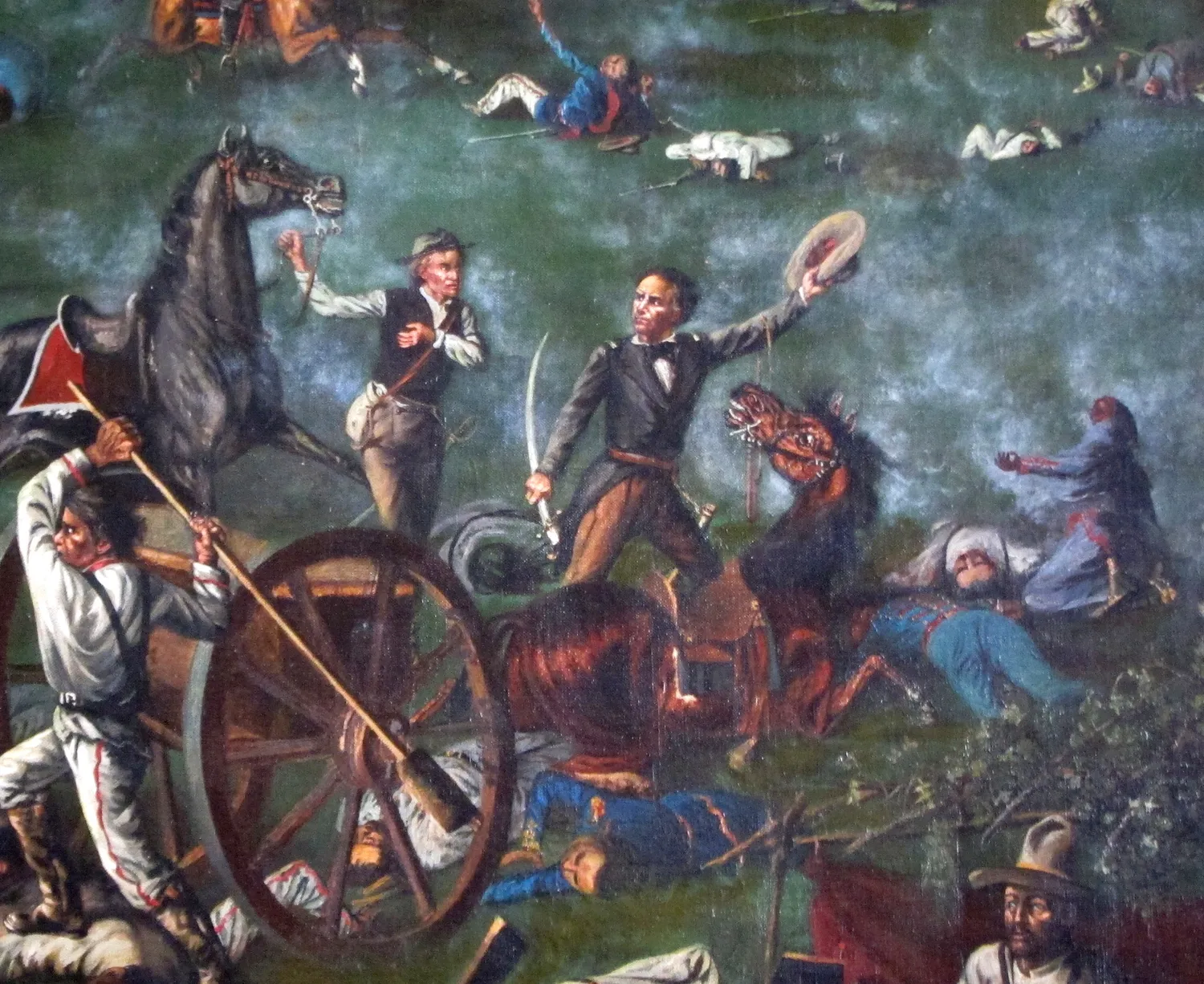
"Sam Houston at San Jacinto" by Henry Arthur McArdle / Wikimedia Commons (Public domain).
In 1836, American settlers in the Mexican territory of Texas declared their independence and formed the Republic of Texas. This event was the result of growing conflicts between the settlers and the Mexican government. Tensions developed over issues such as laws, governance, and cultural differences, which eventually led to a dramatic revolution.
The Mexican government had encouraged Americans to settle in Texas during the 1820s, hoping they would help develop the land. However, the settlers brought their own customs and expected to have some control over local decisions. When Mexico abolished slavery and tried to enforce stricter laws and taxes, many settlers felt these rules threatened their way of life. Frustration increased when Mexico limited immigration and suspended the Texas constitution, making the settlers feel powerless.
By 1835, dissatisfaction had turned into open conflict. The settlers organized armed resistance, leading to famous battles like the Alamo and Goliad. These events became symbols of sacrifice and courage but also highlighted the severe consequences of war. The leadership of figures such as Sam Houston helped unite the Texan forces. On March 2, 1836, delegates formally declared Texas’s independence, establishing a new republic and adopting a constitution modeled after that of the United States.
Despite declaring independence, the new Republic of Texas faced serious problems. The Mexican government refused to recognize Texas’s sovereignty and continued to launch military attacks. The republic also struggled with financial instability and political disputes among its leaders. Many Texans wanted to join the United States, hoping for security and economic support, but the U.S. government hesitated, worried about conflict with Mexico and the issue of slavery.
After nearly ten years as an independent nation, Texas was finally annexed by the United States in 1845. This decision outraged Mexico, leading to further disputes and eventually the Mexican-American War. The annexation of Texas shaped America’s westward expansion, but it also raised challenging questions about national identity, citizenship, and the balance of power between free and slave states.
The struggle for Texas independence demonstrates the complex effects of migration, cultural conflict, and political change in American history. Historians continue to debate the consequences of these events and the experiences of all groups involved, including Mexican citizens, Tejanos, and enslaved people.
Interesting Fact: The Republic of Texas had its own flag, currency, and president, and was recognized as an independent nation by only a few countries.
What year did Texas declare independence?
1836184518201835
Who was a key leader for Texas?
Sam HoustonStephen F. AustinJames PolkAntonio López de Santa Anna
Which battle became a symbol of sacrifice?
The AlamoGettysburgYorktownSaratoga
Why did Mexico limit immigration to Texas?
To stop American influenceTo encourage tradeTo make Texas independentTo end slavery
What was a major challenge for the Republic of Texas?
Financial instabilityPlenty of resourcesSupport from MexicoNo political disputes
How did annexation impact the U.S.?
Led to westward expansionStopped migrationEnded political disputesDecreased territory
Texas was an independent country for ten years. True or false?
TrueFalse
What does 'republic' mean in the passage?
A country with elected leadersA military groupA large cityA farming region
Perfect For:
👩🏫 Teachers
• Reading comprehension practice
• Auto-graded assessments
• Literacy skill development
👨👩👧👦 Parents
• Reading practice at home
• Comprehension improvement
• Educational reading time
🏠 Homeschoolers
• Reading curriculum support
• Independent reading practice
• Progress monitoring
Reading Features:
📖
Reading Passage
Engaging fiction or nonfiction text
❓
Comprehension Quiz
Auto-graded questions
📊
Instant Feedback
Immediate results and scoring
📄
Printable Version
Download for offline reading
🔊
Read Aloud
Voice-over with word highlighting
Reviews & Ratings
No reviews yet. Be the first to share your experience!
Related Content
Native American Tribes Across America
This engaging history reading passage introduces students to Native American tribes across America, focusing on their da...
D2.HIS.1.3-5D2.HIS.2.3-5RI.4.1RI.4.2
Teepees: Homes on the Great Plains
This engaging history reading passage introduces students to teepees, the unique homes of Native American tribes on the ...
D2.HIS.2.3-5D2.HIS.14.3-5RI.4.1RI.4.2RI.4.4
Traditional Native American Clothing
This engaging history passage explores traditional Native American clothing and how it reflected the environment, values...
D2.HIS.2.3-5D2.HIS.3.3-5RI.4.3RI.4.4
The Iroquois Confederacy: A System of Peace
This engaging U.S. History reading passage introduces students to the Iroquois Confederacy, a powerful alliance of Nativ...
D2.HIS.2.3-5D2.HIS.3.3-5RI.4.3RI.4.4
The Cherokee Nation: History and Culture
This reading passage explores the rich history and culture of the Cherokee Nation, one of the largest Native American tr...
D2.HIS.2.3-5D2.HIS.14.3-5RI.4.3RI.4.4RI.4.10
The Sioux: Warriors and Tribal Leaders
This history reading passage explores the Sioux Nation, focusing on their roles as warriors and tribal leaders. Students...
D2.HIS.1.3-5D2.HIS.2.3-5RI.4.1RI.4.3
Native American Respect for Nature
This engaging history reading passage explores Native American respect for nature, emphasizing the close relationship be...
D2.HIS.2.3-5D2.HIS.3.3-5RI.4.3RI.4.4
Jamestown: The First Permanent English Colony
This engaging history passage explores the founding of Jamestown, the first permanent English colony in America. Aligned...
D2.HIS.1.3-5D2.HIS.2.3-5RI.4.3RI.4.4
Pocahontas and the Powhatan People
This engaging reading passage explores the life of Pocahontas and the Powhatan people and their important role in early ...
D2.HIS.1.3-5D2.HIS.2.3-5RI.4.1RI.4.3
Colonial Children: School and Chores
This reading passage explores the daily lives of colonial children, focusing on their experiences at school and their ma...
D2.HIS.2.3-5D2.HIS.3.3-5RI.4.1RI.4.2RI.4.4
Colonial Clothing and Homemade Goods
This engaging U.S. history passage explores the daily life of early American colonists with a focus on colonial clothing...
D2.HIS.2.3-5RI.4.3RI.4.4
Colonial Jobs: Blacksmiths, Bakers, and Craftsmen
This engaging history reading passage explores the vital roles of blacksmiths, bakers, and craftsmen in colonial America...
D2.HIS.2.3-5D2.HIS.3.3-5RI.4.3RI.4.4
Colonial Towns and Village Life
This engaging history reading passage explores the daily life, work, and unity found in colonial towns and villages. Ali...
D2.HIS.1.3-5D2.HIS.2.3-5RI.4.3RI.4.4
Colonial Trade with England and Africa
This history reading passage explores colonial trade between the American colonies, England, and Africa, focusing on the...
D2.HIS.2.3-5D2.HIS.14.3-5RI.4.3RI.4.4
Benjamin Franklin: Printer, Inventor, and Leader
This history reading passage explores the life and achievements of Benjamin Franklin, one of America's most important ea...
D2.HIS.2.3-5D2.HIS.3.3-5RI.4.1RI.4.3
George Washington Leads the Army
This engaging history reading passage explores how George Washington bravely led the Continental Army during the America...
D2.HIS.1.3-5D2.HIS.2.3-5RI.4.3RI.4.4
Women and Children During the Revolutionary War
This reading passage explores the important roles women and children played during the Revolutionary War. Students will ...
D2.HIS.2.3-5RI.4.3RI.5.3
African Americans Fight for Freedom
This educational passage explores the brave and inspiring story of how African Americans fought for freedom in the Unite...
D2.HIS.2.3-5D2.HIS.3.3-5RI.4.3RI.4.4
The Battle of Yorktown Ends War
This engaging U.S. history reading passage explores the Battle of Yorktown, a key event that ended the American Revoluti...
D2.HIS.1.3-5D2.HIS.2.3-5RI.4.1RI.4.3
Loyalists vs. Patriots: Divided Families
This engaging U.S. history reading passage explores the division between Loyalists and Patriots during the American Revo...