The Bronze Age Begins
Interactive passage with audio narration, comprehension questions, and printable PDF.
By completing this purchase you agree to our Terms of Use and Privacy Policy. Your subscription renews automatically until you cancel. You can cancel anytime from your account settings. All sales are final and non-refundable. Digital content is available for download in your account immediately upon purchase.
What's included
Part of this bundle

The Bronze Age Begins preview and details
About this printable The Bronze Age Begins reading passage (Grades 5-8)
Sample passage and quiz from The Bronze Age Begins
Reading passage and comprehension quiz preview
The Bronze Age Begins
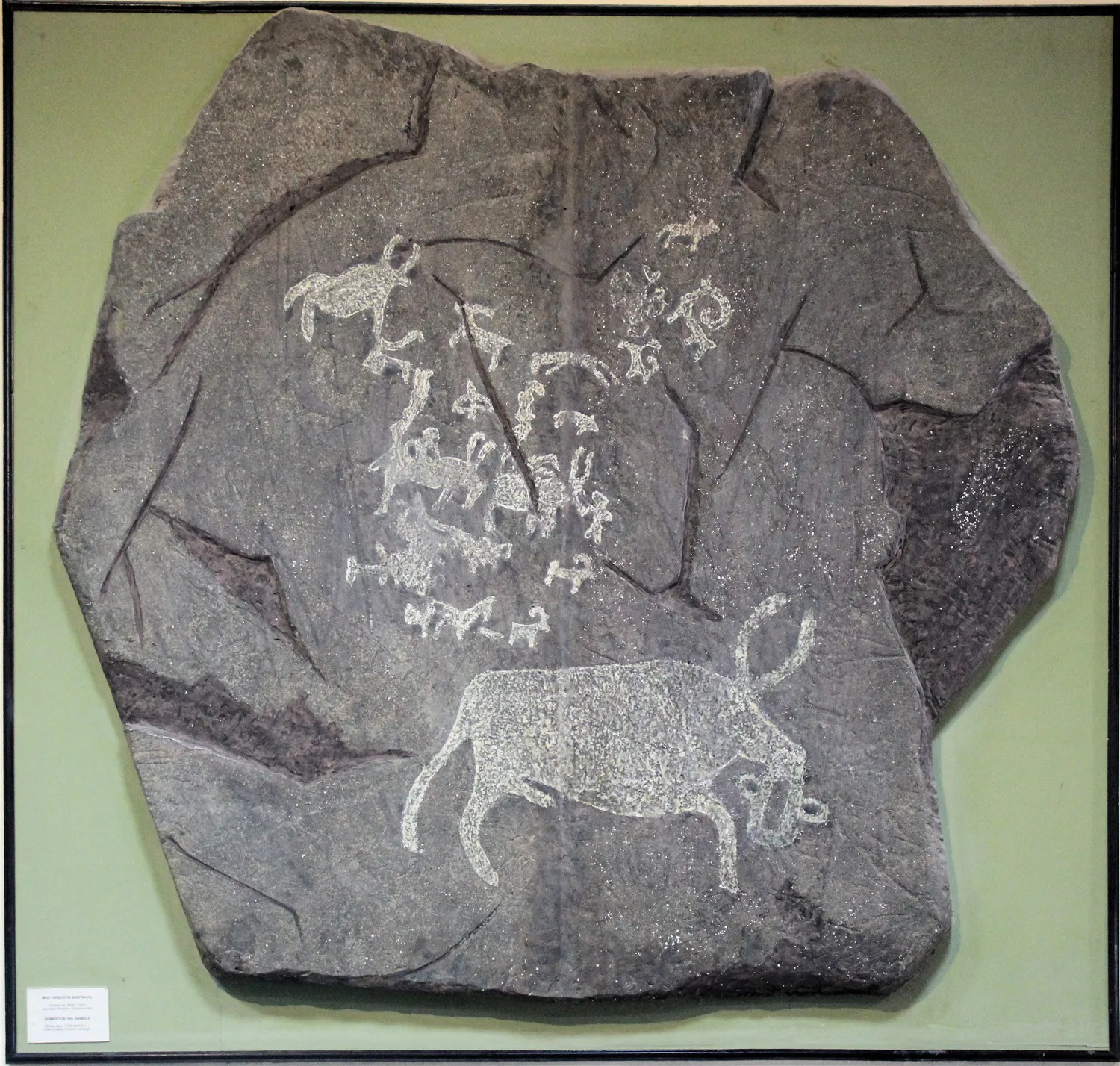
"Bronze Age, 3000 BC, Domesticating Animals" by Gary Todd / Wikimedia Commons (CC0).
The Bronze Age marks a critical turning point in human history when people first learned to create tools and weapons from metals. Beginning around 3300 BCE in Mesopotamia, the Bronze Age spread to Egypt, the Indus Valley, China, and Europe. Instead of relying only on stone, early civilizations began mixing copper with tin to make bronze, a metal that is stronger and more durable than either copper or stone. This discovery led to major changes in technology, society, and daily life.
The process of making bronze, called metallurgy, required advanced knowledge and skills. Archaeologists have uncovered ancient furnaces and molds in places like Sumer and ancient China, showing how people melted copper and tin together at high temperatures. In the city of Ur, clay tablets from about 2100 BCE record the work of specialized metalworkers. These artisans produced bronze swords, axes, plows, and jewelry. The new metal tools made farming easier and more efficient, increasing food supplies and supporting larger populations.
The rise of bronze technology also changed social structures. Metal tools and weapons were valuable, so those who controlled their production gained power. Kings and priests often directed workshops and controlled the resources needed for bronze-making. A clear social hierarchy developed, with elites at the top and laborers or slaves at the bottom. Trade networks expanded as people sought copper and tin, two metals rarely found together. Archaeological evidence shows that by 2500 BCE, bronze objects and raw materials moved great distances across Asia and Europe, linking distant cultures.
Bronze also influenced warfare and art. Armies equipped with bronze swords and spears had advantages over rivals still using stone. In China’s Shang Dynasty (about 1600–1046 BCE), elaborate bronze vessels were used in religious ceremonies. In Europe, the discovery of the famous Nebra Sky Disk, made around 1600 BCE, shows how bronze was used for both practical and symbolic purposes. However, not all societies adopted bronze at the same time. Some regions continued to use stone tools for centuries, depending on the availability of resources and contact with other cultures.
The impact of the Bronze Age can be seen in the growth of cities, increase in trade, and the rise of complex civilizations. Metallurgy laid the foundation for future technological advances, including the later Iron Age. The development of bronze was not just a new way to make tools—it was a revolution that helped shape the world’s first great societies.
This period connects to the broader themes of ancient history, such as the relationship between technology, society, and the environment.
Interesting Fact: The word “bronze” comes from the Italian word “bronzo,” but the metal was used thousands of years before Italian even existed!
Comprehension quiz (8 questions)
1. When did the Bronze Age begin?
2. What metals make bronze?
3. Which city recorded metalworkers on clay tablets?
4. How did making bronze affect farming?
5. Why did trade networks grow during the Bronze Age?
6. What was an effect of bronze weapons?
7. Bronze is stronger than stone. True or false?
8. What does 'metallurgy' mean?
Perfect for the way you teach
- Build comprehension skills
- Auto-graded quiz
- Differentiated reading
- Read together at home
- Improve fluency
- Quiet reading time
- Reading curriculum support
- Independent practice
- Track Lexile growth