The Forty-Niners: Who Came and Why — Reading Comprehension
Rate this
Premium Resource
Present
Present in classroom. No work saved
Assign
Classroom with student accounts, Track progress
Quick Play
No student accounts, assign with a link
Grades
3
4
5
Standards
D2.HIS.2.3-5
D2.HIS.3.3-5
RI.4.3
RI.4.4
W.4.2
PRINT+DIGITAL RESOURCE
This learning resource is available in interactive and printable formats. The interactive worksheet can be played online and assigned to students. The Printable PDF version can be downloaded and printed for completion by hand.
This engaging reading passage explores the story of the Forty-Niners and their journey during the California Gold Rush. Students will learn about the events of 1848-1850s, the reasons people traveled west, and the challenges they faced. The passage uses a clear, chronological narrative and highlights cause-and-effect relationships, making it ideal for building historical understanding. The passage is aligned with C3 Framework and Common Core standards, and is accompanied by a glossary, multiple-choice quiz, writing activities, a timeline, and a graphic organizer. For accessibility and engagement, it also includes a read aloud audio and a Spanish translation. The passage is designed to enhance literacy skills while teaching about Westward Expansion, the spirit of adventure, and how the Gold Rush changed the nation. Key vocabulary is taught in context, and students are encouraged to analyze, make connections, and draw comparisons between the past and present.
CONTENT PREVIEW
Expand content preview
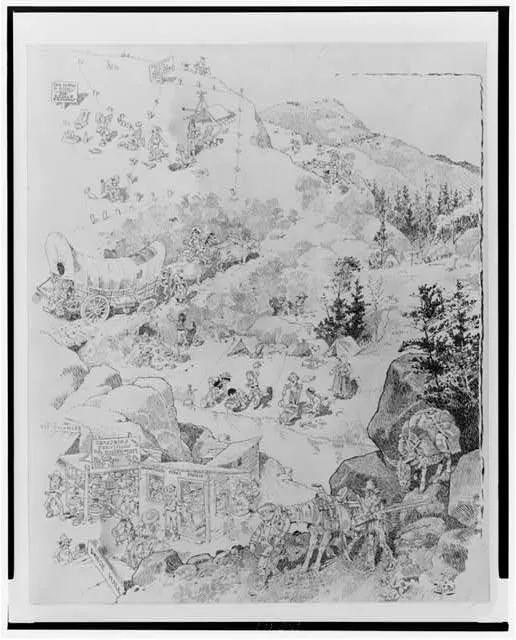
"49ers" Source: Library of Congress - Crawford, Will, 1869-1944
The California Forty-Niners were people who rushed to California in 1849 to search for gold. In January 1848, gold was found at Sutter’s Mill in northern California. News spread quickly across the United States and around the world. By the next year, thousands of people left their homes and traveled to California, hoping to become rich.
The journey to California was long and dangerous. Some people traveled across the country in covered wagons. Others took ships around South America or crossed the jungles of Panama. They faced harsh weather, sickness, and rough roads. Many people did not reach California, but those who did were full of hope and excitement.
The people who went to California in 1849 were called “Forty-Niners.” They came from all over the world. People came from the United States, Mexico, South America, Europe, Asia, and even Australia. This made California a place with many different cultures and languages. The Forty-Niners worked hard, using picks, shovels, and gold pans to search for gold in rivers and streams.
Mining for gold was hard work. Most Forty-Niners did not find much gold, but some became very rich. Many set up camps and small towns near rivers. These towns grew quickly as more people arrived. Stores, hotels, and banks opened to help the new settlers. Some people made more money selling supplies than searching for gold.
The California Gold Rush changed the state forever. The population grew rapidly, and new cities like San Francisco became busy centers for trade and business. The Gold Rush also brought people from many backgrounds together. Even though life was hard, people helped each other and built new communities. The dream of finding gold brought hope, but it was the hard work and bravery of the Forty-Niners that helped shape California’s future.
Interesting Fact: Levi Strauss, who invented blue jeans, first sold his pants to Forty-Niners who needed strong clothes for mining.
When did the Gold Rush start?
1849177618611800
Where was gold first found?
San FranciscoSutter's MillSacramentoLos Angeles
Who were called Forty-Niners?
People who found goldGold seekers in 1849Miners from MexicoNative people
Why did people move to California?
To find goldTo farm wheatTo see familyTo escape war
What was one challenge the Forty-Niners faced?
Bad weatherToo much foodShort tripsEasy travel
How did the Gold Rush change California?
Fewer people lived thereCities and towns grewLess businessNo new stores
True or False: Most miners became rich.
TrueFalse
What does "diverse" mean in the passage?
Many kindsOnly oneVery smallNot important
Perfect For:
👩🏫 Teachers
• Reading comprehension practice
• Auto-graded assessments
• Literacy skill development
👨👩👧👦 Parents
• Reading practice at home
• Comprehension improvement
• Educational reading time
🏠 Homeschoolers
• Reading curriculum support
• Independent reading practice
• Progress monitoring
Reading Features:
📖
Reading Passage
Engaging fiction or nonfiction text
❓
Comprehension Quiz
Auto-graded questions
📊
Instant Feedback
Immediate results and scoring
📄
Printable Version
Download for offline reading
🔊
Read Aloud
Voice-over with word highlighting
Reviews & Ratings
No reviews yet. Be the first to share your experience!
Related Content
Native American Tribes Across America
This engaging history reading passage introduces students to Native American tribes across America, focusing on their da...
D2.HIS.1.3-5D2.HIS.2.3-5RI.4.1RI.4.2
Teepees: Homes on the Great Plains
This engaging history reading passage introduces students to teepees, the unique homes of Native American tribes on the ...
D2.HIS.2.3-5D2.HIS.14.3-5RI.4.1RI.4.2RI.4.4
Traditional Native American Clothing
This engaging history passage explores traditional Native American clothing and how it reflected the environment, values...
D2.HIS.2.3-5D2.HIS.3.3-5RI.4.3RI.4.4
The Iroquois Confederacy: A System of Peace
This engaging U.S. History reading passage introduces students to the Iroquois Confederacy, a powerful alliance of Nativ...
D2.HIS.2.3-5D2.HIS.3.3-5RI.4.3RI.4.4
The Cherokee Nation: History and Culture
This reading passage explores the rich history and culture of the Cherokee Nation, one of the largest Native American tr...
D2.HIS.2.3-5D2.HIS.14.3-5RI.4.3RI.4.4RI.4.10
The Sioux: Warriors and Tribal Leaders
This history reading passage explores the Sioux Nation, focusing on their roles as warriors and tribal leaders. Students...
D2.HIS.1.3-5D2.HIS.2.3-5RI.4.1RI.4.3
Native American Respect for Nature
This engaging history reading passage explores Native American respect for nature, emphasizing the close relationship be...
D2.HIS.2.3-5D2.HIS.3.3-5RI.4.3RI.4.4
Jamestown: The First Permanent English Colony
This engaging history passage explores the founding of Jamestown, the first permanent English colony in America. Aligned...
D2.HIS.1.3-5D2.HIS.2.3-5RI.4.3RI.4.4
Pocahontas and the Powhatan People
This engaging reading passage explores the life of Pocahontas and the Powhatan people and their important role in early ...
D2.HIS.1.3-5D2.HIS.2.3-5RI.4.1RI.4.3
Colonial Children: School and Chores
This reading passage explores the daily lives of colonial children, focusing on their experiences at school and their ma...
D2.HIS.2.3-5D2.HIS.3.3-5RI.4.1RI.4.2RI.4.4
Colonial Clothing and Homemade Goods
This engaging U.S. history passage explores the daily life of early American colonists with a focus on colonial clothing...
D2.HIS.2.3-5RI.4.3RI.4.4
Colonial Jobs: Blacksmiths, Bakers, and Craftsmen
This engaging history reading passage explores the vital roles of blacksmiths, bakers, and craftsmen in colonial America...
D2.HIS.2.3-5D2.HIS.3.3-5RI.4.3RI.4.4
Colonial Towns and Village Life
This engaging history reading passage explores the daily life, work, and unity found in colonial towns and villages. Ali...
D2.HIS.1.3-5D2.HIS.2.3-5RI.4.3RI.4.4
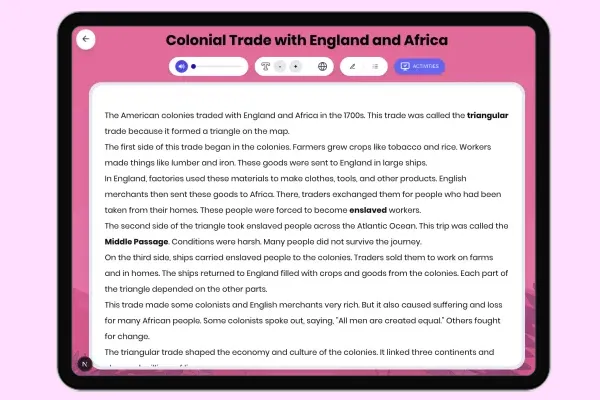
Colonial Trade with England and Africa
This history reading passage explores colonial trade between the American colonies, England, and Africa, focusing on the...
D2.HIS.2.3-5D2.HIS.14.3-5RI.4.3RI.4.4
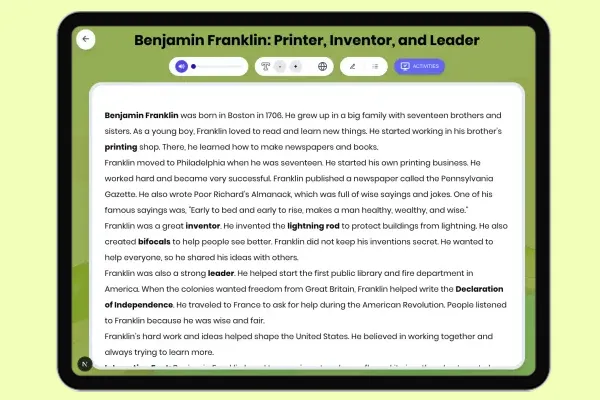
Benjamin Franklin: Printer, Inventor, and Leader
This history reading passage explores the life and achievements of Benjamin Franklin, one of America's most important ea...
D2.HIS.2.3-5D2.HIS.3.3-5RI.4.1RI.4.3
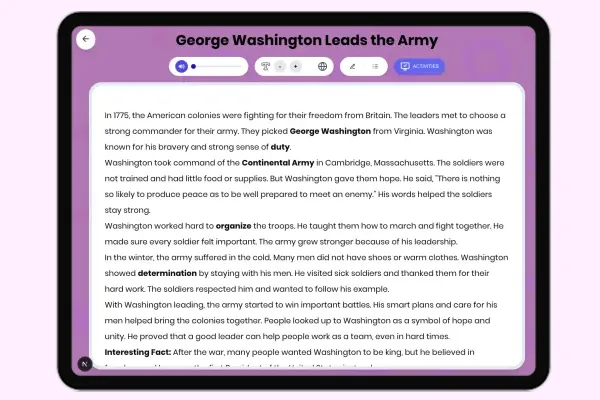
George Washington Leads the Army
This engaging history reading passage explores how George Washington bravely led the Continental Army during the America...
D2.HIS.1.3-5D2.HIS.2.3-5RI.4.3RI.4.4
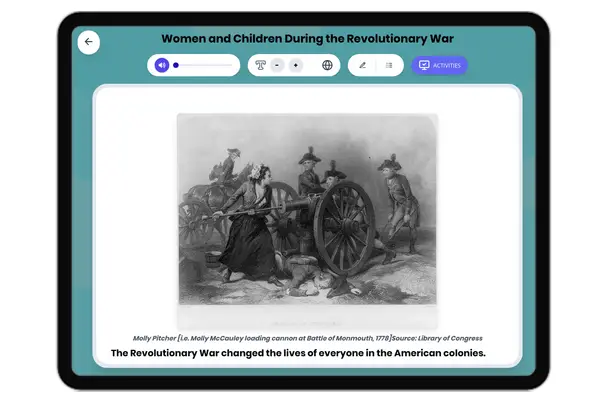
Women and Children During the Revolutionary War
This reading passage explores the important roles women and children played during the Revolutionary War. Students will ...
D2.HIS.2.3-5RI.4.3RI.5.3
African Americans Fight for Freedom
This educational passage explores the brave and inspiring story of how African Americans fought for freedom in the Unite...
D2.HIS.2.3-5D2.HIS.3.3-5RI.4.3RI.4.4
The Battle of Yorktown Ends War
This engaging U.S. history reading passage explores the Battle of Yorktown, a key event that ended the American Revoluti...
D2.HIS.1.3-5D2.HIS.2.3-5RI.4.1RI.4.3
Loyalists vs. Patriots: Divided Families
This engaging U.S. history reading passage explores the division between Loyalists and Patriots during the American Revo...