The Great Depression: Hard Times
Interactive passage with audio narration, comprehension questions, and printable PDF.
By completing this purchase you agree to our Terms of Use and Privacy Policy. Your subscription renews automatically until you cancel. You can cancel anytime from your account settings. All sales are final and non-refundable. Digital content is available for download in your account immediately upon purchase.
What's included
The Great Depression: Hard Times preview and details
About this printable The Great Depression: Hard Times reading passage (Grades 3-5)
Sample passage and quiz from The Great Depression: Hard Times
Reading passage and comprehension quiz preview
Great Depression
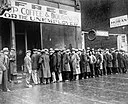
The Great Depression began in the United States in 1929. It was the worst economic crisis in American history. During this time, many people lost their jobs, homes, and savings. Banks failed, businesses closed, and families faced great hardship.
One of the main causes of the Great Depression was the stock market crash in October 1929. People had invested their money in stocks, hoping to become rich. When the stock market crashed, the value of stocks fell quickly. Many people lost all their savings.
Banks did not have enough money to help everyone. When people rushed to take out their money, many banks closed. Without banks to lend money, businesses could not pay their workers. This led to high unemployment, which means many people could not find jobs. Families had little money for food, clothes, or shelter.
Life was especially hard for farmers. Crops failed because of droughts and dust storms in the Midwest, known as the Dust Bowl. Many families left their farms and traveled to other states to find work. Cities built soup kitchens to give food to people in need. Some families lived in tents or makeshift homes called "Hoovervilles."
President Franklin D. Roosevelt became president in 1933. He introduced the "New Deal," a set of programs to help people find work and support their families. The government created jobs building roads, schools, and parks. These programs helped many people survive the toughest years of the Depression.
Even though times were hard, Americans showed bravery and unity. Communities worked together to help one another. People shared what little they had. The Great Depression finally ended when the United States entered World War II in 1941. The war created new jobs in factories and the economy improved.
The Great Depression changed the country. It taught Americans the importance of working together during tough times. It also led to new laws to protect people's money in banks and to support families in need.
Interesting Fact: During the Great Depression, some children wrote letters to the president asking for clothes or food for their families.
Comprehension quiz (8 questions)
1. When did the Great Depression begin?
2. Who was president during the New Deal?
3. What was the Dust Bowl?
4. Why did banks close?
5. What was one effect of unemployment?
6. How did Americans show unity?
7. The Great Depression ended with World War II. True or false?
8. What is a 'soup kitchen'?
Common Core standards for The Great Depression: Hard Times
Explain events, procedures, ideas, or concepts in a historical, scientific, or technical text, including what happened and why, based on specific information in the text.
Determine the meaning of general academic and domain-specific words or phrases in a text relevant to a grade 4 topic or subject area.
Explain the relationships or interactions between two or more individuals, events, ideas, or concepts in a historical, scientific, or technical text based on specific information in the text.
Determine the meaning of general academic and domain-specific words and phrases in a text relevant to a grade 5 topic or subject area.
Perfect for the way you teach
- Build comprehension skills
- Auto-graded quiz
- Differentiated reading
- Read together at home
- Improve fluency
- Quiet reading time
- Reading curriculum support
- Independent practice
- Track Lexile growth