The Mills and Ironworks of the Middle Colonies
Interactive passage with audio narration, comprehension questions, and printable PDF.
By completing this purchase you agree to our Terms of Use and Privacy Policy. Your subscription renews automatically until you cancel. You can cancel anytime from your account settings. All sales are final and non-refundable. Digital content is available for download in your account immediately upon purchase.
What's included
Part of this bundle

The Mills and Ironworks of the Middle Colonies preview and details
About this printable The Mills and Ironworks of the Middle Colonies reading passage (Grades 3-5)
Sample passage and quiz from The Mills and Ironworks of the Middle Colonies
Reading passage and comprehension quiz preview
Middle Colonies Industry
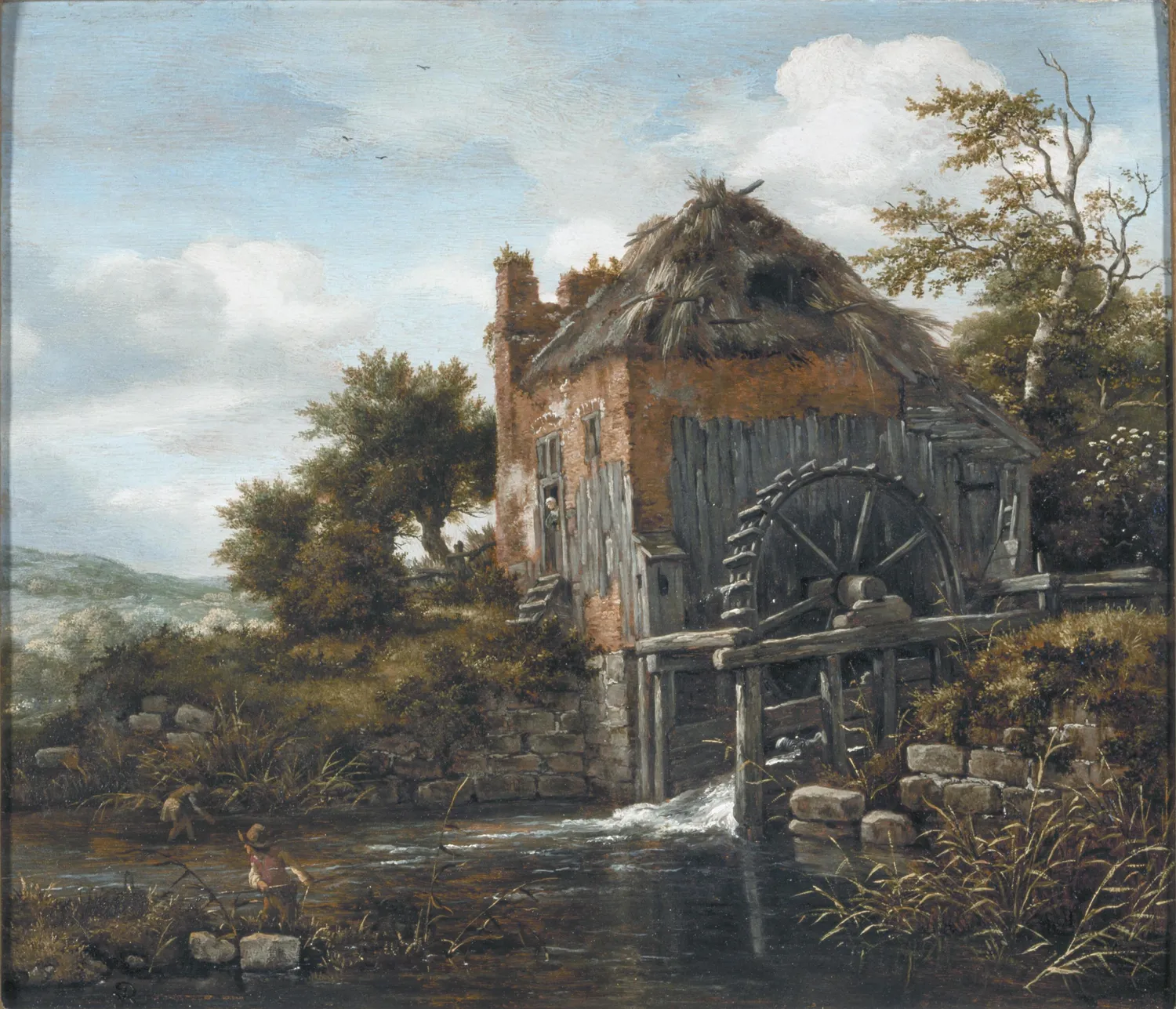
"Water mill near a farm" by Jacob van Ruisdael / Wikimedia Commons.
The Middle Colonies became centers of manufacturing during colonial times. Colonists in places like Pennsylvania, New York, New Jersey, and Delaware found many natural resources in their land. Thick forests gave them wood. Rivers and waterfalls offered power. Rich soil grew plenty of wheat and other crops.
People in the Middle Colonies built flour mills near waterfalls. The falling water turned large wooden wheels, called waterwheels. These wheels powered heavy stone grinders inside the mills. Farmers brought their wheat to be ground into flour. The flour was packed in barrels and sold not just in the colonies, but also across the Atlantic Ocean. Middle Colonies flour became famous in Europe and the Caribbean.
Lumber mills also used waterpower. Workers cut down trees from the forests. They floated logs down rivers to the mills. At the mills, waterwheels powered saws that cut the logs into boards. These boards were used to build houses, ships, and furniture. The lumber industry helped towns grow and made trade possible with other colonies and countries.
The Middle Colonies also had important ironworks. Ironworkers used iron ore found in the ground. They heated the ore in large, hot furnaces. The iron was shaped into tools, nails, horseshoes, and pots. These products were needed by farmers, builders, and everyone in the colonies.
Because of these industries, towns and cities grew quickly. Workers moved to these places for jobs. Markets and ports were built for shipping goods. Families earned money by selling flour, lumber, and iron. Trade brought wealth and new people from many backgrounds.
Waterfalls and rivers were very important. Without waterpower, the mills and ironworks would not have worked. The natural resources and the hard work of the colonists made the Middle Colonies strong and successful. The products made here traveled far across the world and helped the colonies connect with other countries.
Manufacturing in the Middle Colonies was a result of using what nature provided and finding smart ways to solve problems. The teamwork of people, the power of water, and the rich land helped these colonies grow into important economic centers.
Interesting Fact: Some flour mills in the Middle Colonies could grind more than 100 barrels of flour in a single day!
Comprehension quiz (8 questions)
1. What powered the mills?
2. What did lumber mills produce?
3. Which colonies are included in the Middle Colonies?
4. Why did towns grow near mills?
5. How did the ironworks help colonists?
6. What was one result of trade?
7. Flour mills could grind over 100 barrels daily. True or false?
8. What is manufacturing?
Common Core standards for The Mills and Ironworks of the Middle Colonies
Explain events, procedures, ideas, or concepts in a historical, scientific, or technical text, including what happened and why, based on specific information in the text.
Determine the meaning of general academic and domain-specific words or phrases in a text relevant to a grade 4 topic or subject area.
Write informative/explanatory texts to examine a topic and convey ideas and information clearly.
Perfect for the way you teach
- Build comprehension skills
- Auto-graded quiz
- Differentiated reading
- Read together at home
- Improve fluency
- Quiet reading time
- Reading curriculum support
- Independent practice
- Track Lexile growth