The New England Colonies: An Introduction
Interactive passage with audio narration, comprehension questions, and printable PDF.
By completing this purchase you agree to our Terms of Use and Privacy Policy. Your subscription renews automatically until you cancel. You can cancel anytime from your account settings. All sales are final and non-refundable. Digital content is available for download in your account immediately upon purchase.
What's included
Part of this bundle

The New England Colonies: An Introduction preview and details
About this printable The New England Colonies: An Introduction reading passage (Grades 3-5)
Sample passage and quiz from The New England Colonies: An Introduction
Reading passage and comprehension quiz preview
New England Colonies
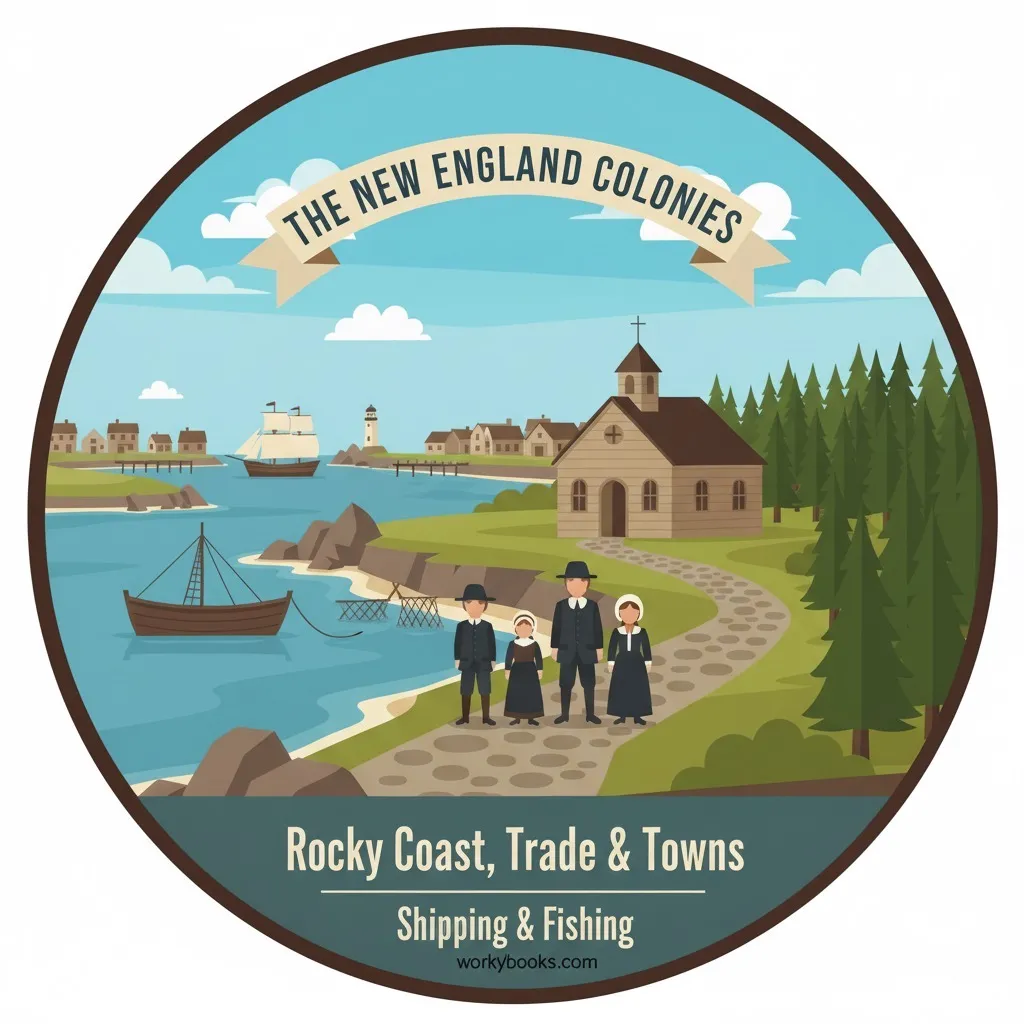
The New England Colonies were Massachusetts, Connecticut, Rhode Island, and New Hampshire. These colonies were started in the early 1600s by a group called the Puritans. The Puritans wanted to practice their own religion in peace. In England, they were not allowed to worship as they wished. They decided to cross the Atlantic Ocean for a new life.
The journey to North America was long and dangerous. The Puritans sailed in small ships, facing storms and cold weather. When they arrived in the Northeast, they found thick forests, rocky soil, and cold winters. Life was hard, but the Puritans worked together. They built villages with meetinghouses at the center. The meetinghouse was used for church and important town meetings.
Each New England colony had its own beginning. Massachusetts was started by the Puritans in 1620 and 1630. Connecticut and Rhode Island were formed soon after. Leaders like Thomas Hooker and Roger Williams left Massachusetts to start new colonies with more freedom. New Hampshire was settled by people who wanted new opportunities. All four colonies had strong communities that valued hard work, learning, and religion.
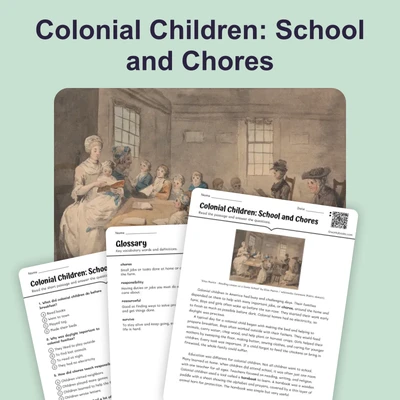
The New England Colonies had small farms and fished in the Atlantic Ocean. They cut down trees to build homes and ships. The forests and sea gave them food and supplies. People helped each other in daily life. Children went to school to learn reading and writing, often using the Bible as a textbook. Everyone was expected to obey the laws of the colony and respect their neighbors.
Religious freedom was very important to the New England Colonists. They believed in worshipping as they chose. However, they also wanted their towns to follow strict rules. Sometimes, people who did not agree with the Puritan leaders left and started new towns. Over time, this led to more freedom and new ideas in the region.
The New England Colonies became known for their close-knit communities and strong values. They faced many challenges but worked together to survive. Their ideas about freedom and self-government helped shape the future of the United States.
Interesting Fact: The first public school in America was started in Boston, Massachusetts, in 1635 to teach children reading and writing.
Comprehension quiz (8 questions)
1. Which colony was started first?
2. Who were the Puritans?
3. What did the meetinghouse serve as?
4. Why did some leaders leave Massachusetts?
5. How did the colonies get food and supplies?
6. Why were close communities important?
7. Puritans wanted to worship in their own way.
8. What is a colony?
Common Core standards for The New England Colonies: An Introduction
Explain events, procedures, ideas, or concepts in a historical, scientific, or technical text, including what happened and why, based on specific information in the text.
Determine the meaning of general academic and domain-specific words or phrases in a text relevant to a grade 4 topic or subject area.
Write informative/explanatory texts to examine a topic and convey ideas and information clearly.
Perfect for the way you teach
- Build comprehension skills
- Auto-graded quiz
- Differentiated reading
- Read together at home
- Improve fluency
- Quiet reading time
- Reading curriculum support
- Independent practice
- Track Lexile growth