This learning resource is available in interactive and printable formats. The interactive worksheet can be played online and assigned to students. The Printable PDF version can be downloaded and printed for completion by hand.
This engaging U.S. history reading passage introduces students to the Age of Exploration and the intense race for riches among European nations. The story follows explorers from Spain, England, and France as they set out to find gold, land, and new trade routes in North America, and explores their interactions with Native American peoples. Students learn about the motivations, challenges, and early encounters that shaped American history. The passage includes a clear timeline, glossary, and multiple-choice questions to build historical understanding and literacy skills. Aligned to C3 Framework and Common Core standards, this resource also offers a Spanish translation, read aloud audio, and writing activities to deepen analysis. Ideal for classroom or independent learning, this passage helps students connect past events to present-day America and gain key vocabulary for understanding U.S. history.
CONTENT PREVIEW
Expand content preview
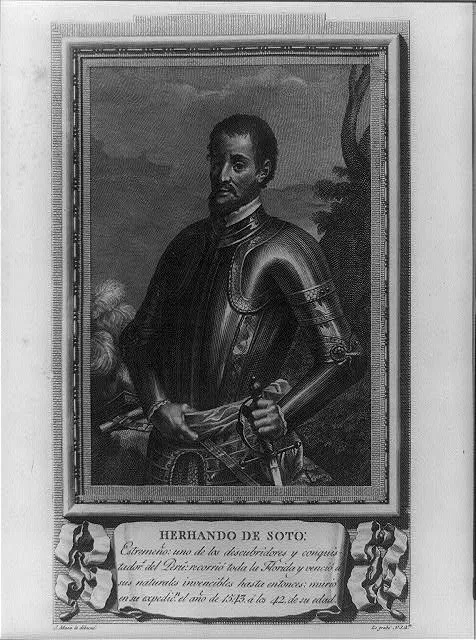
Hernando De Soto. Source: Library of Congress
Gold and other riches drove many European explorers to cross the ocean to the Americas. In the 15th and 16th centuries, kings and queens of Europe wanted to find new sources of wealth. They believed that gold, silver, and spices could make their countries powerful. Sailors and adventurers hoped to become rich and famous by discovering new lands.
The search for treasure was dangerous. Many people in Europe believed that monsters lived in the unknown seas. Maps were not accurate, and storms could wreck ships. Despite the risks, men like Christopher Columbus, Hernán Cortés, and Francisco Pizarro set sail. They carried hopes of finding gold and spices. Their journeys were possible because of new technology, like stronger ships and better navigation tools.
When the explorers arrived, they met many Native American peoples who had lived in the Americas for thousands of years. Some Native Americans traded with the newcomers, offering food and help. However, the search for riches often led to fighting. Explorers wanted gold and land. This caused conflict with Native Americans who wanted to protect their homes. Many explorers took gold and silver from Native people. This changed life for Native Americans in many ways.
Spanish explorers especially wanted to claim land and gather resources. They built forts and missions. They forced many Native Americans to work in gold and silver mines. New settlements grew, and European diseases spread, making many Native Americans sick. Over time, the explorers found less gold than they hoped, but they claimed large areas for their countries. Trade grew between the Americas and Europe, bringing new foods and animals to both lands.
The search for gold and wealth was a main reason for European exploration. These journeys changed the world. They brought new ideas, goods, and people together, but also caused problems and hardship for Native Americans. The promise of riches made people brave, but it also had lasting effects on the land and the people who lived there first.
Interesting Fact: Some explorers believed there was a city of gold called “El Dorado,” but no one ever found it!
Why did European explorers travel to the Americas?
To find gold and wealthTo visit familyTo relax on beachesTo escape bad weather
Who were the Native Americans?
First people in the AmericasEuropean kingsSpanish explorersSailors from Asia
What did explorers hope to find?
Gold and spicesDinosaursMount EverestFast cars
How did explorers get to the Americas?
By sailing shipsBy airplaneBy trainBy walking
What happened after explorers arrived?
They met Native AmericansThey found only monstersThey built pyramidsThey went home
Why was the search for gold dangerous?
Unknown seas and stormsToo many partiesNot enough foodFriendly monsters
Explorers found a city of gold. True or False?
TrueFalse
What is the meaning of 'resources'?
Things people useA type of foodA kind of shipA map
Perfect For:
👩🏫 Teachers
• Reading comprehension practice
• Auto-graded assessments
• Literacy skill development
👨👩👧👦 Parents
• Reading practice at home
• Comprehension improvement
• Educational reading time
🏠 Homeschoolers
• Reading curriculum support
• Independent reading practice
• Progress monitoring
Reading Features:
📖
Reading Passage
Engaging fiction or nonfiction text
❓
Comprehension Quiz
Auto-graded questions
📊
Instant Feedback
Immediate results and scoring
📄
Printable Version
Download for offline reading
🔊
Read Aloud
Voice-over with word highlighting
Reviews & Ratings
No reviews yet. Be the first to share your experience!
Related Content
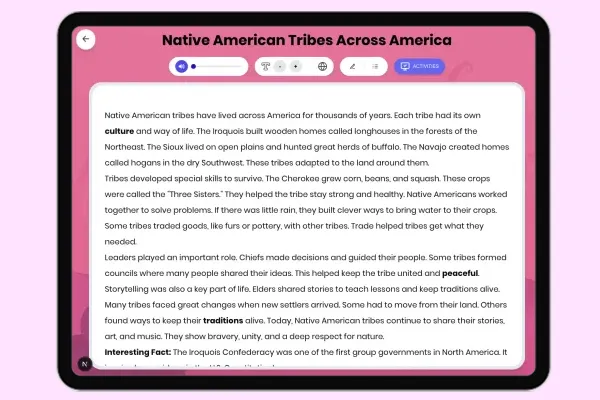
Native American Tribes Across America
This engaging history reading passage introduces students to Native American tribes across America, focusing on their da...
D2.HIS.1.3-5D2.HIS.2.3-5RI.4.1RI.4.2
Teepees: Homes on the Great Plains
This engaging history reading passage introduces students to teepees, the unique homes of Native American tribes on the ...
D2.HIS.2.3-5D2.HIS.14.3-5RI.4.1RI.4.2RI.4.4
Traditional Native American Clothing
This engaging history passage explores traditional Native American clothing and how it reflected the environment, values...
D2.HIS.2.3-5D2.HIS.3.3-5RI.4.3RI.4.4
The Iroquois Confederacy: A System of Peace
This engaging U.S. History reading passage introduces students to the Iroquois Confederacy, a powerful alliance of Nativ...
D2.HIS.2.3-5D2.HIS.3.3-5RI.4.3RI.4.4
The Cherokee Nation: History and Culture
This reading passage explores the rich history and culture of the Cherokee Nation, one of the largest Native American tr...
D2.HIS.2.3-5D2.HIS.14.3-5RI.4.3RI.4.4RI.4.10
The Sioux: Warriors and Tribal Leaders
This history reading passage explores the Sioux Nation, focusing on their roles as warriors and tribal leaders. Students...
D2.HIS.1.3-5D2.HIS.2.3-5RI.4.1RI.4.3
Native American Respect for Nature
This engaging history reading passage explores Native American respect for nature, emphasizing the close relationship be...
D2.HIS.2.3-5D2.HIS.3.3-5RI.4.3RI.4.4
Jamestown: The First Permanent English Colony
This engaging history passage explores the founding of Jamestown, the first permanent English colony in America. Aligned...
D2.HIS.1.3-5D2.HIS.2.3-5RI.4.3RI.4.4
Pocahontas and the Powhatan People
This engaging reading passage explores the life of Pocahontas and the Powhatan people and their important role in early ...
D2.HIS.1.3-5D2.HIS.2.3-5RI.4.1RI.4.3
Colonial Children: School and Chores
This reading passage explores the daily lives of colonial children, focusing on their experiences at school and their ma...
D2.HIS.2.3-5D2.HIS.3.3-5RI.4.1RI.4.2RI.4.4
Colonial Clothing and Homemade Goods
This engaging U.S. history passage explores the daily life of early American colonists with a focus on colonial clothing...
D2.HIS.2.3-5RI.4.3RI.4.4
Colonial Jobs: Blacksmiths, Bakers, and Craftsmen
This engaging history reading passage explores the vital roles of blacksmiths, bakers, and craftsmen in colonial America...
D2.HIS.2.3-5D2.HIS.3.3-5RI.4.3RI.4.4
Colonial Towns and Village Life
This engaging history reading passage explores the daily life, work, and unity found in colonial towns and villages. Ali...
D2.HIS.1.3-5D2.HIS.2.3-5RI.4.3RI.4.4
Colonial Trade with England and Africa
This history reading passage explores colonial trade between the American colonies, England, and Africa, focusing on the...
D2.HIS.2.3-5D2.HIS.14.3-5RI.4.3RI.4.4
Benjamin Franklin: Printer, Inventor, and Leader
This history reading passage explores the life and achievements of Benjamin Franklin, one of America's most important ea...
D2.HIS.2.3-5D2.HIS.3.3-5RI.4.1RI.4.3
George Washington Leads the Army
This engaging history reading passage explores how George Washington bravely led the Continental Army during the America...
D2.HIS.1.3-5D2.HIS.2.3-5RI.4.3RI.4.4
Women and Children During the Revolutionary War
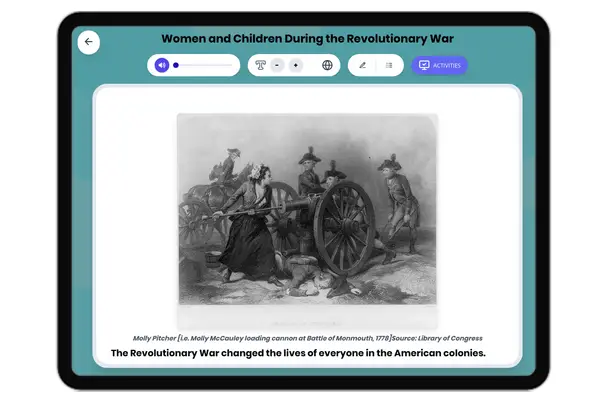
This reading passage explores the important roles women and children played during the Revolutionary War. Students will ...
D2.HIS.2.3-5RI.4.3RI.5.3
African Americans Fight for Freedom
This educational passage explores the brave and inspiring story of how African Americans fought for freedom in the Unite...
D2.HIS.2.3-5D2.HIS.3.3-5RI.4.3RI.4.4
The Battle of Yorktown Ends War
This engaging U.S. history reading passage explores the Battle of Yorktown, a key event that ended the American Revoluti...
D2.HIS.1.3-5D2.HIS.2.3-5RI.4.1RI.4.3
Loyalists vs. Patriots: Divided Families
This engaging U.S. history reading passage explores the division between Loyalists and Patriots during the American Revo...