This learning resource is available in interactive and printable formats. The interactive worksheet can be played online and assigned to students. The Printable PDF version can be downloaded and printed for completion by hand.
This passage provides a comprehensive explanation of the rock cycle for middle school students, aligned to NGSS standard MS-ESS2-1. Students will learn how rocks change from one type to another—igneous, sedimentary, and metamorphic—through processes like weathering and erosion, heat and pressure, melting, and cooling. The passage highlights the energy sources driving these changes, including solar energy and Earth's internal heat, and explains how the rock cycle is connected to plate tectonics. Real-world examples and applications show how the rock cycle shapes landscapes and impacts human society. Key vocabulary is embedded and explained, and the passage is supported by a glossary, reading comprehension questions, writing activities, and graphic organizers. Spanish translations and a differentiated, simpler version make this resource accessible for all learners. Audio integration is included to support diverse learning needs.
CONTENT PREVIEW
Expand content preview
The Rock Cycle
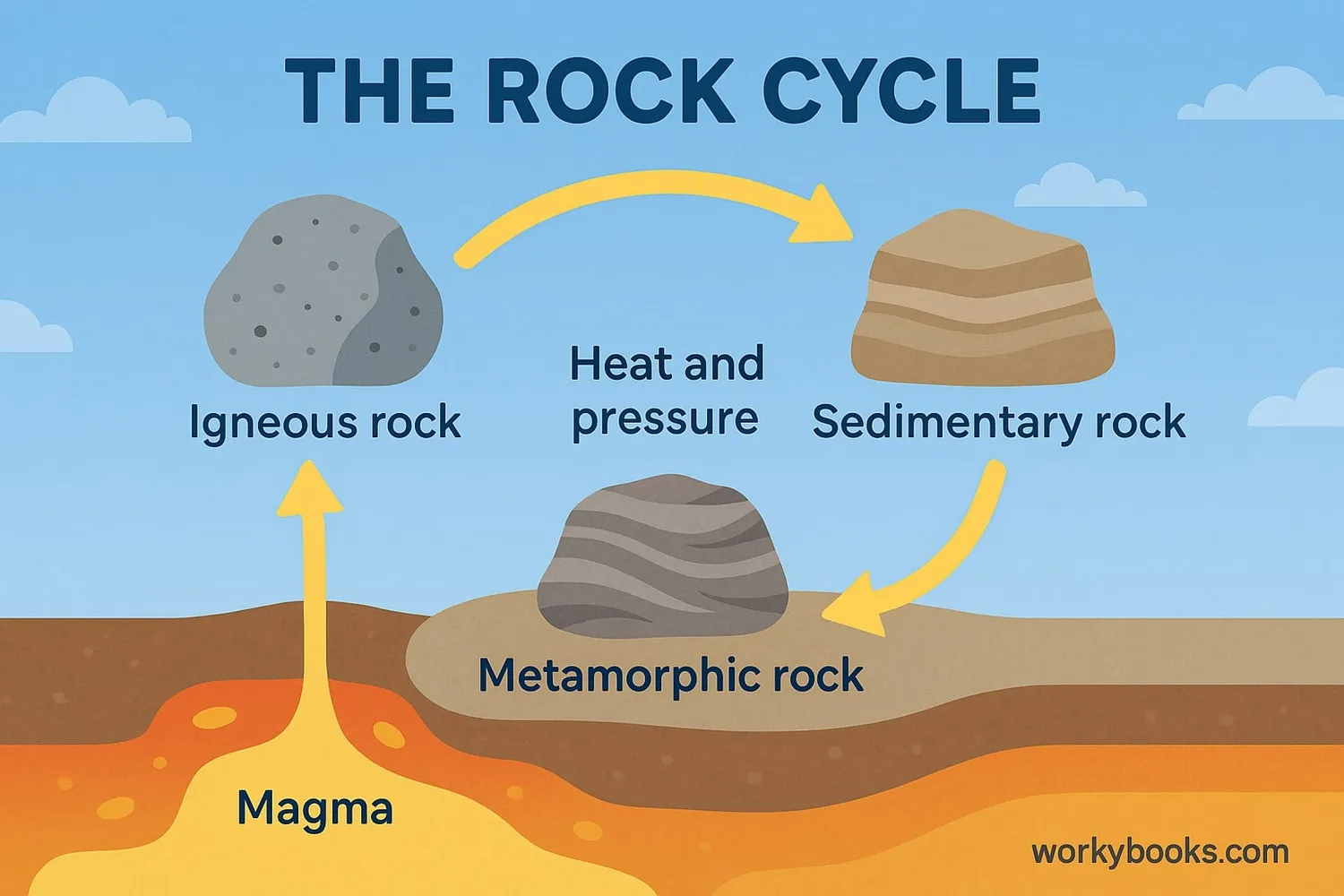
The surfaces of continents and ocean floors are made of rocks that are constantly changing. The rock cycle is the set of natural processes that transform rocks from one type to another over millions of years. This cycle is important because it shapes Earth's surface and recycles materials. Scientists study the rock cycle to understand how landscapes form and how Earth's materials are reused.
How Rocks Change: Processes in the Rock Cycle
The rock cycle begins with three main types of rocks: igneous, sedimentary, and metamorphic. Each type can become another through specific processes. Igneous rocks form when melted rock, called magma, cools and solidifies—this can happen deep underground or at the surface after a volcanic eruption. Over time, weathering and erosion caused by wind, water, and ice break down rocks into small pieces called sediments. These sediments are carried away and deposited in layers. When the layers are pressed together and hardened, they become sedimentary rocks.
If sedimentary or igneous rocks are buried deep within the Earth, intense heat and pressure can change their structure, forming metamorphic rocks. If rocks melt completely from high temperatures, they turn into magma again and, once cooled, will form new igneous rocks. This cycle can take millions of years, and any rock type can eventually become another, following different pathways each time. Uplift caused by plate tectonics can bring rocks back to the surface, exposing them to weathering once more.
Energy Sources and Earth's Systems
The rock cycle is powered by energy from two main sources. The sun provides energy for weathering and erosion at Earth's surface, while Earth's internal heat drives melting, pressure, and tectonic activity below ground. For example, about 70% of Earth's surface is shaped by weathering and erosion from rainfall and rivers, processes driven by solar energy. Meanwhile, Earth's internal heat creates movements in the crust, causing rocks to melt and mountains to form. Plate tectonics, the movement of Earth's plates, is a key force that uplifts rocks, creates volcanoes, and recycles Earth's crust over time.
Real-World Examples and Applications
One example of the rock cycle in action is the formation of the Himalayas, where tectonic plates collide and force rocks upward, exposing them to weathering. In coastal regions, sedimentary rocks can be formed from sand deposited by rivers and compacted over thousands of years. Understanding the rock cycle helps engineers find resources like minerals and fossil fuels, and allows scientists to predict natural hazards such as landslides or volcanic eruptions.
The rock cycle demonstrates how Earth's materials are always moving and changing. This ongoing process connects to larger scientific principles such as conservation of matter and the dynamic nature of Earth's systems. By studying the rock cycle, we gain insight into our planet's past, present, and future.
Interesting Fact: Some rocks found on Earth's surface today are over 4 billion years old, making them among the oldest materials on the planet.
What is the main purpose of the rock cycle?
To explain how rocks change from one type to another over timeTo show how animals survive in different habitatsTo describe the water cycle on EarthTo explain why the sun produces energy
Which process turns sediments into sedimentary rock?
Melting and coolingCompaction and cementationEvaporation and condensationPhotosynthesis
What type of rock forms when magma cools and solidifies?
SedimentaryIgneousMetamorphicOrganic
In the passage, what does the term 'sediments' mean?
Melted rock deep undergroundSmall particles of rock, sand, or mineralsA type of living organismA process that forms volcanoes
What is 'plate tectonics' as used in the passage?
The process that breaks down rocks at the surfaceThe movement of large sections of Earth's crustThe energy from the sun that causes weatheringThe melting of rocks into magma
How does energy from the sun affect the rock cycle?
It powers weathering and erosion on Earth's surfaceIt causes magma to melt deep undergroundIt creates new minerals in rocksIt directly makes igneous rocks
Why are plate tectonics important in the rock cycle?
They cause rocks to cool fasterThey create volcanoes and uplift rocks to the surfaceThey break down sediments in the oceanThey form living organisms
Which of the following is TRUE based on the passage?
Any rock type can eventually become another rock typeSedimentary rocks never change formThe rock cycle operates only on landRocks always stay the same
The rock cycle operates over millions of years. (True/False)
TrueFalse
Heat and pressure can change sedimentary rocks into metamorphic rocks. (True/False)
TrueFalse
Perfect For:
👩🏫 Teachers
• Reading comprehension practice
• Auto-graded assessments
• Literacy skill development
👨👩👧👦 Parents
• Reading practice at home
• Comprehension improvement
• Educational reading time
🏠 Homeschoolers
• Reading curriculum support
• Independent reading practice
• Progress monitoring
Reading Features:
📖
Reading Passage
Engaging fiction or nonfiction text
❓
Comprehension Quiz
Auto-graded questions
📊
Instant Feedback
Immediate results and scoring
📄
Printable Version
Download for offline reading
🔊
Read Aloud
Voice-over with word highlighting
Reviews & Ratings
No reviews yet. Be the first to share your experience!
Related Content
Talus Slopes: Formation and Features
This earth science passage explains talus slope formation through mechanical weathering processes, aligning with NGSS MS...
MS-ESS2-1MS-ESS2-2RST.6-8.4
Biological Weathering: Types and Examples
This passage details biological weathering processes, connecting to NGSS MS-ESS2-1 (Earth's systems) and LS2.B (ecosyste...
MS-ESS2-1MS-PS1-2RST.6-8.3
Frost Wedging: How Ice Splits Rock
This passage explains frost wedging as a mechanical weathering process. Aligned with NGSS MS-ESS2-1 (Earth’s systems) a...
MS-ESS2-1MS-ESS2-2RST.6-8.3
Chemical Weathering: The Breakdown of Rocks Through Chemical Reactions
This passage explains chemical weathering processes, aligned with NGSS MS-ESS2-1 (Earth’s systems) and ESS2-2 (surface ...
MS-ESS2-1MS-ESS2-2RST.6-8.4
Limestone Caves: Nature’s Underground Wonders
This passage explains limestone cave formation through carbonation, aligned with NGSS MS-ESS2-1 (Earth’s systems) and L...
MS-ESS2-1LS2.CRST.6-8.7
The Coldest City in the World: Yakutsk
This NGSS-aligned science passage introduces middle school readers to Yakutsk, the coldest city on Earth. Students will ...
MS-ESS2-1
Igneous Rocks
This comprehensive passage introduces middle school students to igneous rocks, focusing on how these rocks form from mol...
MS-ESS2-1MS-ESS3-1
Sedimentary Rocks
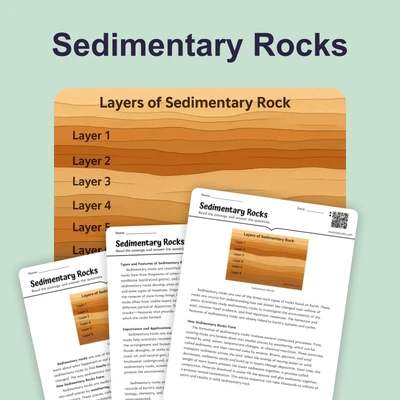
This comprehensive middle school science passage introduces students to sedimentary rocks, detailing their step-by-step ...
MS-ESS2-1MS-ESS2-3MS-ESS3-1
Metamorphic Rocks
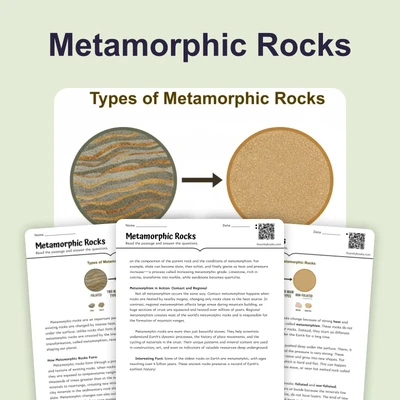
This engaging middle school science passage introduces students to the fascinating world of metamorphic rocks. Aligned w...
MS-ESS2-1MS-ESS3-1
Scientific Inquiry in Earth Science
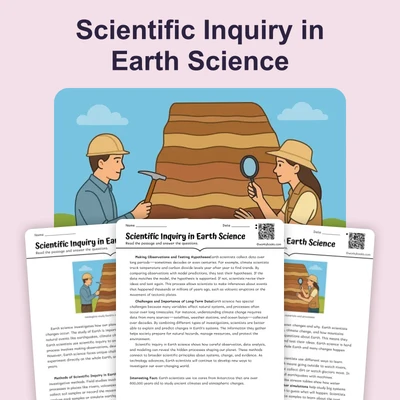
This passage explores scientific inquiry in Earth science for grades 6-8, aligned with NGSS standards MS-ESS1-4, MS-ESS2...
MS-ESS1-4MS-ESS2-1MS-ESS3-5SEP
Contour Lines and Elevation
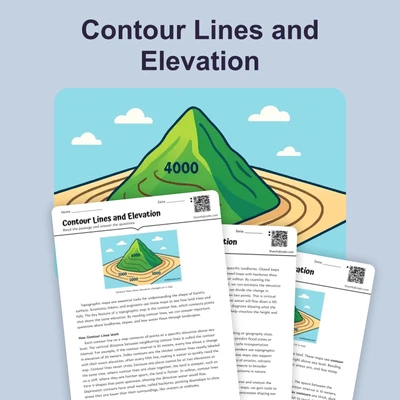
This passage, designed for grades 6-8 and aligned with NGSS standards MS-ESS2-2 and MS-ESS2-1, introduces students to th...
MS-ESS2-2MS-ESS2-1SEP.4SEP.8
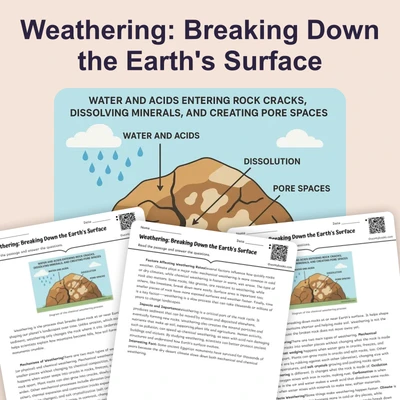
Weathering
This comprehensive science reading passage for grades 6-8 focuses on the concept of weathering, aligning with NGSS stand...
MS-ESS2-1
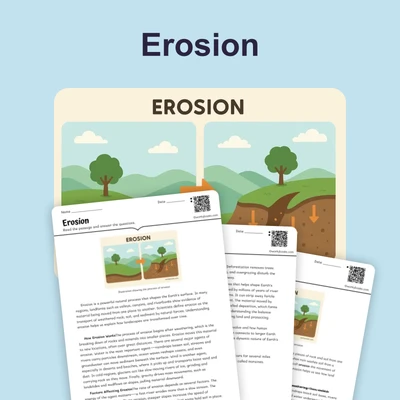
Erosion
This comprehensive middle school science passage explains erosion—the process that transports weathered rock and soil fr...
MS-ESS2-1
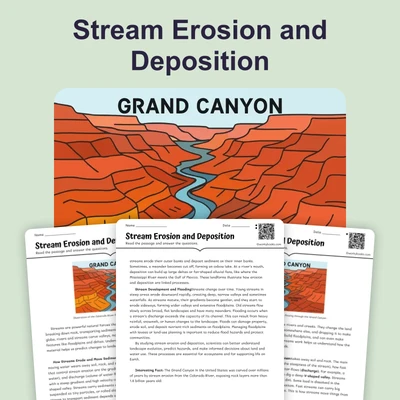
Stream Erosion and Deposition
This middle school science passage, aligned to NGSS MS-ESS2-1, introduces students to the dynamic processes of stream er...
MS-ESS2-1
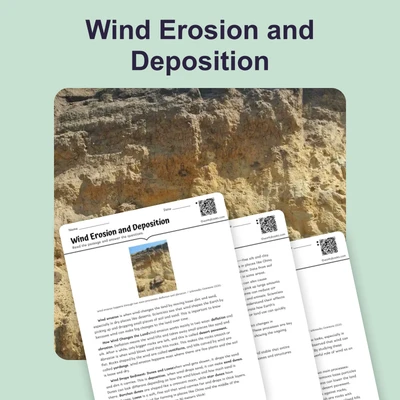
Wind Erosion and Deposition
This comprehensive science reading passage for grades 6-8 explores the processes of wind erosion and deposition, alignin...
MS-ESS2-1
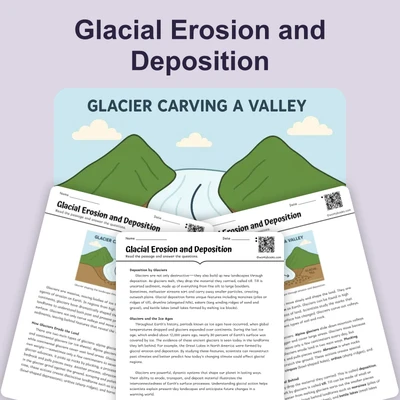
Glacial Erosion and Deposition
This middle school science passage explores glacial erosion and deposition, focusing on the mechanisms by which glaciers...
MS-ESS2-1
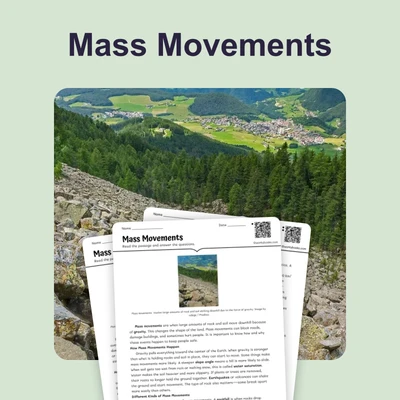
Mass Movements
This NGSS-aligned passage introduces middle school students to the science of mass movements—gravity-driven motions of r...
MS-ESS2-1MS-ESS3-2
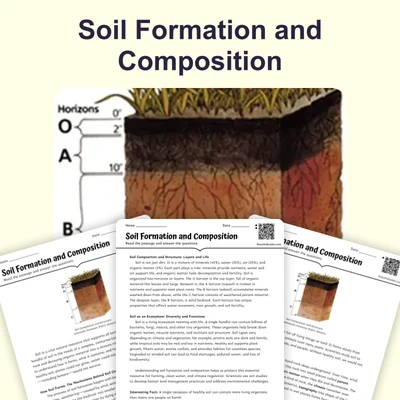
Soil Formation and Composition
This comprehensive middle school science passage explores soil formation and composition, perfectly aligned to NGSS stan...
MS-ESS2-1
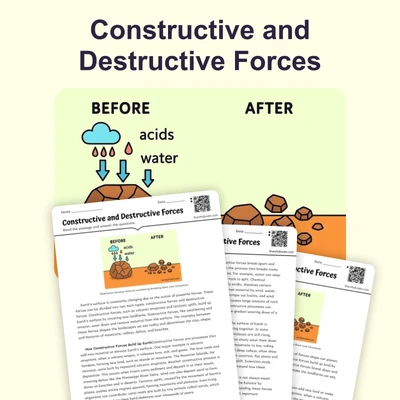
Constructive and Destructive Forces
This middle school science passage explores how Earth's surface is constantly shaped by the interplay of constructive an...
MS-ESS2-1
Mountains and Mountain Building
This NGSS-aligned passage for grades 6-8 covers the fascinating processes that create Earth's highest landforms—mountain...