The Scientific Method in Biology — Reading Comprehension
Rate this
Premium Resource
Present
Present in classroom. No work saved
Assign
Classroom with student accounts, Track progress
Quick Play
No student accounts, assign with a link
Grades
5
6
7
8
Standards
MS-LS1-1
PRINT+DIGITAL RESOURCE
This learning resource is available in interactive and printable formats. The interactive worksheet can be played online and assigned to students. The Printable PDF version can be downloaded and printed for completion by hand.
This passage provides an in-depth look at how the scientific method is applied in biological investigations for students in grades 6-8. Aligned with NGSS standard MS-LS1-1, it covers each step of the scientific process, including observation, hypothesis formation, experimentation, data collection, and analysis. Real-world examples such as plant growth experiments and animal behavior studies are featured, along with a discussion of variables and the importance of controlled experiments. The text also addresses the unique challenges of biological research, such as ethical considerations, organism variability, and timeframes for results. Activities include comprehension questions, writing prompts, and graphic organizers to support diverse learners. This resource is audio integrated, supporting accessibility and multimodal learning. Key science vocabulary is highlighted, and Spanish translations are provided for both the main and simplified texts.
CONTENT PREVIEW
Expand content preview
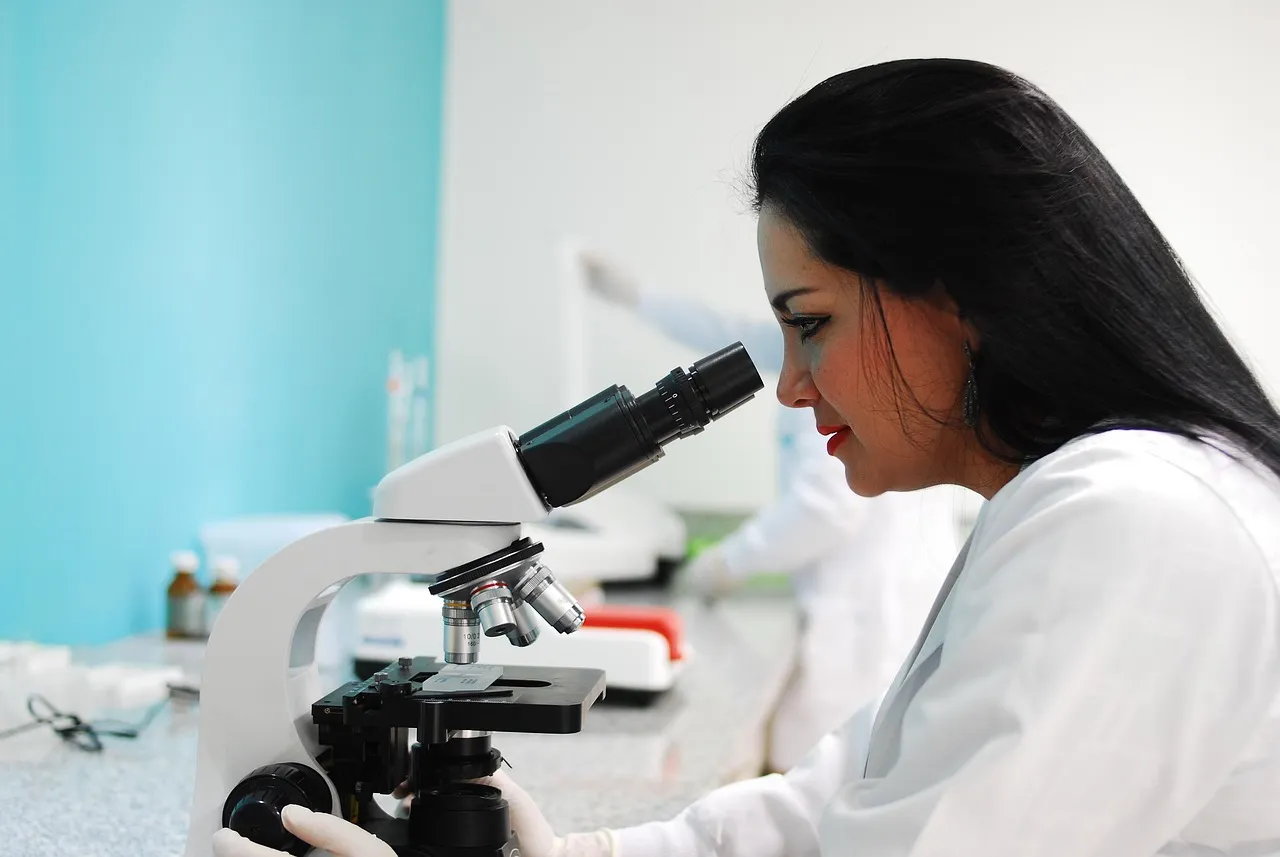
Biology seeks to answer questions about living things using a careful process called the scientific method. Image by fernandozhiminaicela / Pixabay.
Biology seeks to answer questions about living things using a careful process called the scientific method. For example, a scientist may notice that some plants grow taller near a window than others placed farther away. To understand why this happens, scientists follow a series of logical steps: making observations, forming a hypothesis, designing and conducting experiments, collecting and analyzing data, and drawing a conclusion. Applying this process helps ensure discoveries are based on evidence, not just guesses or opinions.
How the Scientific Method Works
The first step is observation—scientists gather information using their senses or tools. For instance, they might measure how fast plants grow under different light conditions. Next, they create a hypothesis: a testable explanation for what they observed. In our plant example, a hypothesis could be, "Plants exposed to more sunlight will grow taller than those given less light." To test the hypothesis, the scientist sets up a controlled experiment where only one variable—the amount of light—is changed, while all other factors like water, soil, and temperature remain constant. This helps ensure that any differences in plant growth are actually caused by light, not something else. Data is collected—usually through measurements or observations—and then analyzed to see if it supports or contradicts the hypothesis.
Applying the Method in Real-World Biology
Biologists use the scientific method to answer questions in many areas, from plant growth to animal behavior. In animal studies, researchers might observe how changes in food availability affect foraging habits in birds. Variables like the type or amount of food offered are carefully controlled. Sometimes, hundreds of animals or plants are observed to account for variability among living things. Data is often organized in tables or graphs to spot patterns and trends. For example, if plants in sunlight grow 25% faster than those in shade, the data provides clear evidence supporting the hypothesis. In some cases, unexpected results lead to new questions and further experiments, showing how science is a continuous, self-correcting process.
Challenges Unique to Biological Research
Studying living organisms brings special challenges. Unlike chemicals in a test tube, living things are highly variable and can change over time. Biological experiments often require large sample sizes and may take weeks, months, or even years to complete. Ethical considerations are important, especially when working with animals or humans. Scientists must design experiments that minimize harm and respect living creatures. Sometimes, natural events like disease or weather can affect results, requiring careful analysis and sometimes repeating experiments.
By following the scientific method, scientists make discoveries that help us understand life’s complexity and solve real-world problems, from improving crop yields to protecting endangered species. This approach is central to how we build new knowledge in biology and connect it to broader scientific principles, like cause and effect in living systems.
Interesting Fact: Some plant experiments, such as studying tree growth, can last for decades or even centuries, with data collected by multiple generations of scientists!
Which of the following is the best example of a hypothesis?
Plants exposed to more sunlight will grow taller than those given less light.All plants need water.Measuring plant height.Graphs show plant growth.
What is the purpose of a controlled experiment?
To change many variables at once.To test the effect of only one variable.To guess the answer.To avoid collecting data.
In the passage, what is the first step of the scientific method?
Drawing a conclusionMaking a hypothesisMaking observationsAnalyzing data
Which step comes after collecting data in the scientific method?
Forming a hypothesisAnalyzing the dataMaking an observationControlling variables
What does the word 'variability' mean in the passage?
The amount of sunlight a plant getsDifferences among living things or resultsA type of scientific toolA prediction about an experiment
What is the meaning of 'ethical considerations' as used in the passage?
The amount of data collectedRules about what is right or wrong in experimentsThe speed of plant growthA kind of experiment
Why do scientists use large sample sizes in biology experiments?
To make results more accurate despite differences among living things.To make the experiment shorter.Because it is easier to work with many subjects.To avoid collecting data.
How might natural events, like weather, impact biological experiments?
They can change results, requiring careful analysis or repeating experiments.They make experiments easier.They always help scientists get the results they want.They have no effect on experiments.
True or False: In a controlled experiment, more than one variable is changed at a time.
TrueFalse
True or False: The scientific method is only used in chemistry, not biology.
TrueFalse
Perfect For:
👩🏫 Teachers
• Reading comprehension practice
• Auto-graded assessments
• Literacy skill development
👨👩👧👦 Parents
• Reading practice at home
• Comprehension improvement
• Educational reading time
🏠 Homeschoolers
• Reading curriculum support
• Independent reading practice
• Progress monitoring
Reading Features:
📖
Reading Passage
Engaging fiction or nonfiction text
❓
Comprehension Quiz
Auto-graded questions
📊
Instant Feedback
Immediate results and scoring
📄
Printable Version
Download for offline reading
🔊
Read Aloud
Voice-over with word highlighting
Reviews & Ratings
No reviews yet. Be the first to share your experience!
Related Content
Antonie van Leeuwenhoek and the Discovery of Animalcules
This NGSS-aligned science passage explores the groundbreaking work of Antonie van Leeuwenhoek, a pioneer in microscopic ...
MS-LS1-1MS-LS1-2
Robert Hooke and the Naming of 'Cells'
This NGSS-aligned reading passage introduces middle school students to Robert Hooke's discovery and naming of 'cells' in...
MS-LS1-1MS-LS1-2
Rudolf Virchow and His Contribution to Cell Theory
This NGSS-aligned science reading passage introduces students to Rudolf Virchow, a key historical figure in cell biology...
MS-LS1-1MS-LS1-2
Matthias Schleiden and the Discovery That Plants Are Made of Cells
This NGSS-aligned science passage explains how Matthias Schleiden, a German scientist in the 1830s, discovered that all ...
MS-LS1-1MS-LS1-2
When Was the Microscope Invented?
This NGSS-aligned reading passage introduces students to the invention of the microscope, an essential scientific tool. ...
MS-LS1-1MS-LS1-2
What are Prokaryotic Cells?
This NGSS-aligned science reading passage explains prokaryotic cells, the simplest type of cells found in single-celled ...
MS-LS1-1MS-LS1-2
What are Eukaryotic Cells?
This NGSS-aligned reading passage introduces middle school students to eukaryotic cells, which are complex cells found i...
MS-LS1-1MS-LS1-2
Prokaryotic vs. Eukaryotic Cells
This NGSS-aligned reading passage helps middle school students compare prokaryotic and eukaryotic cells. Supporting stan...
MS-LS1-1MS-LS1-2
What is an Organelle?
This NGSS-aligned reading passage introduces middle school students to the concept of organelles. Supporting MS-LS1-
MS-LS1-1MS-LS1-2
Chromoplast: Nature's Color Palette
This passage details chromoplast functions in pigment production, ecological signaling, and nutrition. Aligned with NGSS...
MS-LS1-1MS-LS1-2MS-LS1-6LS1.C
Parts of the Cell
This informational science passage, aligned with NGSS standard MS-LS1-1, introduces students to the parts of the cell an...
MS-LS1-1MS-LS1-2
The Nucleolus and Its Function
This NGSS-aligned reading passage focuses on the nucleolus, a key structure inside the cell’s nucleus responsible for ma...
MS-LS1-1MS-LS1-2
Golgi Apparatus and Its Function
This NGSS-aligned reading passage introduces middle school students to the structure and function of the Golgi apparatus...
MS-LS1-1
Is a Platypus a Mammal?
This interactive science reading passage, titled "Is a Platypus a Mammal? The Monotreme Mystery!", delves into the uniqu...
MS-LS1-1
Where Do Platypus Live?
This engaging science reading passage, titled "Where Do Platypus Live? Finding Australia's Elusive Swimmer," explores th...
MS-LS1-1
The Amazing Red Panda
This engaging science reading passage, titled "The Amazing Red Panda: A Fluffy Tree Dweller," introduces students to one...
MS-LS1-1MS-LS4-D
Where Do Red Pandas Live?
This science reading passage, titled "Where Do Red Pandas Live? In the Mountain Forests," explores the specific habitat ...
MS-LS1-1
Przewalski's Horse
This engaging science reading passage, titled "Przewalski's Horse: A Wild Comeback Story," introduces students to the tr...
MS-LS4-DMS-LS1-1
The Quokka
This engaging science reading passage, titled "The Quokka: The Happiest Animal on Earth?", introduces students to one of...
MS-LS4-DMS-LS1-1
The Proboscis Monkey
This interactive science reading passage, titled "The Proboscis Monkey: A Monkey with a Mighty Nose!", introduces studen...