The Space Race to the Moon — Reading Comprehension
Rate this
Premium Resource
Present
Present in classroom. No work saved
Assign
Classroom with student accounts, Track progress
Quick Play
No student accounts, assign with a link
Grades
3
4
5
Standards
D2.HIS.2.3-5
D2.HIS.3.3-5
RI.4.1
RI.4.3
RI.4.4
RI.4.10
PRINT+DIGITAL RESOURCE
This learning resource is available in interactive and printable formats. The interactive worksheet can be played online and assigned to students. The Printable PDF version can be downloaded and printed for completion by hand.
This engaging U.S. history reading passage explores the Space Race to the Moon, highlighting the fierce competition between the United States and the Soviet Union during the Cold War. Students will learn about key events and figures such as President John F. Kennedy, Neil Armstrong, and the Apollo 11 mission. The passage uses clear language, a chronological structure, and grade-appropriate vocabulary to help students understand the significance of the Moon landing in 1969. Included are a glossary of key terms, a timeline, a multiple-choice quiz, and a writing activity. There is also a Spanish translation of the passage, making it accessible for bilingual classrooms. This resource aligns with the C3 Framework for Social Studies and Common Core ELA standards. It is perfect for developing historical thinking, literacy skills, and an appreciation for national achievements in science and exploration. Audio read aloud is available.
CONTENT PREVIEW
Expand content preview
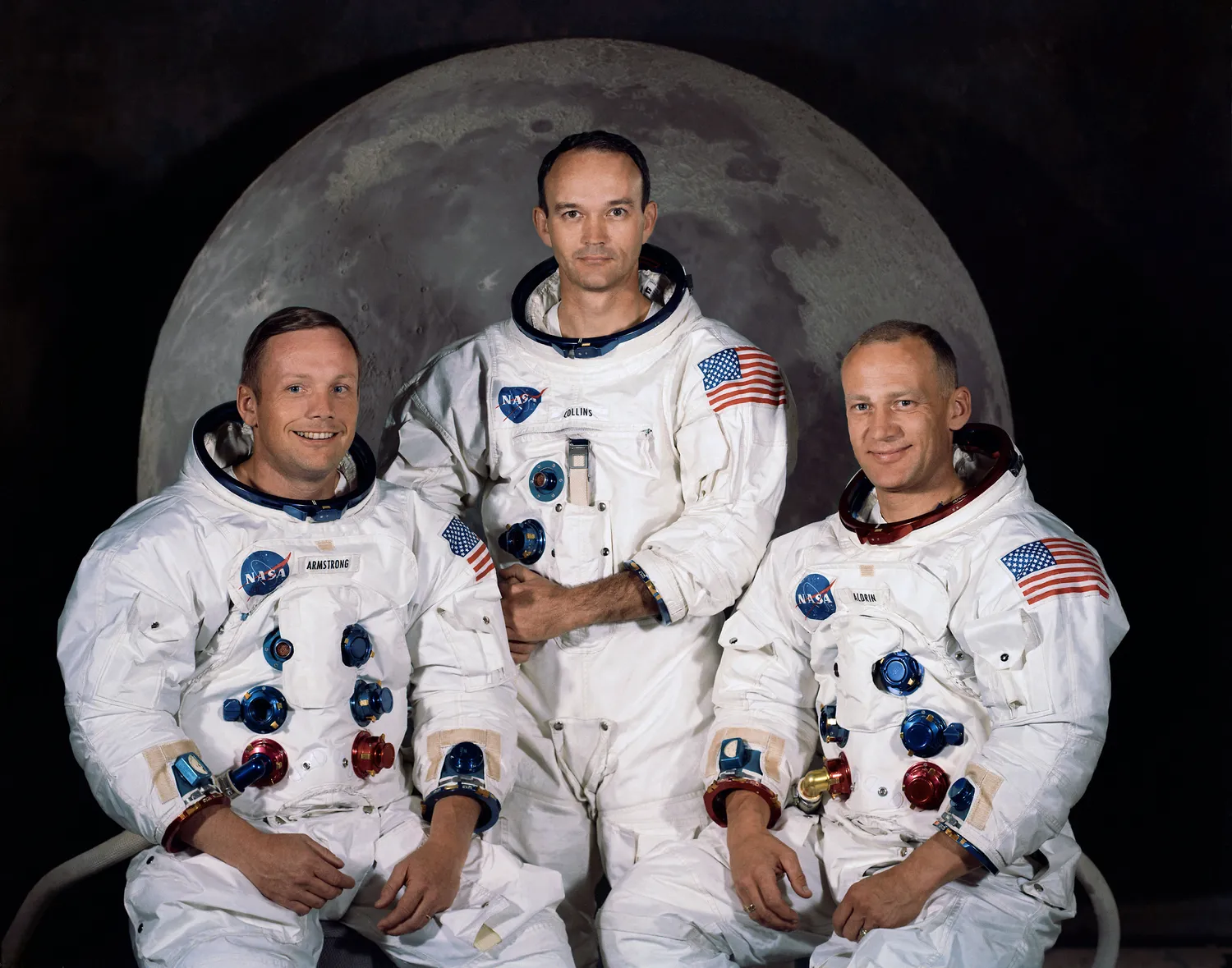
Apollo 11 Crew.jpg Source: Wikimedia Commons - NASA
The Space Race was a contest between the United States and the Soviet Union. Both countries wanted to show their power and science skills during the Cold War. The goal was to see who could be the first to send people to the Moon.
After World War II, the United States and the Soviet Union became rivals. This rivalry was called the Cold War. They did not fight with weapons, but they competed in many ways, including space exploration. Each country wanted to prove they were the strongest and most advanced.
In 1957, the Soviet Union launched Sputnik, the first satellite in space. This shocked Americans and made the United States worry they were falling behind. In 1958, the U.S. created NASA, the National Aeronautics and Space Administration, to lead the country’s space missions.
Both countries spent billions of dollars on rockets and technology. American President John F. Kennedy made a bold promise in 1961. He said the United States would send a man to the Moon and return him safely before the end of the decade. This goal inspired the nation.
Many astronauts trained hard for dangerous missions. There were many failures, but also important successes. America’s Apollo program was the main project to reach the Moon. Apollo 11 became the most famous mission. On July 20, 1969, Neil Armstrong and Buzz Aldrin landed their lunar module on the Moon. Millions watched on television as Armstrong stepped onto the surface and said, “That’s one small step for man, one giant leap for mankind.”
The Space Race changed history. It showed the world what people could achieve with teamwork, science, and courage. The United States won the race to the Moon, but both countries learned and grew from their efforts. The Space Race led to many new discoveries and inventions that still help us today.
Interesting Fact: The computers used in Apollo 11 were less powerful than a modern smartphone!
Who was the first person on the Moon?
Neil ArmstrongJohn F. KennedyBuzz AldrinYuri Gagarin
What was the name of the U.S. space agency?
NASASPUTNIKApolloGemini
Which country launched Sputnik?
Soviet UnionUnited StatesFranceChina
Why did the U.S. want to reach the Moon first?
To be the strongestTo start a warTo find goldTo meet aliens
What did President Kennedy promise?
Send a man to the MoonWin World War IIBuild more carsFly around the world
What was the effect of Sputnik?
U.S. created NASAWorld War III beganArmstrong walked on MarsSoviets landed on Moon
The Space Race was a contest. True or false?
TrueFalse
What does 'astronaut' mean?
Space travelerRocket scientistStarSatellite
Perfect For:
👩🏫 Teachers
• Reading comprehension practice
• Auto-graded assessments
• Literacy skill development
👨👩👧👦 Parents
• Reading practice at home
• Comprehension improvement
• Educational reading time
🏠 Homeschoolers
• Reading curriculum support
• Independent reading practice
• Progress monitoring
Reading Features:
📖
Reading Passage
Engaging fiction or nonfiction text
❓
Comprehension Quiz
Auto-graded questions
📊
Instant Feedback
Immediate results and scoring
📄
Printable Version
Download for offline reading
🔊
Read Aloud
Voice-over with word highlighting
Reviews & Ratings
No reviews yet. Be the first to share your experience!
Related Content
Native American Tribes Across America
This engaging history reading passage introduces students to Native American tribes across America, focusing on their da...
D2.HIS.1.3-5D2.HIS.2.3-5RI.4.1RI.4.2
Teepees: Homes on the Great Plains
This engaging history reading passage introduces students to teepees, the unique homes of Native American tribes on the ...
D2.HIS.2.3-5D2.HIS.14.3-5RI.4.1RI.4.2RI.4.4
Traditional Native American Clothing
This engaging history passage explores traditional Native American clothing and how it reflected the environment, values...
D2.HIS.2.3-5D2.HIS.3.3-5RI.4.3RI.4.4
The Iroquois Confederacy: A System of Peace
This engaging U.S. History reading passage introduces students to the Iroquois Confederacy, a powerful alliance of Nativ...
D2.HIS.2.3-5D2.HIS.3.3-5RI.4.3RI.4.4
The Cherokee Nation: History and Culture
This reading passage explores the rich history and culture of the Cherokee Nation, one of the largest Native American tr...
D2.HIS.2.3-5D2.HIS.14.3-5RI.4.3RI.4.4RI.4.10
The Sioux: Warriors and Tribal Leaders
This history reading passage explores the Sioux Nation, focusing on their roles as warriors and tribal leaders. Students...
D2.HIS.1.3-5D2.HIS.2.3-5RI.4.1RI.4.3
Native American Respect for Nature
This engaging history reading passage explores Native American respect for nature, emphasizing the close relationship be...
D2.HIS.2.3-5D2.HIS.3.3-5RI.4.3RI.4.4
Jamestown: The First Permanent English Colony
This engaging history passage explores the founding of Jamestown, the first permanent English colony in America. Aligned...
D2.HIS.1.3-5D2.HIS.2.3-5RI.4.3RI.4.4
Pocahontas and the Powhatan People
This engaging reading passage explores the life of Pocahontas and the Powhatan people and their important role in early ...
D2.HIS.1.3-5D2.HIS.2.3-5RI.4.1RI.4.3
Colonial Children: School and Chores
This reading passage explores the daily lives of colonial children, focusing on their experiences at school and their ma...
D2.HIS.2.3-5D2.HIS.3.3-5RI.4.1RI.4.2RI.4.4
Colonial Clothing and Homemade Goods
This engaging U.S. history passage explores the daily life of early American colonists with a focus on colonial clothing...
D2.HIS.2.3-5RI.4.3RI.4.4
Colonial Jobs: Blacksmiths, Bakers, and Craftsmen
This engaging history reading passage explores the vital roles of blacksmiths, bakers, and craftsmen in colonial America...
D2.HIS.2.3-5D2.HIS.3.3-5RI.4.3RI.4.4
Colonial Towns and Village Life
This engaging history reading passage explores the daily life, work, and unity found in colonial towns and villages. Ali...
D2.HIS.1.3-5D2.HIS.2.3-5RI.4.3RI.4.4
Colonial Trade with England and Africa
This history reading passage explores colonial trade between the American colonies, England, and Africa, focusing on the...
D2.HIS.2.3-5D2.HIS.14.3-5RI.4.3RI.4.4
Benjamin Franklin: Printer, Inventor, and Leader
This history reading passage explores the life and achievements of Benjamin Franklin, one of America's most important ea...
D2.HIS.2.3-5D2.HIS.3.3-5RI.4.1RI.4.3
George Washington Leads the Army
This engaging history reading passage explores how George Washington bravely led the Continental Army during the America...
D2.HIS.1.3-5D2.HIS.2.3-5RI.4.3RI.4.4
Women and Children During the Revolutionary War
This reading passage explores the important roles women and children played during the Revolutionary War. Students will ...
D2.HIS.2.3-5RI.4.3RI.5.3
African Americans Fight for Freedom
This educational passage explores the brave and inspiring story of how African Americans fought for freedom in the Unite...
D2.HIS.2.3-5D2.HIS.3.3-5RI.4.3RI.4.4
The Battle of Yorktown Ends War
This engaging U.S. history reading passage explores the Battle of Yorktown, a key event that ended the American Revoluti...
D2.HIS.1.3-5D2.HIS.2.3-5RI.4.1RI.4.3
Loyalists vs. Patriots: Divided Families
This engaging U.S. history reading passage explores the division between Loyalists and Patriots during the American Revo...