Reading PassagePremium

The Venomous Blue Dragon Sea Slug

Interactive passage with audio narration, comprehension questions, and printable PDF.

No ratings yet
Grade 6ScienceEnglish · SpanishInteractive · Printable
Just this resource
$1.50
One-time purchase
Best value
Unlock everything
$49.99$29.99/yr
40% off until Aug 1 — 10,000+ resources
Renews at $49.99/year.
Unlock above to use these actions

What's included

Reading passage
Audio narration
Comprehension quiz
Writing activity
Glossary & flashcards
Differentiated version
Spanish translation

The Venomous Blue Dragon Sea Slug preview and details

About this printable The Venomous Blue Dragon Sea Slug science reading passage, NGSS-aligned (Grade 6)

Dive into the fascinating world of the Blue Dragon Sea Slug, a stunning marine creature known for its unique venomous defense. This passage, designed for a Grade 6 reading level, explores how this sea slug utilizes specialized structures to protect itself and acquire food, directly aligning with NGSS LS1.A: Structure and Function. Students will learn about its diet, its clever method of storing venom from its prey, and key terms like 'cnidocytes' and 'nematocysts.' The content is engaging and includes relevant SEO keywords such as 'Blue Dragon Sea Slug venom,' 'marine biology,' and 'ocean creatures.' These materials are audio integrated, making them accessible and engaging for all learners.
Written by Workybooks TeamPublished by Workybooks
Preview

Sample passage and quiz from The Venomous Blue Dragon Sea Slug

Reading passage and comprehension quiz preview

The Venomous Blue Dragon Sea Slug
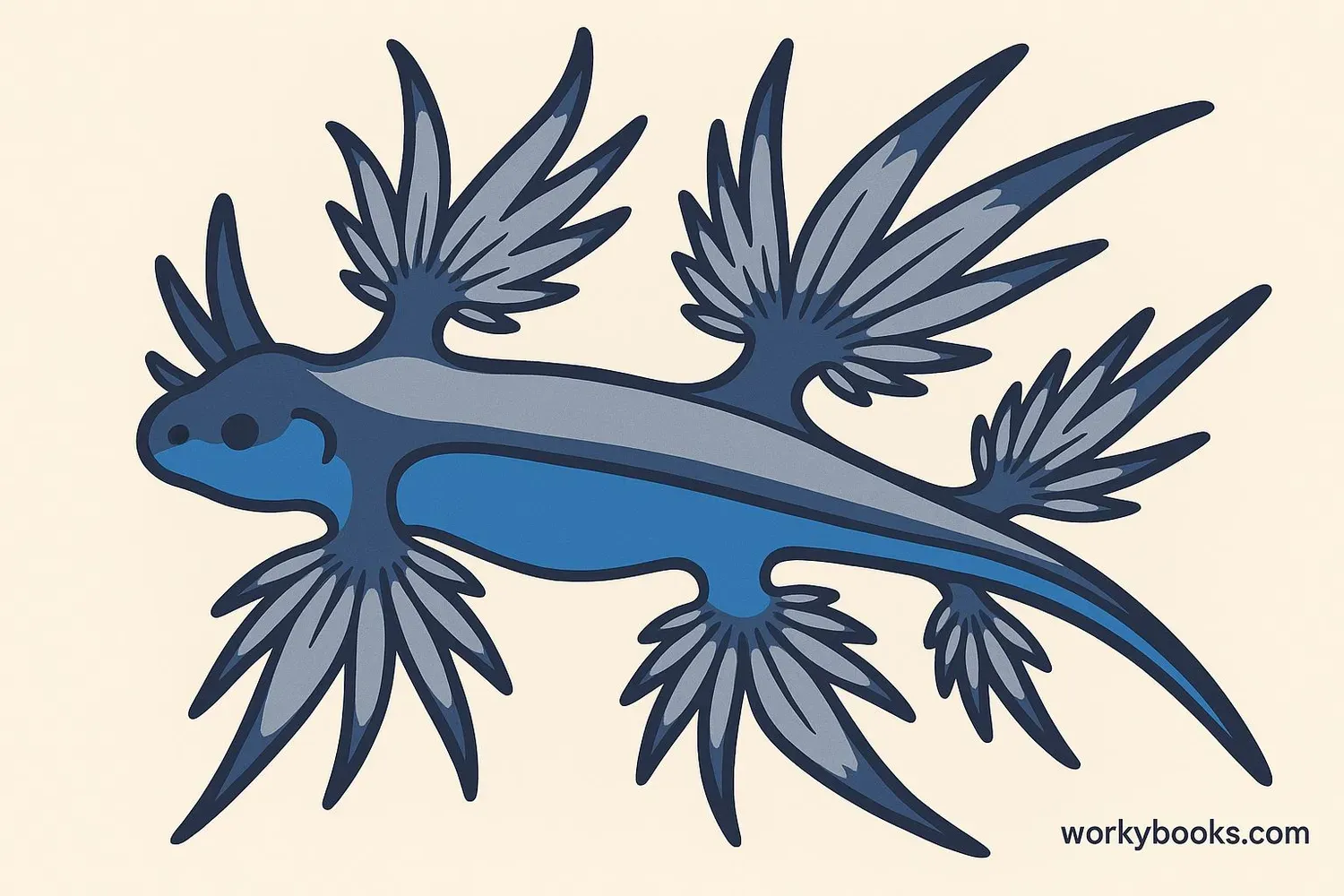
Blue-Dragon-Sea-Slug
Close-up of a blue dragon sea slug's

Imagine a creature so beautiful it looks like a jewel, yet so dangerous it can deliver a powerful sting. This is the Blue Dragon Sea Slug, scientifically known as Glaucus atlanticus. These stunning marine animals are not just pretty; they are formidable hunters and masters of defense, swimming upside down on the ocean's surface. Found in the warm waters of the Atlantic, Pacific, and Indian Oceans, this small, blue-and-white sea slug uses its unique body structures to survive in a challenging environment.

Unlike many sea slugs, the Blue Dragon doesn't produce its own venom. Instead, it has an incredible ability to steal venom from its prey! Its favorite meal is the Portuguese Man o' War, a highly venomous jellyfish-like creature. When the Blue Dragon eats a Portuguese Man o' War, it doesn't digest the stinging cells, called cnidocytes. Instead, it carefully sorts them. Inside these cnidocytes are tiny, harpoon-like structures called nematocysts, which are filled with potent venom.

The Blue Dragon Sea Slug has specialized structures, finger-like cerata, that run along its body. These cerata are not just for show; they are vital for its survival. The slug stores the undigested, active nematocysts from its prey in the tips of these cerata. This means the venom it stores becomes even more concentrated and powerful than the original venom from the Portuguese Man o' War! When threatened by a predator, the Blue Dragon can release these stored nematocysts, delivering a painful sting. This clever defense mechanism makes it a creature to be respected, despite its small size.

The Blue Dragon Sea Slug's brilliant blue and silver coloration also acts as a form of camouflage. Its blue side faces upwards, blending with the blue ocean surface, while its silver side faces downwards, blending with the sunlight reflecting on the water. This dual-sided coloration helps it avoid predators from both above and below. Its specialized structures for storing venom and its striking coloration demonstrate how organisms adapt to their environment for survival and defense.

Interesting Fact: The Blue Dragon Sea Slug can deliver a sting to humans that ranges from mild to very painful, sometimes requiring medical attention.

Comprehension quiz (10 questions)

1. What is the scientific name of the Blue Dragon Sea Slug?

Glaucus atlanticus
Man o' War
Nematocyst slug
Cerata slug

2. What does the Blue Dragon Sea Slug primarily eat?

Small fish
Seaweed
Portuguese Man o' War
Other sea slugs

3. The Blue Dragon Sea Slug produces its own venom.

True
False

4. What are the harpoon-like structures inside cnidocytes?

Cerata
Nematocysts
Stomach cells
Camouflage cells

5. How does the Blue Dragon Sea Slug get its venom?

It creates it
Steals from prey
Finds in ocean plants
Synthesizes in gills

6. Why does the Blue Dragon Sea Slug store venom?

For digestion
For defense
To attract mates
To grow larger

7. What are cerata used for?

Swimming fast
Storing venom
Breathing air
Attracting food

8. The Blue Dragon's coloration helps it:

Stay warm
Blend in
Swim faster
Produce light

9. If a creature also used its prey's defense for its own protection, it would be similar to:

A bird eating seeds
A chameleon changing color
A person wearing a lion costume
A squirrel burying nuts

10. Which term describes the stinging cells stolen by the sea slug?

Venom sacs
Cnidocytes
Defense cells
Prey cells
Who it's for

Perfect for the way you teach

Teachers
  • Build comprehension skills
  • Auto-graded quiz
  • Differentiated reading
Parents
  • Read together at home
  • Improve fluency
  • Quiet reading time
Homeschoolers
  • Reading curriculum support
  • Independent practice
  • Track Lexile growth
Topics

Reviews & Ratings

No reviews yet. Be the first to share your experience!

More reading you might love

20 more
Passage
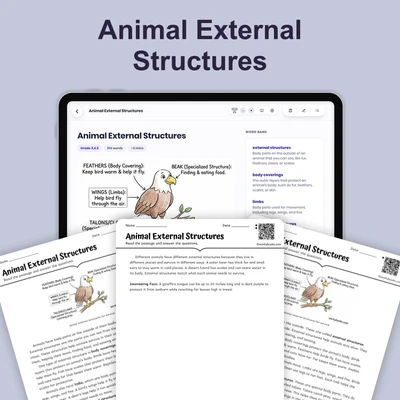
Animal External Structures - reading educational content

Animal External Structures

Reading Passage · NGSS 4-LS1-1

$1.50
Passage
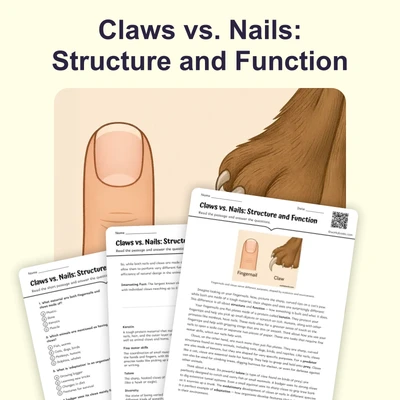
Claws vs. Nails: Structure and Function - reading educational content

Claws vs. Nails: Structure and Function

Reading Passage

$1.50
Passage
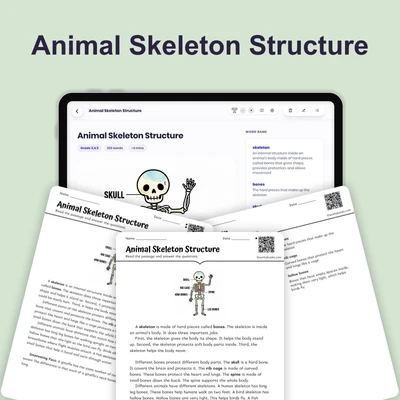
Animal Skeleton Structure - reading educational content

Animal Skeleton Structure

Reading Passage · NGSS 4-LS1-1

$1.50
Interactive
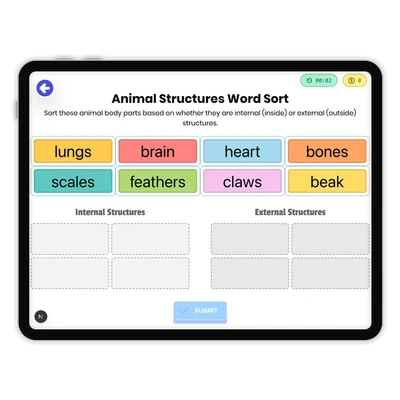
Animal Structures Word Sort - game educational content

Animal Structures Word Sort

Game · 4-LS1-1

$1.50
Passage
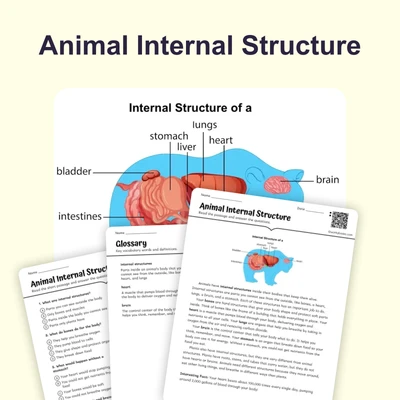
Animal Internal Structure - reading educational content

Animal Internal Structure

Reading Passage · NGSS 4-LS1-1

$1.50
Passage
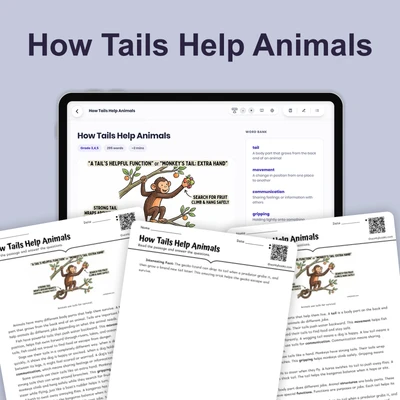
How Tails Help Animals - reading educational content

How Tails Help Animals

Reading Passage · NGSS 4-LS1-1

$1.50
Passage
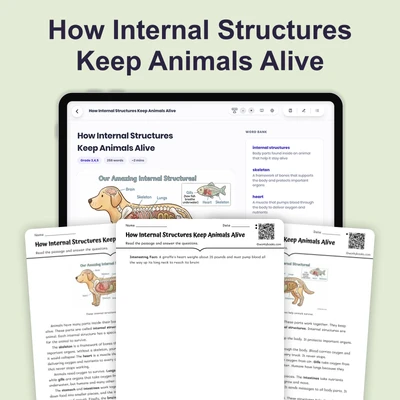
How Internal Structures Keep Animals Alive - reading educational content

How Internal Structures Keep Animals Alive

Reading Passage · NGSS 4-LS1-1

$1.50
Passage
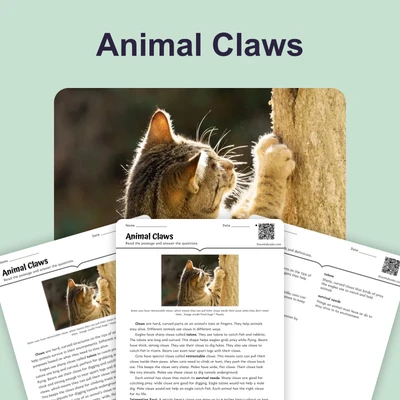
Animal Claws - reading educational content

Animal Claws

Reading Passage · NGSS 4-LS1-1

$1.50
Interactive
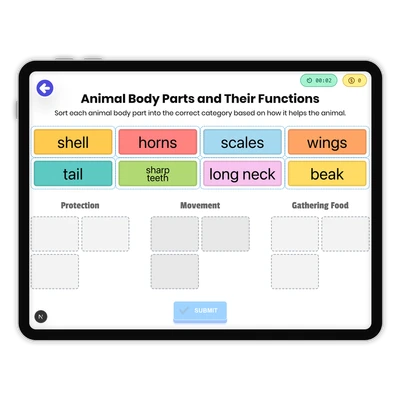
Animal Body Parts and Their Functions - game educational content

Animal Body Parts and Their Functions

Game

$1.50
Passage
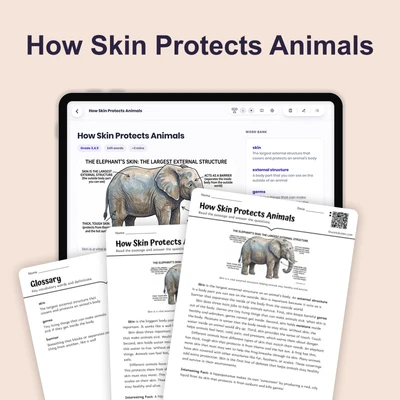
How Skin Protects Animals - reading educational content

How Skin Protects Animals

Reading Passage · NGSS 4-LS1-1

$1.50
Passage
Carnivore Animals Teeth - reading educational content

Carnivore Animals Teeth

Reading Passage

$1.50
Passage
How Legs Help Animals Move - reading educational content

How Legs Help Animals Move

Reading Passage · NGSS 4-LS1-1

$1.50
Passage
How Beaks and Teeth Help Animals Eat - reading educational content

How Beaks and Teeth Help Animals Eat

Reading Passage · NGSS 4-LS1-1

$1.50
Passage
Cell Structure and Function - reading educational content

Cell Structure and Function

Reading Passage · MS-LS1-1

$1.50
Passage
How Animals See Differently - reading educational content

How Animals See Differently

Reading Passage · NGSS 4-LS1-1

$1.50
Passage
How Wings Help Animals Fly - reading educational content

How Wings Help Animals Fly

Reading Passage · NGSS 4-LS1-1

$1.50
Passage
How Animals Get Energy from Food - reading educational content

How Animals Get Energy from Food

Reading Passage · 5-LS1-1

$1.50
Passage
How Animals Digest Food - reading educational content

How Animals Digest Food

Reading Passage · NGSS 4-LS1-1

$1.50
Passage
How Animal Hearts Work - reading educational content

How Animal Hearts Work

Reading Passage · NGSS 4-LS1-1

Free
Passage
How Animal Lungs Work - reading educational content

How Animal Lungs Work

Reading Passage · NGSS 4-LS1-1

$1.50
Copyright © 2026 Workybooks. Made with ♥ in California.