How Legs Help Animals Move
Interactive passage with audio narration, comprehension questions, and printable PDF.
What's included
Part of this bundle

How Legs Help Animals Move preview and details
About this printable How Legs Help Animals Move science reading passage, NGSS-aligned (Grades 3-5)
Sample passage and quiz from How Legs Help Animals Move
Reading passage and comprehension quiz preview
How Legs Help Animals Move
Legs are body parts on the outside of an animal that help it move from place to place. Legs are important because they allow animals to find food, escape danger, and survive in their homes.
Animals have different numbers of legs. Humans have two legs. Dogs and cats have four legs. Insects have six legs. Spiders have eight legs! The number of legs an animal has helps it move in special ways.
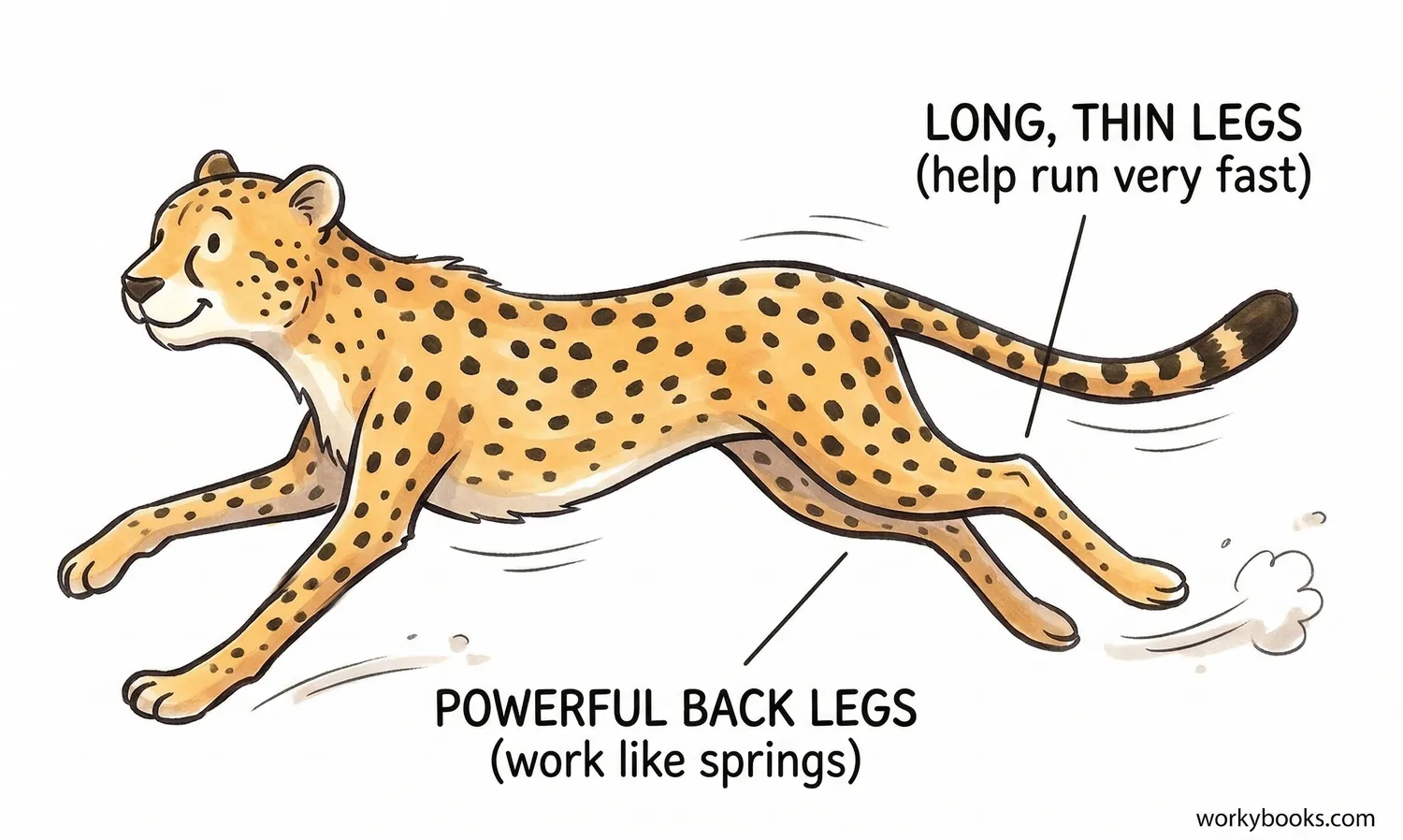
The shape and length of legs also matter. Cheetahs have long, thin legs that help them run very fast to catch prey. Their legs work like springs that push them forward quickly. Frogs have short front legs but powerful back legs that are much longer. These strong back legs help frogs jump far distances to escape from predators.
Some animals have legs designed for water. Ducks have webbed feet, which means their toes are connected by skin. Webbed feet work like paddles to push water backward, helping ducks swim smoothly. Mountain goats have hooves, which are hard coverings on their feet. These special hooves have rough bottoms that grip rocky surfaces, allowing goats to climb steep mountains safely.
The structure of an animal's legs matches how and where it needs to move. Each type of leg helps an animal survive in its environment.
Interesting Fact: A grasshopper can jump 20 times the length of its own body! If humans could do that, we could jump over a basketball court in one leap.
Comprehension quiz (8 questions)
1. How many legs do spiders have?
2. What helps cheetahs run very fast?
3. What are webbed feet used for?
4. Why do frogs have powerful back legs?
5. How do mountain goat hooves help them?
6. What does leg structure match in animals?
7. Legs are inside the animal's body.
8. What does structure mean in the passage?
Perfect for the way you teach
- Build comprehension skills
- Auto-graded quiz
- Differentiated reading
- Read together at home
- Improve fluency
- Quiet reading time
- Reading curriculum support
- Independent practice
- Track Lexile growth