How Wings Help Animals Fly — Reading Comprehension
Rate this
Premium Resource
Present
Present in classroom. No work saved
Assign
Classroom with student accounts, Track progress
Quick Play
No student accounts, assign with a link
Grades
3
4
5
Standards
NGSS 4-LS1-1
PRINT+DIGITAL RESOURCE
This learning resource is available in interactive and printable formats. The interactive worksheet can be played online and assigned to students. The Printable PDF version can be downloaded and printed for completion by hand.
This engaging 250-word reading passage introduces fourth-grade students to the concept of wings as external structures that enable flight in various animals. Aligned with NGSS 4-LS1-1 and the Disciplinary Core Idea LS1.A, the passage explains how bird wings use feathers to push air downward and create lift, how bat wings are made of stretched skin over finger bones, and how insect wings are thin and lightweight. Students also discover that not all wings are used for flying—penguins use their wings as flippers for swimming, and ostriches use wings for balance while running. The passage uses simple, grade-appropriate language and real-world examples to build foundational understanding of animal structures and their functions. Audio integration supports diverse learners by providing multiple ways to access the content. This resource includes a simplified differentiated version, Spanish translations, glossary terms, multiple-choice questions, writing activities, and graphic organizers to support comprehensive learning and assessment of this important life science concept.
CONTENT PREVIEW
Expand content preview
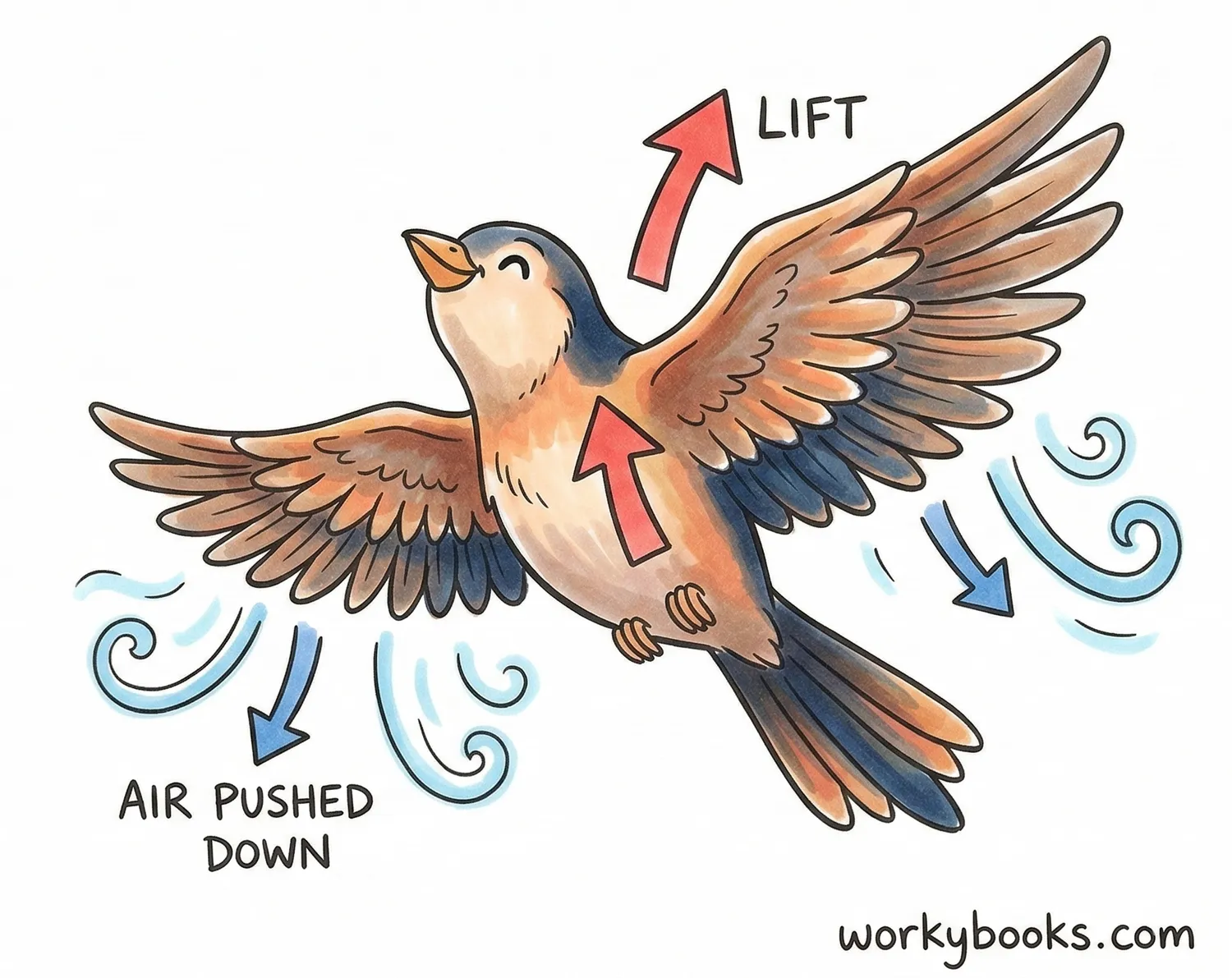
Wings push air downward.
Wings are external structures on the outside of an animal's body that help many animals move through the air. These structures are important because they allow animals to find food, escape danger, and travel to new places.
Bird wings are covered with feathers, which are light, strong structures that grow from a bird's skin. The feathers are shaped to push air downward when the bird flaps its wings. This pushing creates lift, an upward force that helps the bird rise into the air. Think of how you push water down with your hands when swimming to move forward—bird wings work in a similar way with air.
Bat wings look very different from bird wings. A bat's wing is made of thin, stretchy skin called a membrane that stretches over long finger bones. When a bat spreads its fingers, the membrane opens like an umbrella to catch the air.
Insect wings are thin and very light. Most insects have two or four wings that beat very fast to keep them in the air.
Not all wings are used for flying. Penguins have wings, but they use them as flippers to swim underwater. Ostriches have wings too, but they use them for balance while running fast on land.
Interesting Fact: A hummingbird can beat its wings up to 80 times per second, which is so fast that it creates a humming sound you can hear!
What are wings?
Internal organs inside animalsExternal structures that help animals moveFood that animals eatBones inside a bird's body
What covers bird wings?
ScalesFurFeathersSkin
What are bat wings made of?
Feathers over bonesStretched skin over finger bonesHard shellsThick fur
Why do bird feathers push air downward?
To make the bird heavierTo create lift and rise upTo make noiseTo keep the bird warm
How do penguins use their wings?
For flying in the skyFor running on landAs flippers for swimmingFor climbing trees
What helps ostriches when they run fast?
Their wings help with balanceTheir feathers make them flyTheir wings push them forwardTheir wings carry food
All wings are used for flying.
TrueFalse
What does 'lift' mean in the passage?
A downward force pulling animals downAn upward force helping animals riseA sideways movement in waterThe weight of feathers
Perfect For:
👩🏫 Teachers
• Reading comprehension practice
• Auto-graded assessments
• Literacy skill development
👨👩👧👦 Parents
• Reading practice at home
• Comprehension improvement
• Educational reading time
🏠 Homeschoolers
• Reading curriculum support
• Independent reading practice
• Progress monitoring
Reading Features:
📖
Reading Passage
Engaging fiction or nonfiction text
❓
Comprehension Quiz
Auto-graded questions
📊
Instant Feedback
Immediate results and scoring
📄
Printable Version
Download for offline reading
🔊
Read Aloud
Voice-over with word highlighting
Reviews & Ratings
No reviews yet. Be the first to share your experience!
Related Content
How Animals See Differently
This engaging 250-word reading passage introduces fourth-grade students to the fascinating world of animal vision and ey...
NGSS 4-LS1-1LS1.D
Animal Internal Structure
This engaging science passage for Grade 4-5 students explores animal internal structure and how organs work together to ...
NGSS 4-LS1-1
What Are Bones Made Of
This engaging 250-word reading passage introduces Grade 4 students to the structure and function of bones, aligned with ...
NGSS 4-LS1-1LS1.A
How Bones Protect Organs
This engaging 250-word reading passage helps Grade 4 students understand how bones protect organs, aligned with NGSS sta...
NGSS 4-LS1-1LS1.A
How Joints Connect Bones
This 250-word reading passage teaches fourth-grade students about joints and their role in the human skeletal system. Al...
NGSS 4-LS1-1LS1.A
How Muscles Move Bones
This comprehensive 250-word reading passage introduces fourth-grade students to the fundamental concept of how muscles a...
NGSS 4-LS1-1
Two Types of Muscles
This 250-word reading passage introduces fourth-grade students to the two main types of muscles in the human body: volun...
NGSS 4-LS1-1
What Are Muscles
This engaging 250-word reading passage introduces fourth-grade students to the essential concept of muscles and how they...
NGSS 4-LS1-1
How Skin Protects Body
This audio-integrated reading passage introduces fourth-grade students to the protective functions of skin, aligned with...
NGSS 4-LS1-1
Layers of the Skin
This engaging 250-word reading passage introduces fourth-grade students to the three layers of skin and their functions....
NGSS 4-LS1-1LS1.A
What Are Plant Structures
This engaging 250-word reading passage introduces fourth-grade students to the fundamental concept of plant structures a...
NGSS 4-LS1-1
Parts of Plant Stems
This engaging 250-word reading passage introduces fourth-grade students to the internal structure and function of plant ...
NGSS 4-LS1-1LS1.A
How Water Moves Inside Plants
This 250-word reading passage introduces fourth-grade students to the concept of water transport in plants, aligned with...
NGSS 4-LS1-1
Parts of a Flower
This comprehensive 250-word reading passage introduces fourth-grade students to the essential parts of a flower and thei...
NGSS 4-LS1-1LS1.A
How Fish Gills Work
This engaging 250-word reading passage introduces fourth-grade students to the concept of fish gills and how they functi...
NGSS 4-LS1-1
How Leaves Make Food
This engaging Grade 4 science reading passage explains how leaves make food through photosynthesis. Students discover th...
NGSS 4-LS1-1LS1.A
How Animal Hearts Work
This 250-word audio-integrated reading passage introduces fourth-grade students to the essential function of the heart a...
NGSS 4-LS1-1LS1.A
Animal Skeleton Structure
This 250-word reading passage introduces fourth grade students to animal skeleton structure, aligned with NGSS 4-LS1-1 a...
NGSS 4-LS1-1LS1.A
How Animal Lungs Work
This 250-word reading passage introduces fourth-grade students to how animal lungs work, aligned with NGSS standard 4-LS...
NGSS 4-LS1-1LS1.A
What Is Inside a Seed
This engaging 250-word reading passage helps Grade 4 students understand the internal structure of seeds, aligned with N...