Animal Claws
Interactive passage with audio narration, comprehension questions, and printable PDF.
By completing this purchase you agree to our Terms of Use and Privacy Policy. Your subscription renews automatically until you cancel. You can cancel anytime from your account settings. All sales are final and non-refundable. Digital content is available for download in your account immediately upon purchase.
What's included
Part of this bundle

Animal Claws preview and details
About this printable Animal Claws science reading passage, NGSS-aligned (Grades 3-5)
Sample passage and quiz from Animal Claws
Reading passage and comprehension quiz preview
Animal Claws
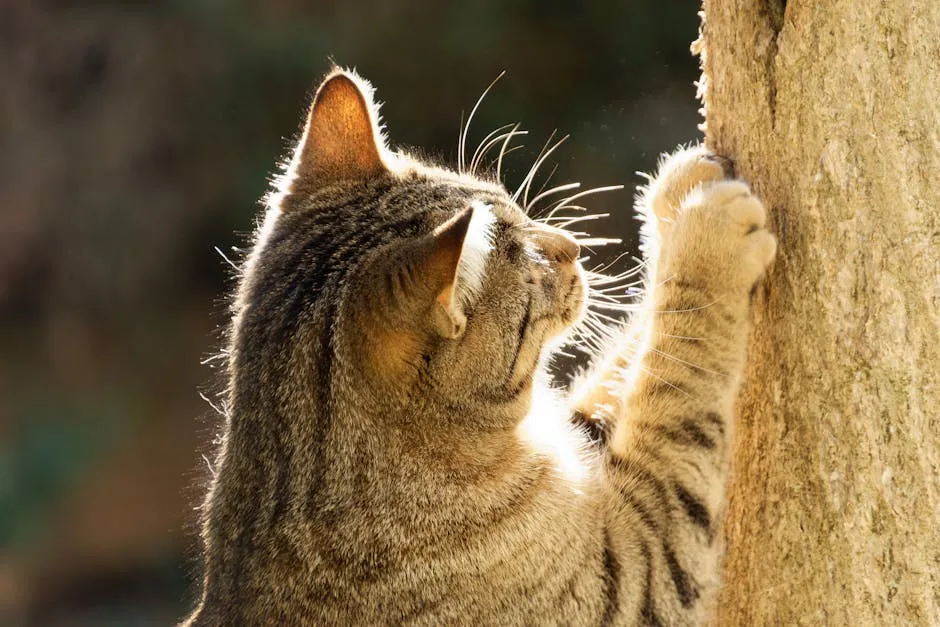
Some cats have retractable claws, which means they can pull their claws inside their paws when they don't need them.. Image credit Fred Augé / Pexels.
Claws are hard, curved structures on the tips of an animal's toes or fingers. They help animals survive in their environments. Different animals use claws for different purposes based on what they need to stay alive.
Eagles use sharp claws called talons to catch prey like fish and rabbits. These talons are long and curved, perfect for grabbing and holding onto animals while flying. Bears use their claws for digging and catching fish in rivers. Their claws are thick and strong enough to tear apart logs and dig deep holes. Cats have retractable claws, which means they can pull their claws inside their paws when not using them. This keeps the claws sharp for climbing trees and hunting. Moles use wide, flat claws like tiny shovels for digging tunnels underground.
The shape and size of an animal's claws match its survival needs. Sharp, curved claws work best for catching prey. Wide, flat claws work best for digging. An eagle's talons would not help a mole dig tunnels, and a mole's wide claws would not help an eagle catch fish. Each animal has claws that are just right for its way of life.
Interesting Fact: A grizzly bear's claws can grow up to 4 inches long—about as long as your hand from your wrist to your fingertips!
Comprehension quiz (8 questions)
1. What are claws?
2. What are eagle claws called?
3. What do bears use claws for?
4. Why do cats have retractable claws?
5. What shape are mole claws?
6. Why do claw shapes match survival needs?
7. Claws help all animals survive.
8. What does retractable mean?
Perfect for the way you teach
- Build comprehension skills
- Auto-graded quiz
- Differentiated reading
- Read together at home
- Improve fluency
- Quiet reading time
- Reading curriculum support
- Independent practice
- Track Lexile growth