This learning resource is available in interactive and printable formats. The interactive worksheet can be played online and assigned to students. The Printable PDF version can be downloaded and printed for completion by hand.
This engaging Grade 4 science reading passage explores how animal tails serve different functions across species, aligned with NGSS standard 4-LS1-1. Students discover that the same type of structure—a tail—can serve very different purposes depending on the animal. Fish use tails to swim through water, dogs communicate emotions with tail movements, monkeys grip branches for climbing, birds steer while flying, horses swat away flies, and kangaroos maintain balance while hopping. The passage helps students understand that animals have internal and external structures that function to support survival, growth, behavior, and reproduction. This audio-integrated resource includes a simplified differentiated version for diverse learners, Spanish translations, vocabulary glossary, comprehension questions, writing activities, and graphic organizers. Students build foundational understanding of structure-function relationships in living organisms through accessible, grade-appropriate language and real-world examples that connect to their everyday observations of animals.
CONTENT PREVIEW
Expand content preview
Animals use tails for survival.
Animals have many different body parts that help them survive. A tail is a body part that grows from the back end of an animal. Tails are important because they help animals do different jobs depending on what the animal needs.
Fish have powerful tails that push water backward. This movement, or change in position, helps fish swim forward through rivers, lakes, and oceans. Without their tails, fish could not travel to find food or escape from danger.
Dogs use their tails in a completely different way. When a dog wags its tail quickly, it shows the dog is happy or excited. When a dog holds its tail low or between its legs, it might feel scared or worried. A dog's tail is used for communication, which means sharing feelings or information with others.
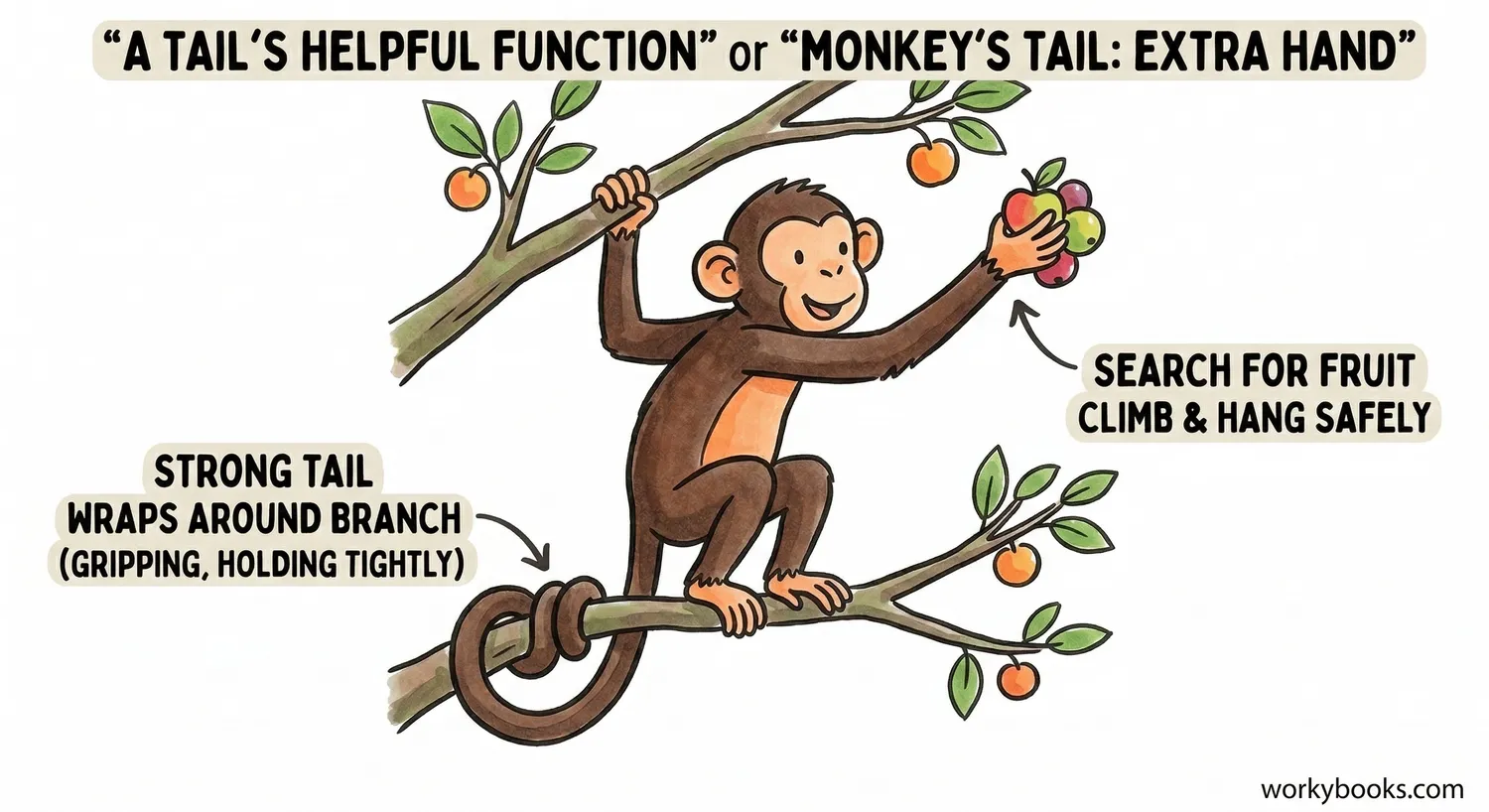
Some animals use their tails like an extra hand. Monkeys that live in trees have strong tails that can wrap around branches. This gripping, or holding tightly, helps monkeys climb and hang safely while they search for fruit. Birds use their tails to steer while flying, just like a boat's rudder helps it turn. A horse swishes its tail back and forth to swat away annoying flies. A kangaroo has a thick, muscular tail that acts like a tripod—it helps the kangaroo balance when it sits or hops.
The same body part can do very different jobs. Tails show us that animal structures, or body parts, have special functions, or purposes, that help each animal survive in its own environment.
Interesting Fact: The gecko lizard can drop its tail when a predator grabs it, and then grow a brand new tail later! This amazing trick helps the gecko escape and survive.
What do fish use their tails for?
To communicate with other fishTo swim forward through waterTo swat away fliesTo grip tree branches
How do dogs use their tails?
To balance when they sitTo steer when they runTo show feelings and communicateTo push water backward
What does gripping mean in the passage?
Swimming through water quicklySharing information with othersHolding tightly onto somethingMoving from place to place
Why does a kangaroo need its tail?
To fly through the airTo catch fish in waterTo communicate with other kangaroosTo help balance when hopping
Which animal uses its tail to steer?
A bird flying in the skyA dog running in a parkA fish swimming in a lakeA monkey climbing a tree
What does the passage teach about tails?
All tails look exactly the sameOnly fish have tails that workTails serve different purposes for animalsTails are not important for survival
All animals use their tails the same way.
TrueFalse
What are structures in animals?
The places where animals liveBody parts of an animalThe food that animals eatThe sounds animals make
Perfect For:
👩🏫 Teachers
• Reading comprehension practice
• Auto-graded assessments
• Literacy skill development
👨👩👧👦 Parents
• Reading practice at home
• Comprehension improvement
• Educational reading time
🏠 Homeschoolers
• Reading curriculum support
• Independent reading practice
• Progress monitoring
Reading Features:
📖
Reading Passage
Engaging fiction or nonfiction text
❓
Comprehension Quiz
Auto-graded questions
📊
Instant Feedback
Immediate results and scoring
📄
Printable Version
Download for offline reading
🔊
Read Aloud
Voice-over with word highlighting
Reviews & Ratings
No reviews yet. Be the first to share your experience!
Related Content
How Animals See Differently
This engaging 250-word reading passage introduces fourth-grade students to the fascinating world of animal vision and ey...
NGSS 4-LS1-1LS1.D
Animal Internal Structure
This engaging science passage for Grade 4-5 students explores animal internal structure and how organs work together to ...
NGSS 4-LS1-1
What Are Bones Made Of
This engaging 250-word reading passage introduces Grade 4 students to the structure and function of bones, aligned with ...
NGSS 4-LS1-1LS1.A
How Bones Protect Organs
This engaging 250-word reading passage helps Grade 4 students understand how bones protect organs, aligned with NGSS sta...
NGSS 4-LS1-1LS1.A
How Joints Connect Bones
This 250-word reading passage teaches fourth-grade students about joints and their role in the human skeletal system. Al...
NGSS 4-LS1-1LS1.A
How Muscles Move Bones
This comprehensive 250-word reading passage introduces fourth-grade students to the fundamental concept of how muscles a...
NGSS 4-LS1-1
Two Types of Muscles
This 250-word reading passage introduces fourth-grade students to the two main types of muscles in the human body: volun...
NGSS 4-LS1-1
What Are Muscles
This engaging 250-word reading passage introduces fourth-grade students to the essential concept of muscles and how they...
NGSS 4-LS1-1
How Skin Protects Body
This audio-integrated reading passage introduces fourth-grade students to the protective functions of skin, aligned with...
NGSS 4-LS1-1
Layers of the Skin
This engaging 250-word reading passage introduces fourth-grade students to the three layers of skin and their functions....
NGSS 4-LS1-1LS1.A
What Are Plant Structures
This engaging 250-word reading passage introduces fourth-grade students to the fundamental concept of plant structures a...
NGSS 4-LS1-1
Parts of Plant Stems
This engaging 250-word reading passage introduces fourth-grade students to the internal structure and function of plant ...
NGSS 4-LS1-1LS1.A
How Water Moves Inside Plants
This 250-word reading passage introduces fourth-grade students to the concept of water transport in plants, aligned with...
NGSS 4-LS1-1
Parts of a Flower
This comprehensive 250-word reading passage introduces fourth-grade students to the essential parts of a flower and thei...
NGSS 4-LS1-1LS1.A
How Fish Gills Work
This engaging 250-word reading passage introduces fourth-grade students to the concept of fish gills and how they functi...
NGSS 4-LS1-1
How Leaves Make Food
This engaging Grade 4 science reading passage explains how leaves make food through photosynthesis. Students discover th...
NGSS 4-LS1-1LS1.A
How Animal Hearts Work
This 250-word audio-integrated reading passage introduces fourth-grade students to the essential function of the heart a...
NGSS 4-LS1-1LS1.A
Animal Skeleton Structure
This 250-word reading passage introduces fourth grade students to animal skeleton structure, aligned with NGSS 4-LS1-1 a...
NGSS 4-LS1-1LS1.A
How Animal Lungs Work
This 250-word reading passage introduces fourth-grade students to how animal lungs work, aligned with NGSS standard 4-LS...
NGSS 4-LS1-1LS1.A
What Is Inside a Seed
This engaging 250-word reading passage helps Grade 4 students understand the internal structure of seeds, aligned with N...