

Thomas Edison Invents the Light Bulb — Reading Comprehension
Rate this
Premium Resource
Present
Present in classroom. No work saved
Assign
Classroom with student accounts, Track progress
Quick Play
No student accounts, assign with a link
Grades
3
4
5
Standards
D2.HIS.2.3-5
D2.HIS.3.3-5
RI.4.3
RI.4.4
RI.5.3
RI.5.4
PRINT+DIGITAL RESOURCE
This learning resource is available in interactive and printable formats. The interactive worksheet can be played online and assigned to students. The Printable PDF version can be downloaded and printed for completion by hand.
This passage explores the inspiring story of Thomas Edison and his invention of the light bulb, a key moment in U.S. history. Students will learn how Edison's curiosity, teamwork, and determination led to one of the most important inventions of all time. The passage uses simple language and a clear cause-and-effect structure, making it accessible to young readers. Key vocabulary is highlighted and explained in a glossary. Activities include a multiple-choice quiz, writing prompts, and a timeline to build historical understanding and literacy skills. This resource supports both the C3 Framework for Social Studies and Common Core ELA standards. Read aloud audio and a Spanish translation are provided, making it perfect for diverse classrooms. Topics include Edison's childhood, his laboratory, his team of helpers, and the impact of electric light on people's lives. Use this passage to spark curiosity about innovation and connect past inventions to modern life.
CONTENT PREVIEW
Expand content preview
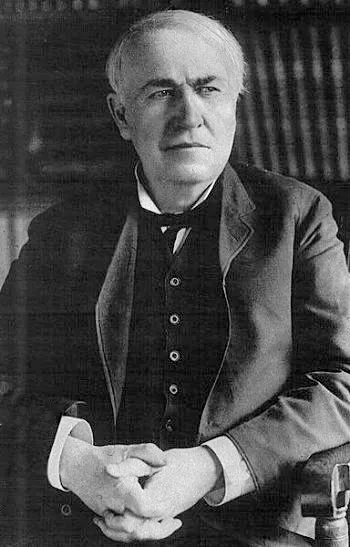
Thomas Edison.jpg Source: Wikimedia Commons - Unknown authorUnknown author
Thomas Edison was one of the most important inventors in American history. Born in 1847 in Ohio, Edison was curious and loved to learn about how things worked. From a young age, he asked many questions and liked to experiment with simple machines and tools.
By the time Edison was a young man, he was already working with telegraphs and learning about electricity. His first big invention was the phonograph. This device could record sound and play it back. Before the phonograph, people could not save music or voices to listen to later. Edison's invention amazed the world and was the first time people could hear recorded sound.
Next, Edison focused on making electric light. People used candles and oil lamps to light their homes, which were dim and sometimes dangerous. Edison wanted to create a safe, bright, and steady light. He spent years testing different materials and designs. In 1879, Edison invented a practical light bulb. His light bulb used a tiny piece of carbon called a filament that glowed when electricity passed through it. This invention changed how people lived and worked, making it possible to light homes, streets, and factories safely.
Edison did not stop there. He built a laboratory in Menlo Park, New Jersey, where he and a team of workers created and tested new inventions. Edison received over 1,000 patents for his ideas. A patent is a special right that lets an inventor control how their invention is used. This allowed Edison to protect his work and earn money from his inventions.
Another important invention was the motion picture camera. With this device, people could record moving images for the first time. Edison's camera made movies possible, so people could watch stories and events on a screen.
Thomas Edison became known as the "Wizard of Menlo Park" because of his many amazing inventions. His hard work and curiosity changed the world. Today, we still use light bulbs, recorded sound, and movies—all because Edison believed that with enough effort, anything could be improved.
Interesting Fact: Edison tested over 6,000 different materials before finding the best filament for his light bulb!
What was Edison's first big invention?
PhonographLight bulbRadioMotion picture camera
What did Edison's light bulb use to glow?
FilamentBatteryWaterMetal tube
Where was Edison's famous laboratory?
Menlo ParkBostonChicagoNew York
Why was the phonograph important?
It recorded and played soundIt made moviesIt made lightIt was a fast train
How did Edison's inventions change homes?
Safer and brighter with electric lightColder with less heatMore crowdedNo changes
What does a patent do?
Protects inventionsMakes a lightRecords soundCleans tools
Edison invented the telephone. (True/False)
TrueFalse
What is a 'laboratory'?
Place for experimentsMovie theaterSchoolStore
Perfect For:
👩🏫 Teachers
• Reading comprehension practice
• Auto-graded assessments
• Literacy skill development
👨👩👧👦 Parents
• Reading practice at home
• Comprehension improvement
• Educational reading time
🏠 Homeschoolers
• Reading curriculum support
• Independent reading practice
• Progress monitoring
Reading Features:
📖
Reading Passage
Engaging fiction or nonfiction text
❓
Comprehension Quiz
Auto-graded questions
📊
Instant Feedback
Immediate results and scoring
📄
Printable Version
Download for offline reading
🔊
Read Aloud
Voice-over with word highlighting
Reviews & Ratings
No reviews yet. Be the first to share your experience!
Related Content
Native American Tribes Across America
This engaging history reading passage introduces students to Native American tribes across America, focusing on their da...
D2.HIS.1.3-5D2.HIS.2.3-5RI.4.1RI.4.2
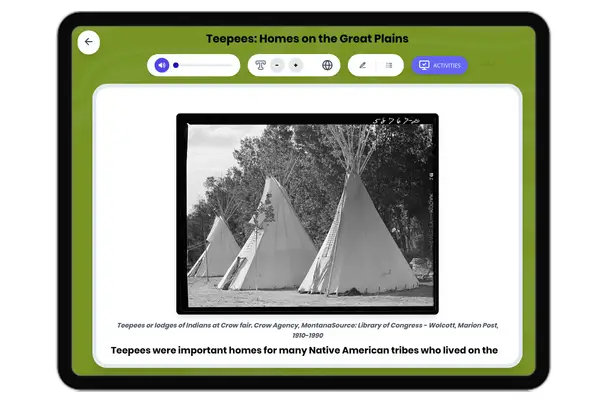
Teepees: Homes on the Great Plains
This engaging history reading passage introduces students to teepees, the unique homes of Native American tribes on the ...
D2.HIS.2.3-5D2.HIS.14.3-5RI.4.1RI.4.2RI.4.4
Traditional Native American Clothing
This engaging history passage explores traditional Native American clothing and how it reflected the environment, values...
D2.HIS.2.3-5D2.HIS.3.3-5RI.4.3RI.4.4
The Iroquois Confederacy: A System of Peace
This engaging U.S. History reading passage introduces students to the Iroquois Confederacy, a powerful alliance of Nativ...
D2.HIS.2.3-5D2.HIS.3.3-5RI.4.3RI.4.4
The Cherokee Nation: History and Culture
This reading passage explores the rich history and culture of the Cherokee Nation, one of the largest Native American tr...
D2.HIS.2.3-5D2.HIS.14.3-5RI.4.3RI.4.4RI.4.10
The Sioux: Warriors and Tribal Leaders
This history reading passage explores the Sioux Nation, focusing on their roles as warriors and tribal leaders. Students...
D2.HIS.1.3-5D2.HIS.2.3-5RI.4.1RI.4.3
Native American Respect for Nature
This engaging history reading passage explores Native American respect for nature, emphasizing the close relationship be...
D2.HIS.2.3-5D2.HIS.3.3-5RI.4.3RI.4.4
Jamestown: The First Permanent English Colony
This engaging history passage explores the founding of Jamestown, the first permanent English colony in America. Aligned...
D2.HIS.1.3-5D2.HIS.2.3-5RI.4.3RI.4.4
Pocahontas and the Powhatan People
This engaging reading passage explores the life of Pocahontas and the Powhatan people and their important role in early ...
D2.HIS.1.3-5D2.HIS.2.3-5RI.4.1RI.4.3
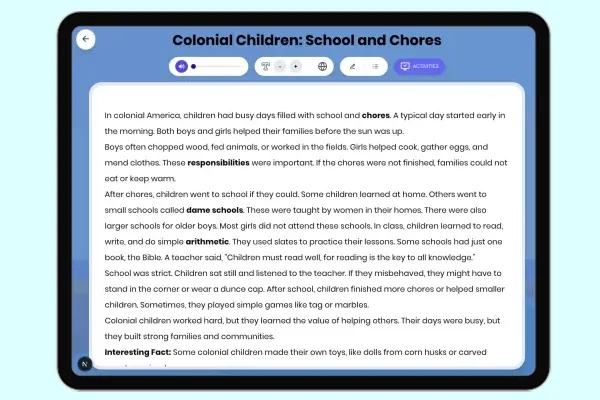
Colonial Children: School and Chores
This reading passage explores the daily lives of colonial children, focusing on their experiences at school and their ma...
D2.HIS.2.3-5D2.HIS.3.3-5RI.4.1RI.4.2RI.4.4
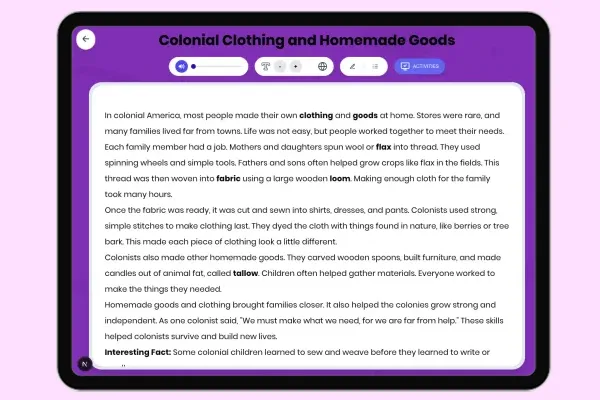
Colonial Clothing and Homemade Goods
This engaging U.S. history passage explores the daily life of early American colonists with a focus on colonial clothing...
D2.HIS.2.3-5RI.4.3RI.4.4
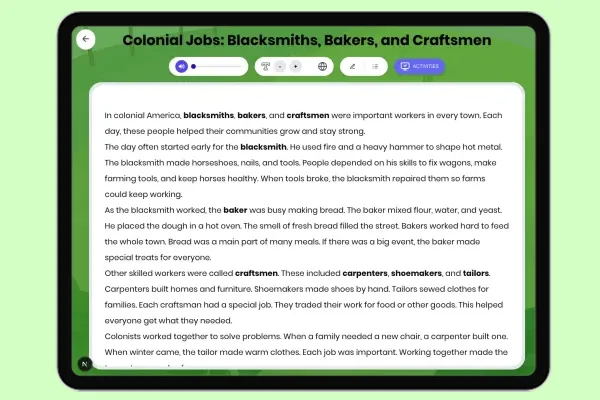
Colonial Jobs: Blacksmiths, Bakers, and Craftsmen
This engaging history reading passage explores the vital roles of blacksmiths, bakers, and craftsmen in colonial America...
D2.HIS.2.3-5D2.HIS.3.3-5RI.4.3RI.4.4
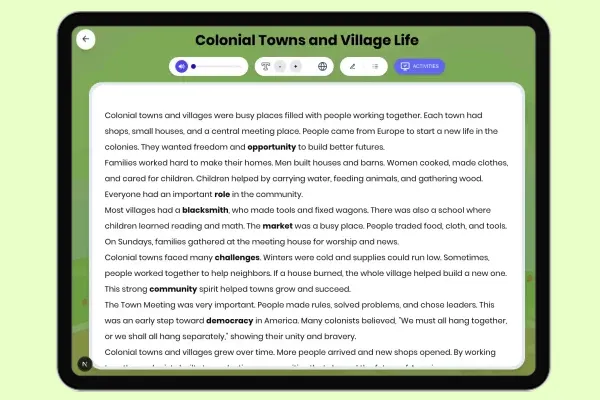
Colonial Towns and Village Life
This engaging history reading passage explores the daily life, work, and unity found in colonial towns and villages. Ali...
D2.HIS.1.3-5D2.HIS.2.3-5RI.4.3RI.4.4
Colonial Trade with England and Africa
This history reading passage explores colonial trade between the American colonies, England, and Africa, focusing on the...
D2.HIS.2.3-5D2.HIS.14.3-5RI.4.3RI.4.4
Benjamin Franklin: Printer, Inventor, and Leader
This history reading passage explores the life and achievements of Benjamin Franklin, one of America's most important ea...
D2.HIS.2.3-5D2.HIS.3.3-5RI.4.1RI.4.3
George Washington Leads the Army
This engaging history reading passage explores how George Washington bravely led the Continental Army during the America...
D2.HIS.1.3-5D2.HIS.2.3-5RI.4.3RI.4.4
Women and Children During the Revolutionary War
This reading passage explores the important roles women and children played during the Revolutionary War. Students will ...
D2.HIS.2.3-5RI.4.3RI.5.3
African Americans Fight for Freedom
This educational passage explores the brave and inspiring story of how African Americans fought for freedom in the Unite...
D2.HIS.2.3-5D2.HIS.3.3-5RI.4.3RI.4.4
The Battle of Yorktown Ends War
This engaging U.S. history reading passage explores the Battle of Yorktown, a key event that ended the American Revoluti...
D2.HIS.1.3-5D2.HIS.2.3-5RI.4.1RI.4.3
Loyalists vs. Patriots: Divided Families
This engaging U.S. history reading passage explores the division between Loyalists and Patriots during the American Revo...