Trail of Tears 1838
Interactive passage with audio narration, comprehension questions, and printable PDF.
By completing this purchase you agree to our Terms of Use and Privacy Policy. Your subscription renews automatically until you cancel. You can cancel anytime from your account settings. All sales are final and non-refundable. Digital content is available for download in your account immediately upon purchase.
What's included
Trail of Tears 1838 preview and details
About this printable Trail of Tears 1838 reading passage (Grades 6-8)
Sample passage and quiz from Trail of Tears 1838
Reading passage and comprehension quiz preview
Trail of Tears 1838
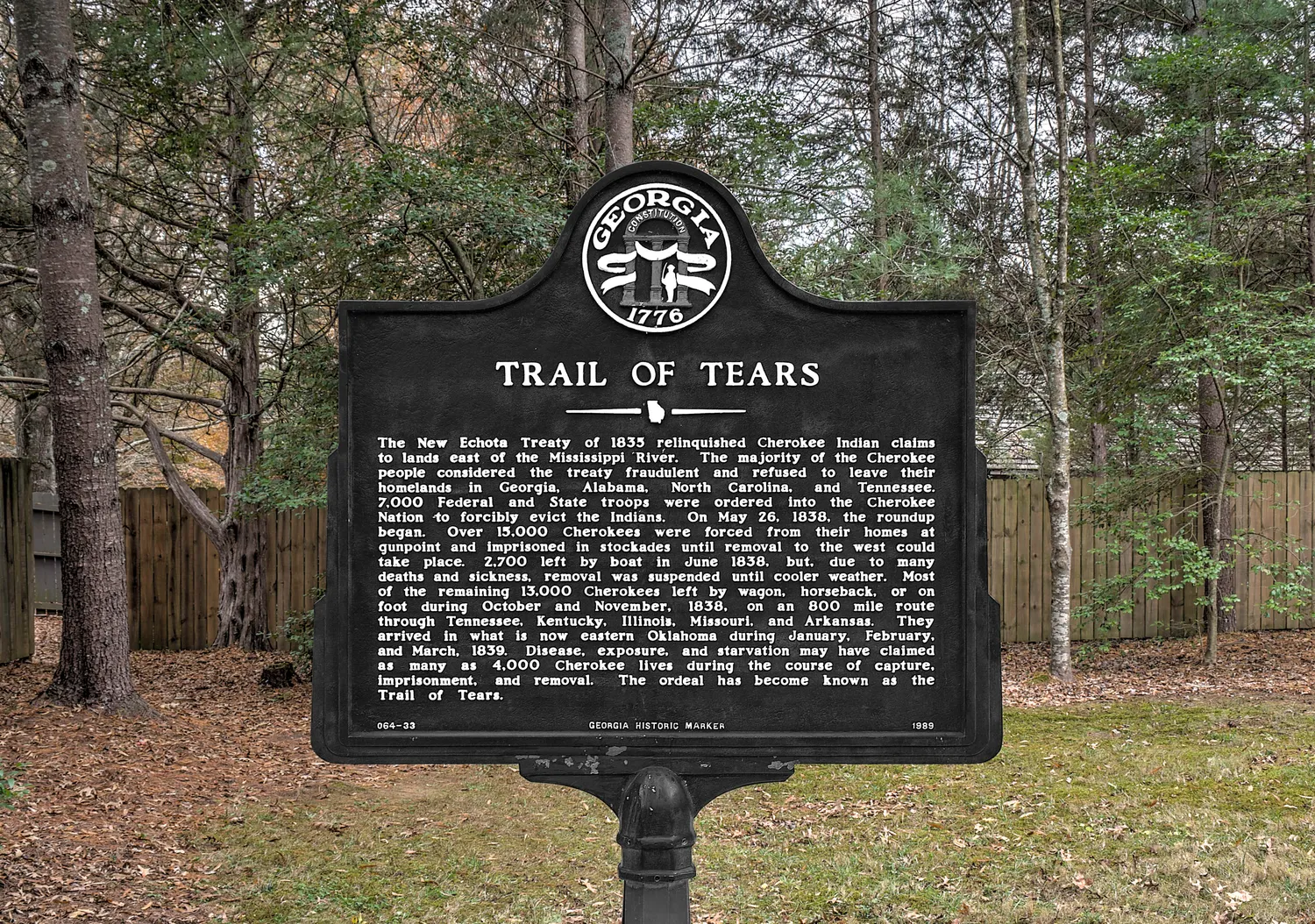
Source: Wikimedia Commons - Dsdugan
The Trail of Tears in 1838 was a tragic episode in United States history. That year, the U.S. government forced thousands of Cherokee and other Native American nations to leave their ancestral homelands in the southeastern United States. They were moved to a distant region called Indian Territory, located west of the Mississippi River. This forced migration was carried out under the supervision of U.S. soldiers and involved great suffering for those relocated.
The main cause of the relocation was the desire of white settlers and the government to gain fertile land in present-day Georgia, Alabama, and Tennessee. The Indian Removal Act of 1830, signed by President Andrew Jackson, provided legal authority for these actions. Although some Native nations tried to resist or use the courts, their efforts were largely unsuccessful. As a result, the U.S. government organized the removal of the Cherokee and several other groups. This policy reflected a wider period of westward expansion in American history.
The journey itself was extremely difficult. Families were separated suddenly and given little time to prepare. Many were forced to walk hundreds of miles, while others traveled in crowded wagons or boats. The route was marked by hardship: food and clean water were scarce, weather conditions were harsh, and people suffered from disease and exhaustion. Thousands died along the way, including many children and elders. The journey became known as the "Trail of Tears" because of the immense pain and loss experienced by those who made it.
The consequences of the Trail of Tears were lasting and severe. Entire communities lost their homes, cultural sites, and connections to their land. The displacement changed the lives of the Cherokee and other nations forever. Many struggled to rebuild their communities in the unfamiliar Indian Territory. Although some managed to preserve parts of their culture and traditions, the trauma of this event shaped Native American history for generations.
Despite the suffering, the Trail of Tears is important for understanding the conflicts and values of the United States during the 1800s. It shows how national goals, like territorial expansion, sometimes clashed with the rights and lives of others. Examining primary sources, such as government documents, maps, and personal accounts, helps historians reconstruct the experience and consider different perspectives.
Interesting Fact: Interesting Fact: John Ross, the Principal Chief of the Cherokee, tried to use the U.S. legal system to stop the removal but was unsuccessful. His leadership during the crisis is still remembered today.
Comprehension quiz (8 questions)
1. What year was the Trail of Tears?
2. Who was forced to move on the Trail of Tears?
3. Where were the Cherokee sent?
4. Why did settlers want Native American land?
5. What made the journey so difficult?
6. What was the impact on Native nations?
7. The Trail of Tears caused lasting trauma.
8. What is 'displacement'?
Common Core standards for Trail of Tears 1838
Explain events, procedures, ideas, or concepts in a historical, scientific, or technical text, including what happened and why, based on specific information in the text.
Determine the meaning of general academic and domain-specific words or phrases in a text relevant to a grade 4 topic or subject area.
Write informative/explanatory texts to examine a topic and convey ideas and information clearly.
Perfect for the way you teach
- Build comprehension skills
- Auto-graded quiz
- Differentiated reading
- Read together at home
- Improve fluency
- Quiet reading time
- Reading curriculum support
- Independent practice
- Track Lexile growth