Treaty of Paris 1783
Interactive passage with audio narration, comprehension questions, and printable PDF.
By completing this purchase you agree to our Terms of Use and Privacy Policy. Your subscription renews automatically until you cancel. You can cancel anytime from your account settings. All sales are final and non-refundable. Digital content is available for download in your account immediately upon purchase.
What's included
Treaty of Paris 1783 preview and details
About this printable Treaty of Paris 1783 reading passage (Grades 6-8)
Sample passage and quiz from Treaty of Paris 1783
Reading passage and comprehension quiz preview
Treaty of Paris 1783
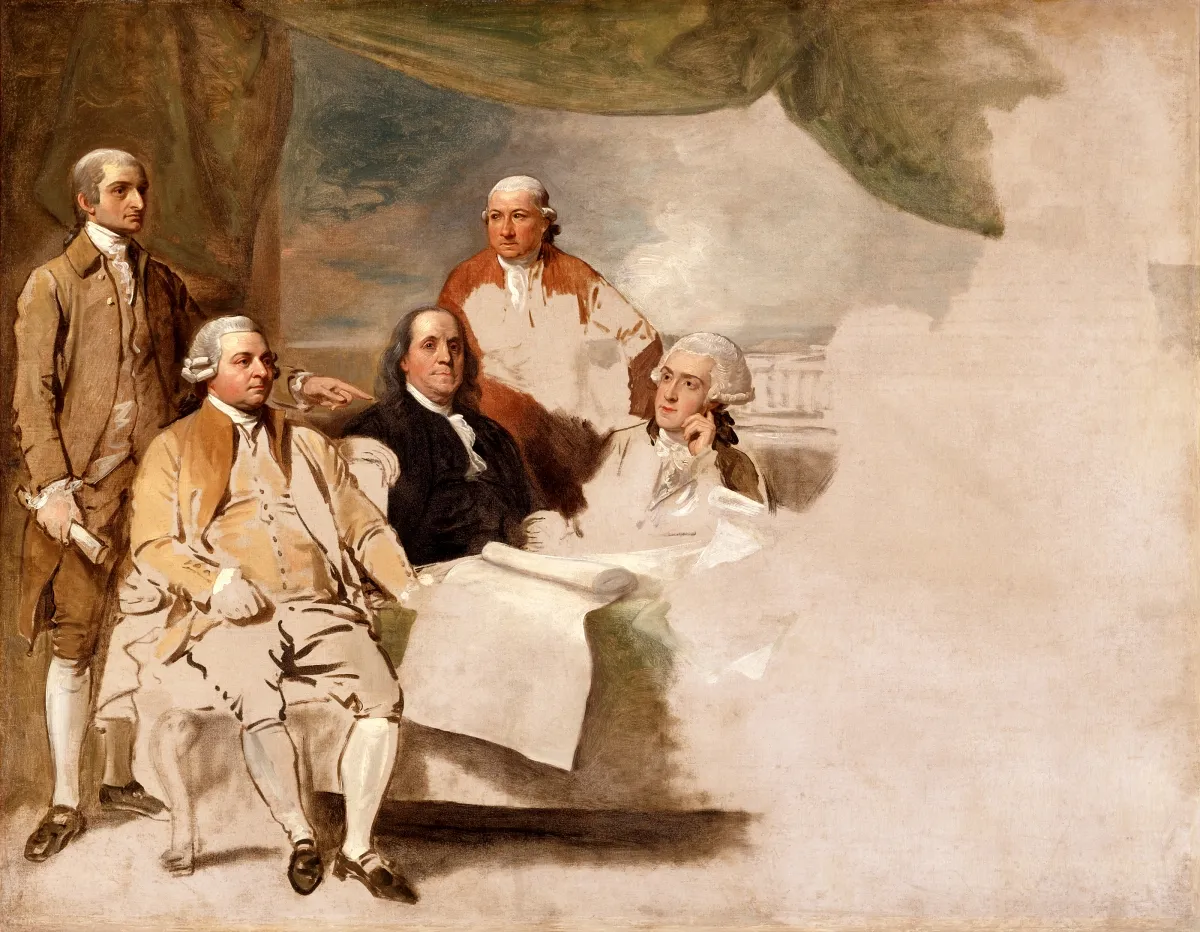
Source: Wikimedia Commons - Benjamin West
The Treaty of Paris in 1783 officially ended the American Revolutionary War between Great Britain and its former colonies. After years of conflict, both sides needed a formal agreement to create peace and address unresolved issues. The negotiations took place in Paris, France, where American representatives Benjamin Franklin, John Jay, and John Adams met with British diplomats. The resulting treaty not only recognized American independence but also established the boundaries of the new nation and set the stage for future relations.
One of the main problems facing negotiators was the question of sovereignty, or the authority to rule. Great Britain had to accept the loss of its American colonies and agree to recognize them as a separate and independent country. This recognition was crucial for the United States to function as a legitimate nation and to form alliances with other countries.
Another important issue was the determination of boundaries. The treaty granted the United States territory stretching from the Atlantic Ocean west to the Mississippi River, and from Canada in the north to Spanish Florida in the south. This new land included important resources and gave Americans room to expand, although it also brought challenges, such as conflicts with Native Americans and disputes over western lands.
The treaty also addressed the rights and property of Loyalists, colonists who had supported Britain during the war. The agreement stated that Congress would recommend the return of property taken from Loyalists, but this promise proved difficult to enforce. In addition, both sides agreed to allow the collection of debts owed to British creditors, showing that economic concerns remained important even after the fighting ended.
The Treaty of Paris reflected both compromise and conflict. While it solved the problem of ending the war and confirmed American independence, it left some issues unsettled. For example, Britain continued to occupy certain western forts, and the fate of Native American lands was not clearly protected. These unresolved issues would create new challenges for the United States in the years ahead.
Despite these difficulties, the treaty was a landmark achievement. It proved that the Americans could negotiate with powerful nations and shape their own future. The new United States now had to govern itself, manage land and resources, and build relationships with other countries. The Treaty of Paris 1783 remains a significant turning point in world history, marking the moment when a group of colonies became an independent nation.
Interesting Fact: The treaty was signed on September 3, 1783, but it took several months for news to reach America, and the last British troops did not leave New York until November 1783.
Comprehension quiz (8 questions)
1. What year was the Treaty of Paris signed?
2. Who was NOT an American negotiator?
3. Which river formed the western boundary?
4. What was a main problem discussed?
5. Why was British recognition important?
6. What was a result of the treaty?
7. The Treaty of Paris protected all Native lands.
8. What is sovereignty?
Common Core standards for Treaty of Paris 1783
Explain events, procedures, ideas, or concepts in a historical, scientific, or technical text, including what happened and why, based on specific information in the text.
Determine the meaning of general academic and domain-specific words or phrases in a text relevant to a grade 4 topic or subject area.
Write informative/explanatory texts to examine a topic and convey ideas and information clearly.
Perfect for the way you teach
- Build comprehension skills
- Auto-graded quiz
- Differentiated reading
- Read together at home
- Improve fluency
- Quiet reading time
- Reading curriculum support
- Independent practice
- Track Lexile growth