Treaty of Versailles 1919
Interactive passage with audio narration, comprehension questions, and printable PDF.
By completing this purchase you agree to our Terms of Use and Privacy Policy. Your subscription renews automatically until you cancel. You can cancel anytime from your account settings. All sales are final and non-refundable. Digital content is available for download in your account immediately upon purchase.
What's included
Treaty of Versailles 1919 preview and details
About this printable Treaty of Versailles 1919 reading passage (Grades 5-8)
Sample passage and quiz from Treaty of Versailles 1919
Reading passage and comprehension quiz preview
Treaty of Versailles 1919
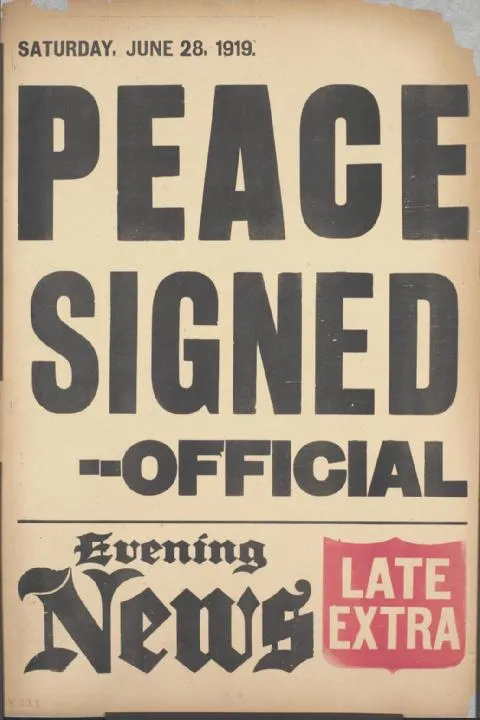
The Treaty of Versailles was a major agreement signed on June 28, 1919, which officially ended World War I between Germany and the Allied Powers. The treaty was created during the Paris Peace Conference, where delegates from over 30 countries gathered at the Palace of Versailles in France to decide the fate of Europe after years of devastating conflict. The Allied leaders, including British Prime Minister David Lloyd George, French Premier Georges Clemenceau, and U.S. President Woodrow Wilson, played central roles in shaping the treaty’s terms. Their decisions would have lasting effects on world history.
The main goal of the Treaty of Versailles was to prevent another world war by holding Germany responsible for the destruction caused. The treaty forced Germany to accept blame for the war, a requirement known as the "war guilt clause" (Article 231). Germany also had to pay massive reparations—financial payments for damage done during the war. According to primary sources, such as the official treaty documents, Germany was ordered to pay 132 billion gold marks, a sum that strained its economy for years. The treaty also required Germany to give up important territories like Alsace-Lorraine and all of its overseas colonies.
Military restrictions were another key component of the treaty. Germany’s army was reduced to just 100,000 men, and it was forbidden from having tanks, aircraft, or submarines. The demilitarization of the Rhineland region, which bordered France, was intended to protect France from future attacks. The treaty also established the League of Nations, an international organization dedicated to maintaining peace. President Wilson had promoted the League as a way to resolve disputes diplomatically, but the U.S. Senate refused to join, which weakened the League’s influence. Some historians debate whether the harshness of the treaty made future conflict more likely, given the resentment it created in Germany.
The consequences of the Treaty of Versailles were significant and long-lasting. The treaty’s penalties caused severe economic problems in Germany and led to political instability. Some Germans saw the treaty as an injustice and a humiliation, fueling anger that would later help the rise of Adolf Hitler and the start of World War II. At the same time, the treaty redrew borders across Europe and the Middle East, creating new nations and changing the balance of power. The signing of the treaty in the Hall of Mirrors at Versailles was a symbolic end to the old era, but it also set the stage for new challenges and conflicts.
The Treaty of Versailles demonstrates how peace settlements can shape the future, for better or worse. By studying this treaty, we connect to larger themes of justice, the impact of war, and the search for lasting peace in world history.
Interesting Fact: The date of the treaty signing, June 28, 1919, was exactly five years after the assassination of Archduke Franz Ferdinand, which had triggered World War I.
Comprehension quiz (8 questions)
1. When was the Treaty of Versailles signed?
2. Where did the signing take place?
3. Who was NOT a leader at the conference?
4. Why did the treaty require reparations?
5. What was a result for Germany?
6. How did the treaty affect future events?
7. The League of Nations was created by the treaty. (True/False)
8. What does 'reparations' mean?
Perfect for the way you teach
- Build comprehension skills
- Auto-graded quiz
- Differentiated reading
- Read together at home
- Improve fluency
- Quiet reading time
- Reading curriculum support
- Independent practice
- Track Lexile growth