Truman Integrates Military: Executive Action
Interactive passage with audio narration, comprehension questions, and printable PDF.
By completing this purchase you agree to our Terms of Use and Privacy Policy. Your subscription renews automatically until you cancel. You can cancel anytime from your account settings. All sales are final and non-refundable. Digital content is available for download in your account immediately upon purchase.
What's included
Truman Integrates Military: Executive Action preview and details
About this printable Truman Integrates Military: Executive Action reading passage (Grades 6-8)
Sample passage and quiz from Truman Integrates Military: Executive Action
Reading passage and comprehension quiz preview
Truman Integrates Military
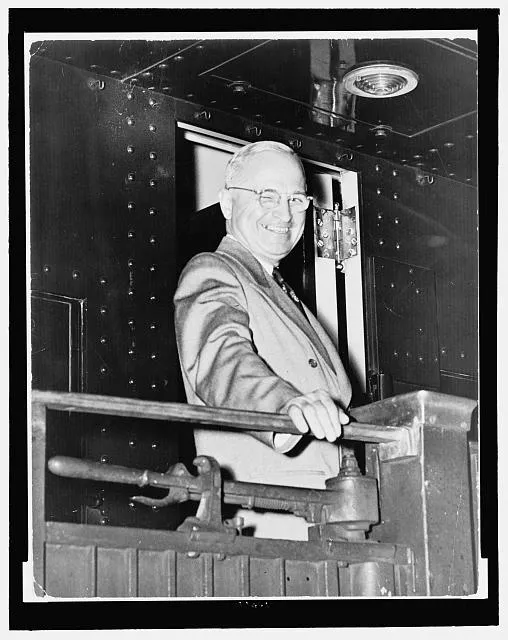
Source: Library of Congress
On July 26, 1948, President Harry S. Truman signed Executive Order 9981, a document that forever changed the United States military. Before this order, the military was racially segregated. Black and white soldiers served in separate units, often with different duties, living conditions, and opportunities. Segregation was a common practice not only in the military but also in many parts of American society.
The problem of racial segregation in the armed forces became especially clear during World War II. More than one million African Americans served in the war, hoping their service would lead to greater equality at home. However, they often faced discrimination and were given fewer chances for advancement. Some leaders and groups, such as the NAACP and A. Philip Randolph, began to pressure the government for change.
President Truman faced a difficult decision. Many Americans, especially in southern states, opposed desegregation. However, civil rights activists argued that fighting for freedom abroad while denying it at home was hypocritical. Truman believed in fairness and recognized the need for integration of the military. He also wanted to demonstrate that the United States stood for democracy and justice during the early years of the Cold War.
By issuing Executive Order 9981, Truman made it clear that "there shall be equality of treatment and opportunity for all persons in the armed services without regard to race, color, religion or national origin." The order created a committee to study and recommend ways to achieve desegregation. Change did not happen overnight. Some military leaders resisted, and it took several years for the order to be fully carried out.
Despite resistance, the process of integration slowly advanced. The Korean War (1950–1953) became a turning point, as military leaders realized that segregated units were less effective. Integration allowed the armed forces to use the talents of all service members and helped build unity and morale. By the mid-1950s, most branches of the military had ended official segregation.
Truman’s decision to integrate the military was a major victory for the early civil rights movement. It set an important example, showing that the government could take action against discrimination. The success of military integration inspired other efforts to end segregation in schools, public places, and workplaces. It also showed that national policies could challenge deeply rooted social practices.
Although Executive Order 9981 did not solve all problems of racism or inequality, it was a powerful step forward. It demonstrated the importance of leadership and collective action in achieving social change. The integration of the military was a sign of hope for a more equal nation, influencing the larger struggle for civil rights that would grow in the decades that followed.
Interesting Fact: The Tuskegee Airmen, a famous group of African American pilots from World War II, played a key role in showing the value and bravery of Black service members before the military was integrated.
Comprehension quiz (8 questions)
1. Who signed Executive Order 9981?
2. What did Executive Order 9981 end?
3. In what year was Executive Order 9981 signed?
4. Why did some people resist integration?
5. How did the Korean War affect integration?
6. What was a result of military integration?
7. Executive Order 9981 created a committee. True or false?
8. What does 'integration' mean?
Common Core standards for Truman Integrates Military: Executive Action
Explain events, procedures, ideas, or concepts in a historical, scientific, or technical text, including what happened and why, based on specific information in the text.
Determine the meaning of general academic and domain-specific words or phrases in a text relevant to a grade 4 topic or subject area.
Write informative/explanatory texts to examine a topic and convey ideas and information clearly.
Perfect for the way you teach
- Build comprehension skills
- Auto-graded quiz
- Differentiated reading
- Read together at home
- Improve fluency
- Quiet reading time
- Reading curriculum support
- Independent practice
- Track Lexile growth