This learning resource is available in interactive and printable formats. The interactive worksheet can be played online and assigned to students. The Printable PDF version can be downloaded and printed for completion by hand.
This passage explores the three main types of rocks—igneous, sedimentary, and metamorphic—by examining how each type forms and what it reveals about Earth's history. With clear explanations, real-world examples, and integration of key scientific concepts, the text fulfills the Next Generation Science Standards (NGSS) MS-ESS2-1. The passage emphasizes the importance of rock identification for resource use, construction, and understanding geological processes. It includes a glossary, multiple-choice quiz, writing prompts, and graphic organizers, making it ideal for grades 6-8. Audio integration supports diverse learners. This resource helps students connect rock types to broader scientific principles, such as the rock cycle, and prepares them for deeper study of Earth's systems.
Metamorphic Rocks
Rocks are the solid materials that make up the Earth's crust and tell the story of our planet's past. Each rock type forms through a unique set of processes, revealing information about the conditions under which it was created. Geologists use clues from rocks to answer key scientific questions, such as how Earth's surface changes over time and where important natural resources are found. Understanding the different types of rocks helps us build safer structures, locate valuable materials, and learn about Earth's history. This passage introduces the three main rock families and explains why identifying rock types matters.
Formation of the Three Rock Families
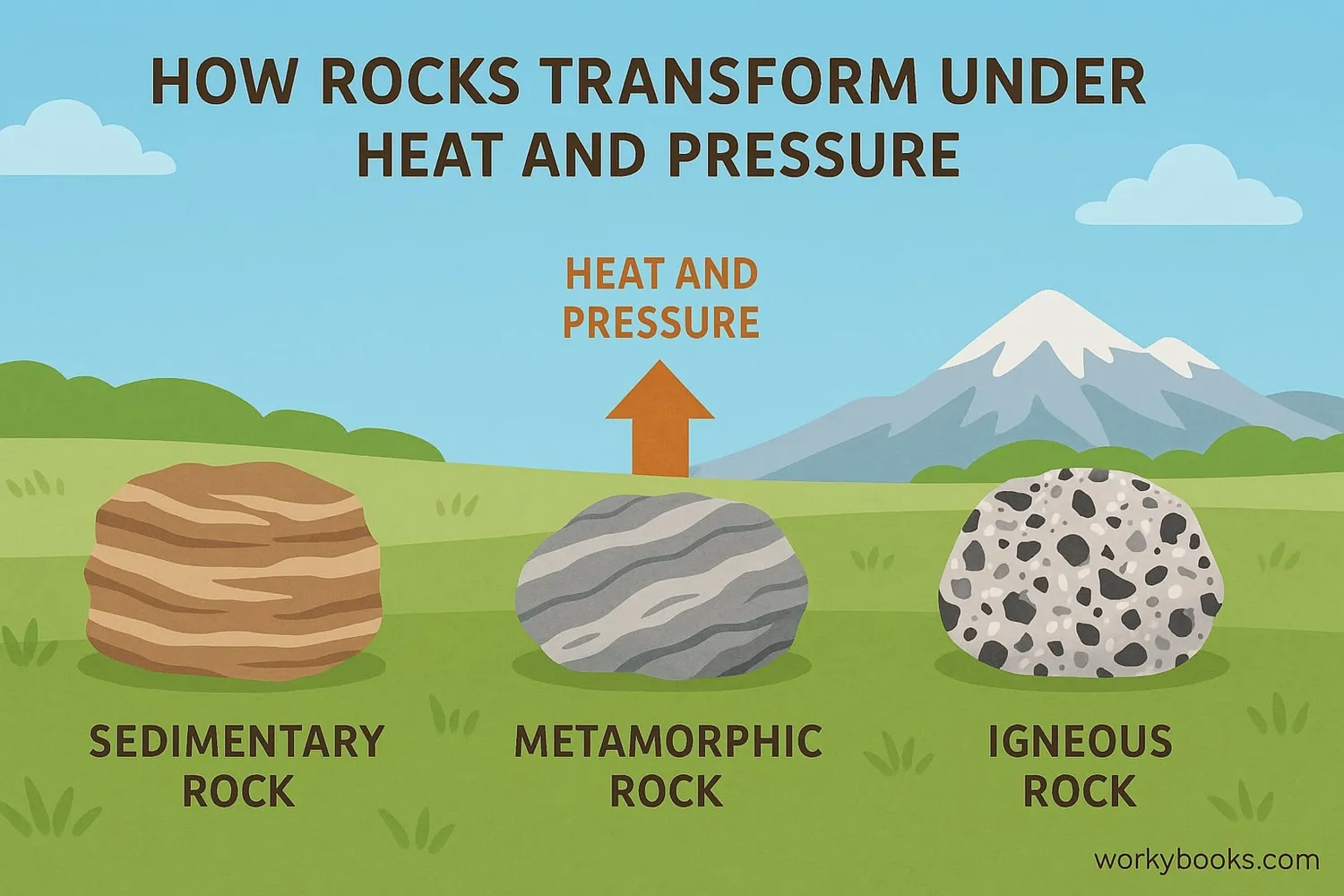
There are three major groups of rocks: igneous, sedimentary, and metamorphic rocks. Igneous rocks form when molten material known as magma or lava cools and solidifies. This process can happen deep underground or after a volcanic eruption at the surface. Granite, which often makes up the continents, is an example of a coarse-grained igneous rock. Basalt, which forms the ocean floor, is a fine-grained igneous rock. Sedimentary rocks are created when small pieces of other rocks, called sediments, are compressed and cemented together over time, usually in rivers, lakes, or oceans. Sandstone and limestone are common sedimentary rocks, each recording details about the environment where they formed. Metamorphic rocks begin as igneous or sedimentary rocks but change due to intense heat and pressure inside the Earth. This transformation, called metamorphism, can produce rocks like marble and schist, which often have distinctive bands or layers.
Rock Identification: Texture and Composition
Scientists identify rocks by examining their texture and composition. Texture describes the size, shape, and arrangement of a rock's grains or crystals. For example, granite has large, visible crystals, while basalt's crystals are too small to see without a microscope. Sedimentary rocks might show layers or contain visible fragments. Composition refers to the types of minerals present in a rock. Different minerals form under different conditions, so knowing what minerals are in a rock provides clues about its origin. This scientific approach—using observations and evidence—helps geologists classify rocks and understand Earth's processes in detail.
Why Knowing Rock Types Matters
Recognizing and understanding rock types has important real-world applications. For example, many building materials, such as granite and limestone, come from specific rock types because of their strength and durability. Certain rocks contain valuable resources like metals, oil, or groundwater. Studying rocks also reveals evidence of past environments, such as ancient oceans or mountain-building events. This information helps scientists reconstruct Earth's history and predict how the planet might change in the future. Identifying rock types is an essential skill in geology, engineering, environmental science, and even in everyday life.
In summary, the three main types of rocks—igneous, sedimentary, and metamorphic—are each formed by different processes and tell unique stories about Earth's past. By identifying rocks using texture and composition, scientists can unlock information about natural resources, environmental changes, and the dynamic systems that shape our planet.
Interesting Fact: Some metamorphic rocks, like gneiss, can contain minerals that formed more than 1 billion years ago, making them among the oldest materials on Earth.
Which process forms igneous rocks?
Cooling and solidifying of magma or lavaCompression of sedimentsHeat and pressure changing other rocksErosion and weathering of minerals
What is the main way sedimentary rocks form?
From cooled lavaFrom compressed and cemented sedimentsBy melting undergroundBy freezing water
Metamorphic rocks begin as which type(s) of rock?
Only igneous rocksIgneous or sedimentary rocksOnly sedimentary rocksOnly volcanic rocks
Which detail best explains why knowing rock types is useful?
It helps scientists find resources like metals and oil.It tells us which rocks are the oldest.It shows which rocks are found in the ocean.It makes rocks look more interesting.
What does the word 'texture' mean in the passage?
How a rock feels to touchThe size, shape, and arrangement of grains or crystals in a rockThe color of a rockHow heavy a rock is
What is 'metamorphism' as used in the passage?
The process of rocks melting into magmaThe process where rocks change due to heat and pressureThe cooling of lava on Earth's surfaceThe breaking apart of sedimentary rocks
If you find a rock with large, visible crystals, what type of rock is it most likely to be?
SedimentaryMetamorphicIgneousOrganic
How do scientists use rocks to learn about Earth's past?
By looking at the minerals and textures to understand formation conditionsBy tasting the rocksBy measuring their temperatureBy counting the number of rocks in an area
True or False: Sedimentary rocks can contain visible fragments of other rocks.
TrueFalse
True or False: All metamorphic rocks start as igneous rocks.
TrueFalse
Perfect For:
👩🏫 Teachers
• Reading comprehension practice
• Auto-graded assessments
• Literacy skill development
👨👩👧👦 Parents
• Reading practice at home
• Comprehension improvement
• Educational reading time
🏠 Homeschoolers
• Reading curriculum support
• Independent reading practice
• Progress monitoring
Reading Features:
📖
Reading Passage
Engaging fiction or nonfiction text
❓
Comprehension Quiz
Auto-graded questions
📊
Instant Feedback
Immediate results and scoring
📄
Printable Version
Download for offline reading
🔊
Read Aloud
Voice-over with word highlighting
Related Content
Stratigraphy: Reading Earth's Layered History
This passage explains stratigraphy as the study of rock layers to interpret Earth's history. Aligned with NGSS MS-ESS1-4...
MS-ESS2-1MS-PS1-2RST.6-8.3
Frost Wedging: How Ice Splits Rock
This passage explains frost wedging as a mechanical weathering process. Aligned with NGSS MS-ESS2-1 (Earth’s systems) a...
MS-ESS2-1MS-ESS2-2RST.6-8.3
Limestone Caves: Nature’s Underground Wonders
This passage explains limestone cave formation through carbonation, aligned with NGSS MS-ESS2-1 (Earth’s systems) and L...
MS-ESS2-1LS2.CRST.6-8.7
Chemical Weathering: The Breakdown of Rocks Through Chemical Reactions
This passage explains chemical weathering processes, aligned with NGSS MS-ESS2-1 (Earth’s systems) and ESS2-2 (surface ...
MS-ESS2-1MS-ESS2-2RST.6-8.4
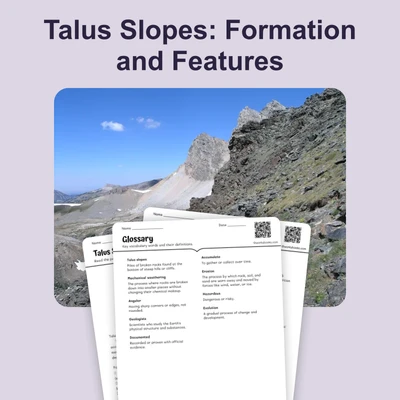
Talus Slopes: Formation and Features
This earth science passage explains talus slope formation through mechanical weathering processes, aligning with NGSS MS...
MS-ESS2-1MS-ESS2-2RST.6-8.4
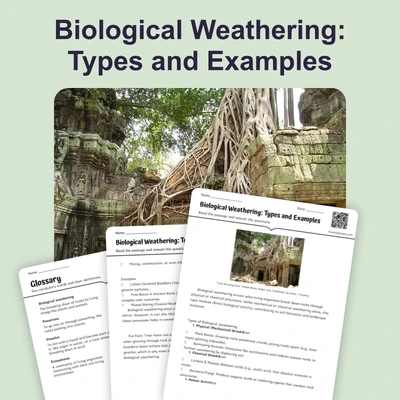
Biological Weathering: Types and Examples
This passage details biological weathering processes, connecting to NGSS MS-ESS2-1 (Earth's systems) and LS2.B (ecosyste...
MS-ESS2-1MS-PS1-2RST.6-8.3
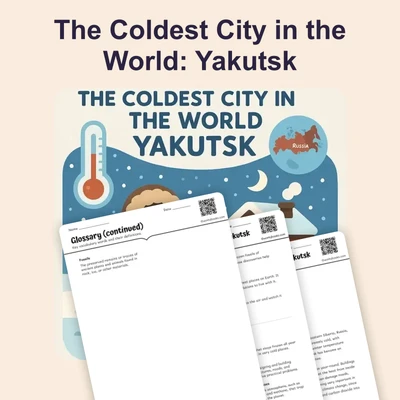
The Coldest City in the World: Yakutsk
This NGSS-aligned science passage introduces middle school readers to Yakutsk, the coldest city on Earth. Students will ...
MS-ESS2-1
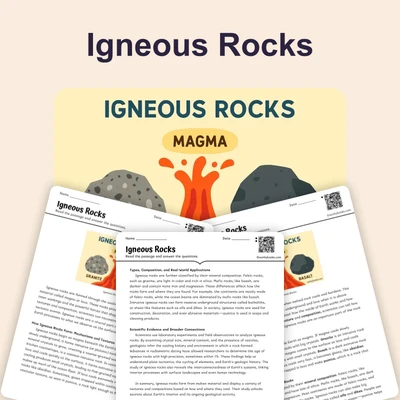
Igneous Rocks
This comprehensive passage introduces middle school students to igneous rocks, focusing on how these rocks form from mol...
MS-ESS2-1MS-ESS3-1
Sedimentary Rocks
This comprehensive middle school science passage introduces students to sedimentary rocks, detailing their step-by-step ...
MS-ESS2-1MS-ESS2-3MS-ESS3-1
Metamorphic Rocks
This engaging middle school science passage introduces students to the fascinating world of metamorphic rocks. Aligned w...
MS-ESS2-1MS-ESS3-1
Scientific Inquiry in Earth Science
This passage explores scientific inquiry in Earth science for grades 6-8, aligned with NGSS standards MS-ESS1-4, MS-ESS2...
MS-ESS1-4MS-ESS2-1MS-ESS3-5SEP
Contour Lines and Elevation
This passage, designed for grades 6-8 and aligned with NGSS standards MS-ESS2-2 and MS-ESS2-1, introduces students to th...
MS-ESS2-2MS-ESS2-1SEP.4SEP.8
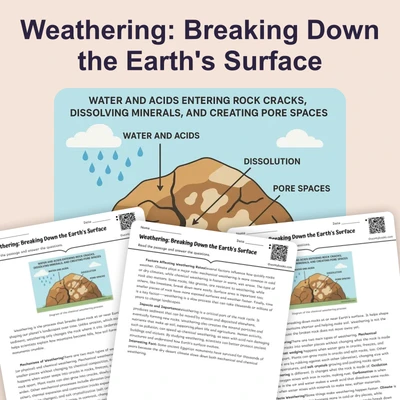
Weathering
This comprehensive science reading passage for grades 6-8 focuses on the concept of weathering, aligning with NGSS stand...
MS-ESS2-1
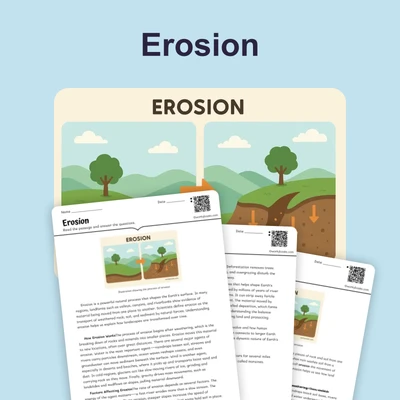
Erosion
This comprehensive middle school science passage explains erosion—the process that transports weathered rock and soil fr...
MS-ESS2-1
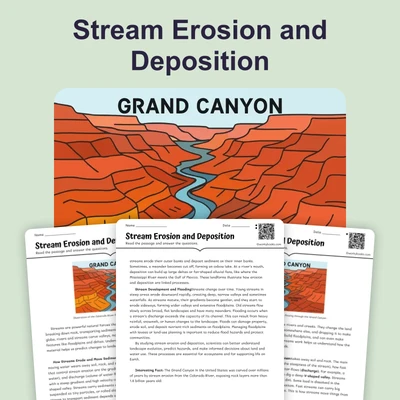
Stream Erosion and Deposition
This middle school science passage, aligned to NGSS MS-ESS2-1, introduces students to the dynamic processes of stream er...
MS-ESS2-1
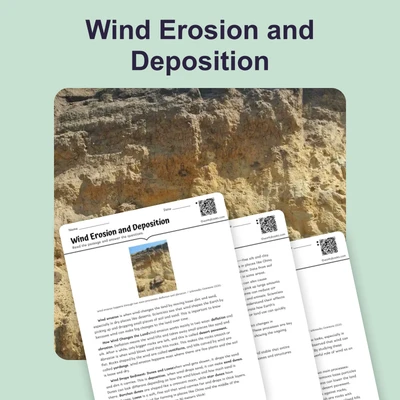
Wind Erosion and Deposition
This comprehensive science reading passage for grades 6-8 explores the processes of wind erosion and deposition, alignin...
MS-ESS2-1
Glacial Erosion and Deposition
This middle school science passage explores glacial erosion and deposition, focusing on the mechanisms by which glaciers...
MS-ESS2-1
Mass Movements
This NGSS-aligned passage introduces middle school students to the science of mass movements—gravity-driven motions of r...
MS-ESS2-1MS-ESS3-2
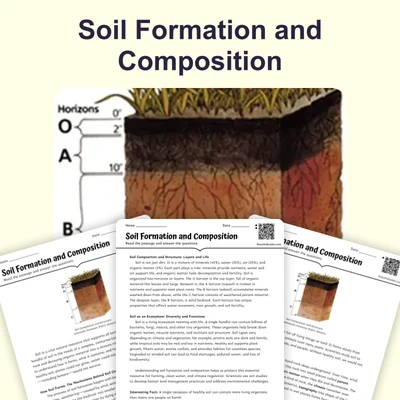
Soil Formation and Composition
This comprehensive middle school science passage explores soil formation and composition, perfectly aligned to NGSS stan...
MS-ESS2-1
Constructive and Destructive Forces
This middle school science passage explores how Earth's surface is constantly shaped by the interplay of constructive an...