This learning resource is available in interactive and printable formats. The interactive worksheet can be played online and assigned to students. The Printable PDF version can be downloaded and printed for completion by hand.
This middle school science passage introduces students to the concept of valence electrons, the outermost electrons that control how atoms interact and combine. Aligned with NGSS MS-PS1-1, it explains how the number of valence electrons can be determined by an element’s group on the periodic table, and how this affects chemical stability and bonding. Through clear explanations and real-world examples like sodium, oxygen, and neon, students explore how valence electrons drive the formation of molecules and influence the behavior of different elements. The passage integrates academic vocabulary, relevant context, and connects to broader scientific principles of matter and chemical processes. Designed for grades 6-8, it also includes a simplified version for differentiated learning, an audio component for accessibility, and interactive activities such as multiple-choice questions, writing prompts, and graphic organizers. This comprehensive resource deepens conceptual understanding of atomic structure, chemical reactivity, and the periodic table.
CONTENT PREVIEW
Expand content preview
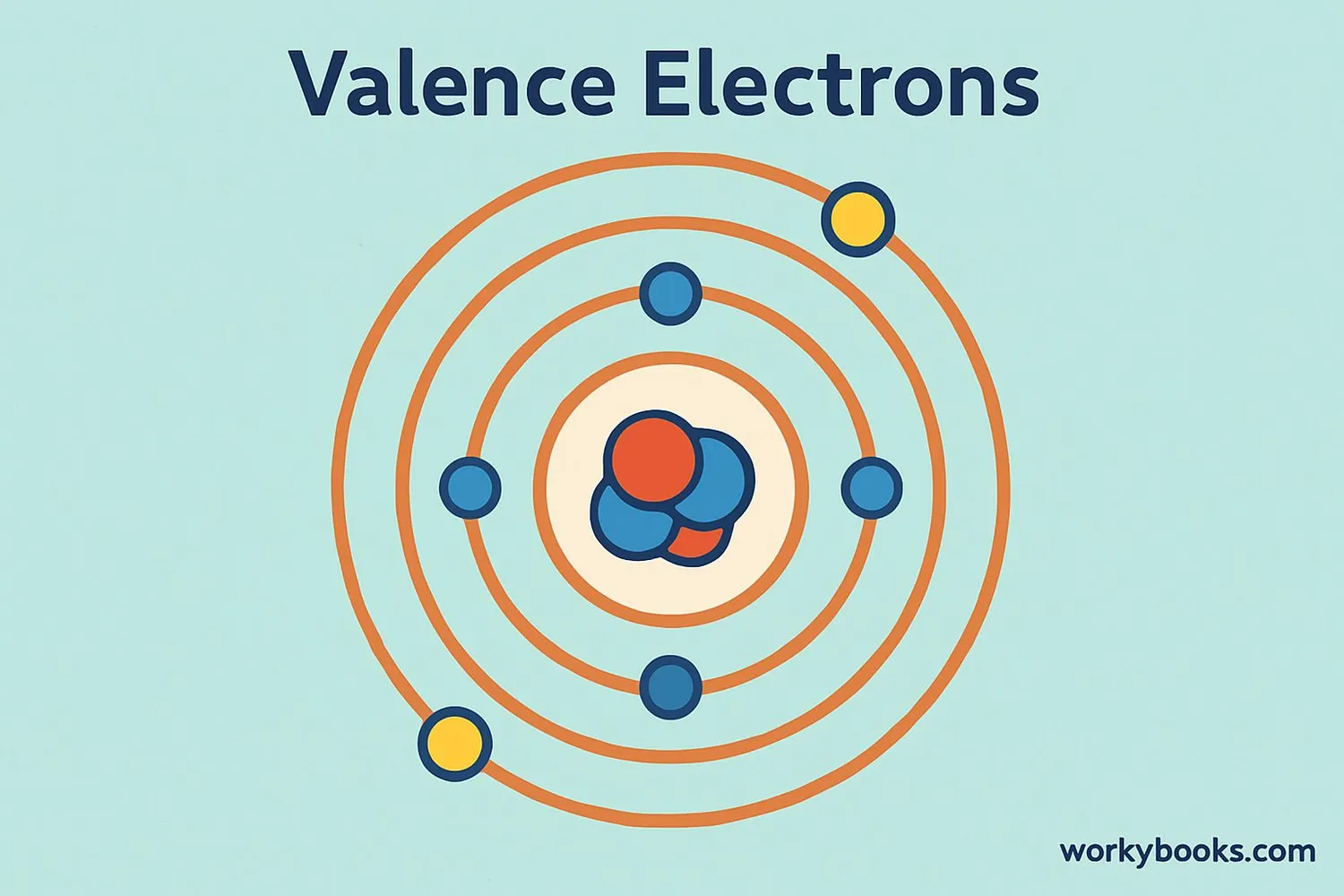
Valence electrons are the outermost electrons of an atom, and they play a central role in chemical reactions. In chemistry, scientists discovered that the way elements combine depends on these electrons. For example, the difference between the explosive reaction of sodium with water and the non-reactive nature of neon can be explained by their valence electrons. Understanding how these electrons work allows scientists to predict chemical properties and create new materials.
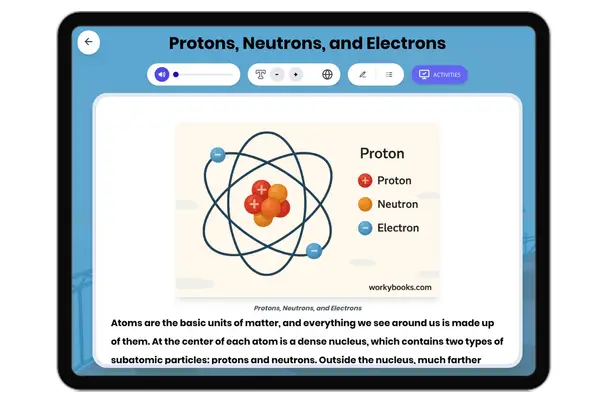
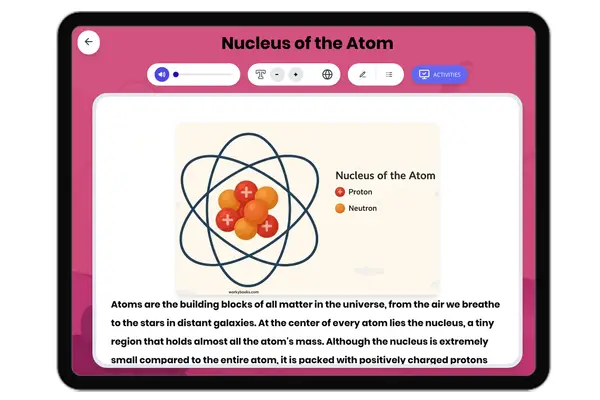
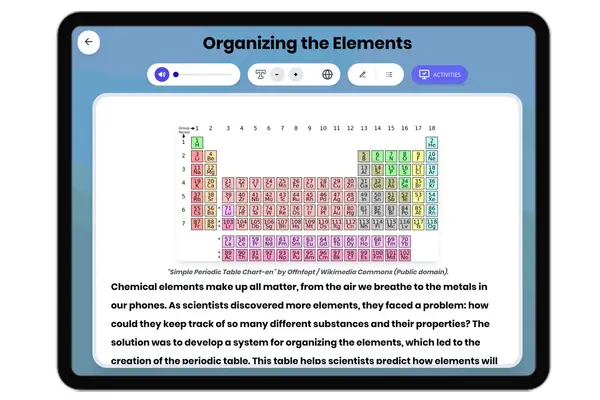
How Valence Electrons Determine Chemical Behavior Atoms are made of protons, neutrons, and electrons. The electrons move in regions called shells around the nucleus. The outermost shell contains the valence electrons. These electrons are responsible for forming chemical bonds with other atoms. Atoms with a full outer shell, such as neon with eight valence electrons, are stable and do not easily react. In contrast, atoms with only one or two valence electrons, like sodium, are highly reactive because they seek to achieve stability by losing or gaining electrons. The periodic table helps us identify the number of valence electrons based on the group number: Group 1 elements have one, Group 6 have six, and Group 8 have eight, making them very stable.
Applications and Real-World Connections Valence electrons explain why different elements behave differently in the environment and in technology. For example, sodium (Na), with one valence electron, reacts explosively with water. Oxygen (O), with six valence electrons, readily forms bonds to make water and many other compounds. Neon (Ne), with eight valence electrons, is so stable that it does not react with most substances and is used in neon lights because it does not combine with other elements. This knowledge helps chemists design safe materials, medicines, and even new types of batteries.
Interactions, Stability, and the Periodic Table Valence electrons are also linked to the stability of atoms. Atoms naturally move toward a stable configuration, which usually means having a full outer shell. This drive for stability is what causes atoms to form bonds, creating molecules and compounds. The periodic table groups elements by similar valence electron numbers, so elements in the same group tend to have similar properties and reactivities. This organization has allowed scientists to predict the discovery of new elements and understand complex chemical systems.
In summary, valence electrons are the key to understanding why atoms interact, how molecules are formed, and how the periodic table is organized. They are central to many chemical and technological advances in our world.
Interesting Fact: The noble gases (Group 8), like neon and argon, are so stable because their outer shells are full; this makes them almost completely unreactive, which is why they are used in lighting and to protect sensitive equipment.
What are valence electrons?
The outermost electrons in an atomProtons in the nucleusElectrons found in the innermost shellNeutrons outside the nucleus
According to the passage, what makes neon stable and unreactive?
It has a full outer shell of valence electronsIt has only one electronIt can easily lose electronsIt forms many compounds
Which group on the periodic table has elements with six valence electrons?
Group 6Group 1Group 8Group 2
What is the main function of valence electrons in chemical bonding?
They form chemical bonds with other atomsThey stay in the nucleusThey give atoms their colorThey determine atomic mass
What does the term 'stability' mean in the context of atoms?
Having a full outer shell of electrons and not likely to reactHaving no electrons at allAlways forming new compoundsBeing very reactive
In the passage, what evidence shows that sodium is highly reactive?
It reacts explosively with waterIt glows in neon lightsIt is a noble gasIt forms a full outer shell
Based on the passage, how can scientists predict an element’s chemical properties?
By looking at its group on the periodic tableBy measuring its colorBy counting its neutronsBy checking its atomic mass
Valence electrons are found in the innermost shell of an atom. (True/False)
TrueFalse
Elements in the same group of the periodic table have the same number of valence electrons. (True/False)
TrueFalse
Which of the following best explains why valence electrons are important?
They determine how atoms interact and form compoundsThey are part of the atom’s nucleusThey change the color of elementsThey have no effect on chemical reactions
Perfect For:
👩🏫 Teachers
• Reading comprehension practice
• Auto-graded assessments
• Literacy skill development
👨👩👧👦 Parents
• Reading practice at home
• Comprehension improvement
• Educational reading time
🏠 Homeschoolers
• Reading curriculum support
• Independent reading practice
• Progress monitoring
Reading Features:
📖
Reading Passage
Engaging fiction or nonfiction text
❓
Comprehension Quiz
Auto-graded questions
📊
Instant Feedback
Immediate results and scoring
📄
Printable Version
Download for offline reading
🔊
Read Aloud
Voice-over with word highlighting
Reviews & Ratings
No reviews yet. Be the first to share your experience!
Related Content
Atomic Structure
This reading passage on Atomic Structure provides middle school students with an accessible explanation of the fundament...
MS-PS1-1RI.6.3RI.7.1
Parts of an Atom
This reading passage on Parts of an Atom provides middle school students with a structured and accessible explanation of...
MS-PS1-1RI.6.3RI.7.1
Chemical Bonds
This reading passage on Chemical Bonds provides middle school students with a clear explanation of how and why atoms con...
MS-PS1-1RI.6.3RI.7.1
The Freezing Point of Water
This science reading passage, titled 'The Freezing Point of Water', introduces students to a key physical science concep...
MS-PS1-1RI.6.3RI.7.1
Physical Properties of Matter
This comprehensive reading passage introduces grades 6-8 students to the concept of physical properties of matter, perfe...
MS-PS1-1
Mixtures and Pure Substances
This middle school science passage provides an in-depth exploration of mixtures and pure substances, directly aligned to...
MS-PS1-1
Types of Mixtures
This comprehensive science passage for grades 6-8 introduces students to the concept of mixtures, focusing on distinguis...
MS-PS1-1
Solutions, Suspensions, and Colloids
This comprehensive science passage explores the differences between solutions, suspensions, and colloids, focusing on ho...
MS-PS1-1
The Nature of Science
This passage explores the nature of science for middle school students, aligning with NGSS standards MS-ETS1-4, MS-PS1-1...
MS-ETS1-4MS-PS1-1MS-LS1-1
Scientific Theories
This reading passage for grades 6-8 introduces students to the concept of scientific theories, emphasizing that these ar...
MS-PS1-1MS-PS1-4MS-PS3-4SCIENCE AND ENGINEERING PRACTICES
Particle Model of Matter
This comprehensive science reading passage for grades 6-8 explores the particle model of matter, aligning with NGSS stan...
MS-PS1-1MS-PS1-4
The Idea of the Atom
This informational science passage introduces middle school students (grades 6-8) to the concept that all matter is made...
MS-PS1-1
Protons, Neutrons, and Electrons
This comprehensive middle school science passage explores the roles of protons, neutrons, and electrons, the three main ...
MS-PS1-1
What are Ions
This passage introduces middle school students to the concept of ions, explaining the processes by which atoms gain or l...
MS-PS1-1
Nucleus of the Atom
This comprehensive passage for grades 6-8 introduces students to the nucleus of the atom, the dense center that contains...
MS-PS1-1
How Atoms Differ
This middle school science reading passage, aligned with NGSS standard MS-PS1-1, explores the fundamental differences am...
MS-PS1-1
Isotopes
This middle school science passage explores the concept of isotopes, which are atoms of the same element with different ...
MS-PS1-1
Compounds vs. Mixtures
This educational passage for grades 6-8 explores the fundamental differences between compounds and mixtures, aligning wi...
MS-PS1-1
Organizing the Elements
This passage for middle school science explores how scientists organized the elements as more were discovered, leading t...