Valley Forge Winter 1777-1778 — Reading Comprehension
Rate this
Premium Resource
Present
Present in classroom. No work saved
Assign
Classroom with student accounts, Track progress
Quick Play
No student accounts, assign with a link
Grades
6
7
8
Standards
D2.HIS.2.3-5
D2.HIS.3.3-5
RI.4.3
RI.4.4
W.4.2
PRINT+DIGITAL RESOURCE
This learning resource is available in interactive and printable formats. The interactive worksheet can be played online and assigned to students. The Printable PDF version can be downloaded and printed for completion by hand.
This passage examines the Valley Forge winter of 1777-1778, a pivotal and challenging period during the American Revolution. Students will explore the causes, experiences, and consequences of the Continental Army's encampment at Valley Forge, analyzing multiple perspectives—including those of soldiers, leaders, and local civilians. The passage uses a problem/solution structure, incorporates primary source evidence, and highlights key disciplinary vocabulary. It emphasizes historical thinking by encouraging readers to consider the complexities and contradictions faced by the army, such as issues of leadership, logistics, morale, and the support (or lack thereof) from Congress and local communities. Activities include a reading comprehension quiz, writing tasks, a T-Chart graphic organizer, and a timeline of events. This resource aligns with C3 and Common Core standards and supports deep analysis skills, as well as English Language Arts (ELA) proficiency. Read aloud audio and a full Spanish translation are included to support diverse learners.
CONTENT PREVIEW
Expand content preview
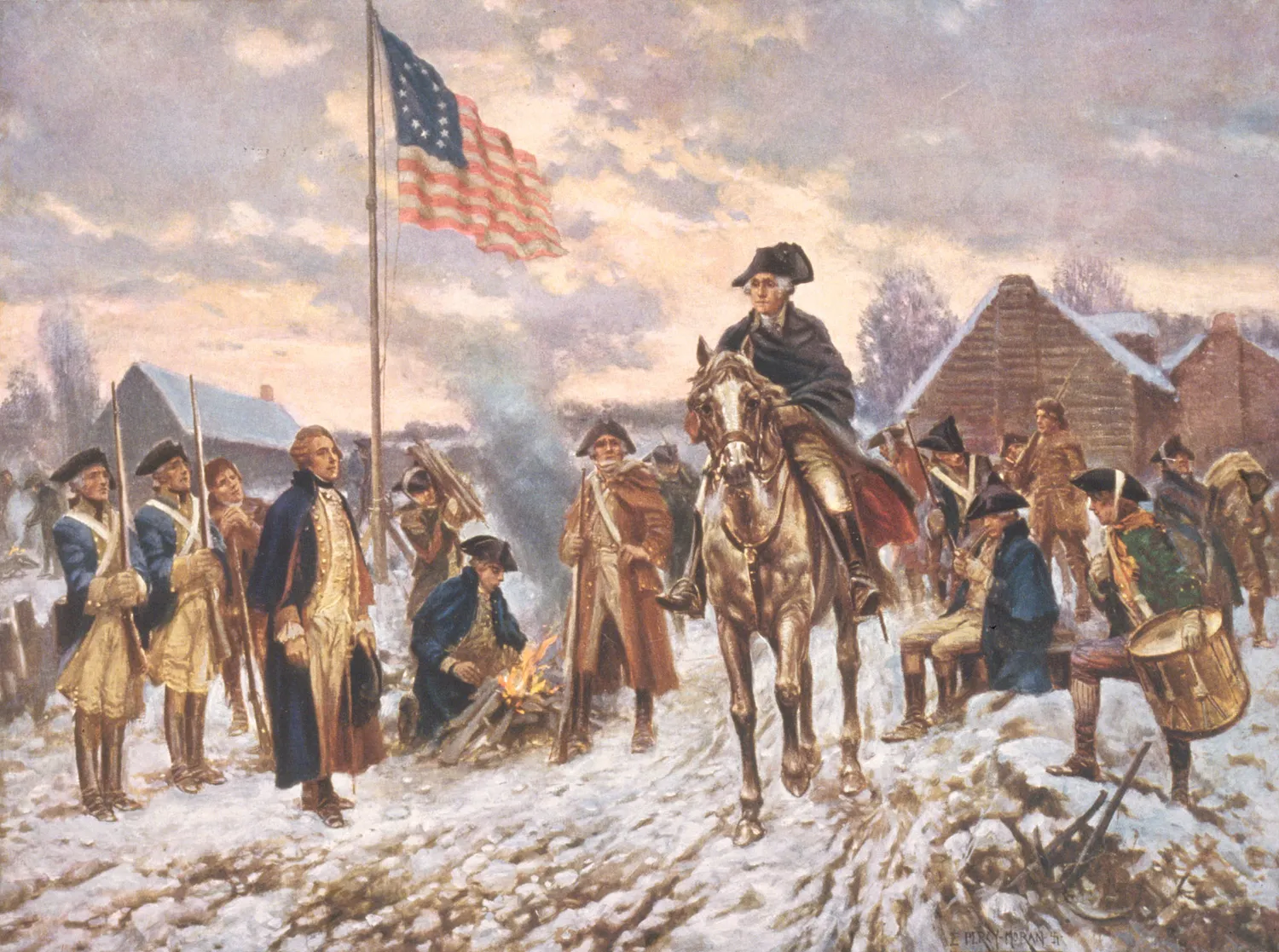
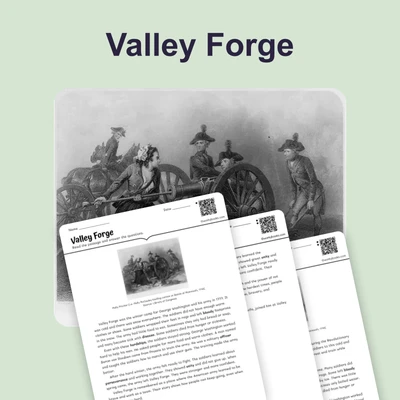
Washington at Valley Forge by E. Percy Moran, Library of Congress
The winter of 1777-1778 at Valley Forge was a critical period during the American Revolution. George Washington’s Continental Army set up an encampment about 20 miles outside of Philadelphia. The army chose Valley Forge for its defensive location, but the decision brought severe challenges. The soldiers faced bitter cold, food shortages, and disease. This winter tested not only their physical strength but also their determination to continue fighting for independence.
Conditions at Valley Forge were extremely harsh. Many soldiers lacked proper clothing and shoes, leaving bloody footprints in the snow. Food was so scarce that hunger and deprivation became daily struggles. Illnesses like smallpox and typhoid spread quickly in the crowded huts. Medical supplies were limited, and many men died from sickness or exposure. Despite these hardships, the army endured through a combination of perseverance and support from local communities.
The problems at Valley Forge forced the Continental Army to find solutions. Washington called for better organization and discipline. He brought in Baron von Steuben, a Prussian officer, to train the soldiers. Von Steuben introduced a strict system of drills and military discipline. Soldiers learned how to march, handle weapons, and work together as a unit. This training improved their skills and morale, helping to turn the army into a more effective fighting force.
Support from the surrounding population was also essential. Civilians brought food, clothing, and blankets to the camp. Congress eventually sent more supplies, though not enough to end all suffering. The army also built better huts for protection. By the end of the winter, those who survived had become more united and confident. The experience at Valley Forge transformed the Continental Army, preparing them to take the offensive against the British.
The story of Valley Forge is complex. While some soldiers deserted, most remained loyal. Their sacrifice and endurance became a symbol of the hardships faced during the fight for independence. Valley Forge was not a battlefield, but it was a turning point. The lessons learned there—about leadership, teamwork, and resilience—helped shape the outcome of the American Revolution.
Interesting Fact: The famous phrase "No army ever suffered more" was used by officers to describe the conditions at Valley Forge, but many soldiers still found ways to play games and write letters home during the harsh winter.
Where did Washington's army camp in winter 1777-1778?
Valley ForgePhiladelphiaBostonYorktown
Who trained the soldiers at Valley Forge?
Baron von SteubenThomas JeffersonBenjamin FranklinPaul Revere
Which was NOT a problem at Valley Forge?
Plenty of foodCold weatherDiseaseLack of shoes
Why was discipline important at Valley Forge?
Made army fight betterBuild bigger tentsGrow more foodSing patriotic songs
How did civilians help the army?
Brought food and clothingJoined the BritishBurned the campStopped sending letters
What was the effect of von Steuben’s training?
Army became strongerArmy left Valley ForgeArmy built shipsArmy surrendered
Valley Forge was a battlefield. True or false?
TrueFalse
What does deprivation mean?
Not having enoughHaving extra suppliesBeing very richMarching in drills
Perfect For:
👩🏫 Teachers
• Reading comprehension practice
• Auto-graded assessments
• Literacy skill development
👨👩👧👦 Parents
• Reading practice at home
• Comprehension improvement
• Educational reading time
🏠 Homeschoolers
• Reading curriculum support
• Independent reading practice
• Progress monitoring
Reading Features:
📖
Reading Passage
Engaging fiction or nonfiction text
❓
Comprehension Quiz
Auto-graded questions
📊
Instant Feedback
Immediate results and scoring
📄
Printable Version
Download for offline reading
🔊
Read Aloud
Voice-over with word highlighting
Reviews & Ratings
No reviews yet. Be the first to share your experience!
Related Content
Native American Tribes Across America
This engaging history reading passage introduces students to Native American tribes across America, focusing on their da...
D2.HIS.1.3-5D2.HIS.2.3-5RI.4.1RI.4.2
Teepees: Homes on the Great Plains
This engaging history reading passage introduces students to teepees, the unique homes of Native American tribes on the ...
D2.HIS.2.3-5D2.HIS.14.3-5RI.4.1RI.4.2RI.4.4
Traditional Native American Clothing
This engaging history passage explores traditional Native American clothing and how it reflected the environment, values...
D2.HIS.2.3-5D2.HIS.3.3-5RI.4.3RI.4.4
The Iroquois Confederacy: A System of Peace
This engaging U.S. History reading passage introduces students to the Iroquois Confederacy, a powerful alliance of Nativ...
D2.HIS.2.3-5D2.HIS.3.3-5RI.4.3RI.4.4
The Cherokee Nation: History and Culture
This reading passage explores the rich history and culture of the Cherokee Nation, one of the largest Native American tr...
D2.HIS.2.3-5D2.HIS.14.3-5RI.4.3RI.4.4RI.4.10
The Sioux: Warriors and Tribal Leaders
This history reading passage explores the Sioux Nation, focusing on their roles as warriors and tribal leaders. Students...
D2.HIS.1.3-5D2.HIS.2.3-5RI.4.1RI.4.3
Native American Respect for Nature
This engaging history reading passage explores Native American respect for nature, emphasizing the close relationship be...
D2.HIS.2.3-5D2.HIS.3.3-5RI.4.3RI.4.4
Jamestown: The First Permanent English Colony
This engaging history passage explores the founding of Jamestown, the first permanent English colony in America. Aligned...
D2.HIS.1.3-5D2.HIS.2.3-5RI.4.3RI.4.4
Pocahontas and the Powhatan People
This engaging reading passage explores the life of Pocahontas and the Powhatan people and their important role in early ...
D2.HIS.1.3-5D2.HIS.2.3-5RI.4.1RI.4.3
Colonial Children: School and Chores
This reading passage explores the daily lives of colonial children, focusing on their experiences at school and their ma...
D2.HIS.2.3-5D2.HIS.3.3-5RI.4.1RI.4.2RI.4.4
Colonial Clothing and Homemade Goods
This engaging U.S. history passage explores the daily life of early American colonists with a focus on colonial clothing...
D2.HIS.2.3-5RI.4.3RI.4.4
Colonial Jobs: Blacksmiths, Bakers, and Craftsmen
This engaging history reading passage explores the vital roles of blacksmiths, bakers, and craftsmen in colonial America...
D2.HIS.2.3-5D2.HIS.3.3-5RI.4.3RI.4.4
Colonial Towns and Village Life
This engaging history reading passage explores the daily life, work, and unity found in colonial towns and villages. Ali...
D2.HIS.1.3-5D2.HIS.2.3-5RI.4.3RI.4.4
Colonial Trade with England and Africa
This history reading passage explores colonial trade between the American colonies, England, and Africa, focusing on the...
D2.HIS.2.3-5D2.HIS.14.3-5RI.4.3RI.4.4
Benjamin Franklin: Printer, Inventor, and Leader
This history reading passage explores the life and achievements of Benjamin Franklin, one of America's most important ea...
D2.HIS.2.3-5D2.HIS.3.3-5RI.4.1RI.4.3
George Washington Leads the Army
This engaging history reading passage explores how George Washington bravely led the Continental Army during the America...
D2.HIS.1.3-5D2.HIS.2.3-5RI.4.3RI.4.4
Women and Children During the Revolutionary War
This reading passage explores the important roles women and children played during the Revolutionary War. Students will ...
D2.HIS.2.3-5RI.4.3RI.5.3
African Americans Fight for Freedom
This educational passage explores the brave and inspiring story of how African Americans fought for freedom in the Unite...
D2.HIS.2.3-5D2.HIS.3.3-5RI.4.3RI.4.4
The Battle of Yorktown Ends War
This engaging U.S. history reading passage explores the Battle of Yorktown, a key event that ended the American Revoluti...
D2.HIS.1.3-5D2.HIS.2.3-5RI.4.1RI.4.3
Loyalists vs. Patriots: Divided Families
This engaging U.S. history reading passage explores the division between Loyalists and Patriots during the American Revo...