Wetland Biomes
Interactive passage with audio narration, comprehension questions, and printable PDF.
By completing this purchase you agree to our Terms of Use and Privacy Policy. Your subscription renews automatically until you cancel. You can cancel anytime from your account settings. All sales are final and non-refundable. Digital content is available for download in your account immediately upon purchase.
What's included
Wetland Biomes preview and details
About this printable Wetland Biomes science reading passage, NGSS-aligned (Grades 5-8)
Sample passage and quiz from Wetland Biomes
Reading passage and comprehension quiz preview
Wetland Biomes

"Wetlands near Drury, Maryland" by Highsmith, Carol M., 1946- / Library of Congress.
Wetlands are biomes where water covers or saturates the soil for at least part of the year. These areas are vital to Earth's health because they support a wide variety of plants, animals, and microorganisms. Wetlands help control floods, clean water, and provide habitats for many rare species. Scientists study wetlands to understand how they function as natural filters and as transitional zones between dry land and aquatic environments. Understanding wetlands helps us see how ecosystems interact and why protecting these areas is so important.
Types of Wetlands and Their Features
Wetlands can be classified into four main types: marshes, swamps, bogs, and fens. Marshes are dominated by grasses and reeds and often have standing or slow-moving water. Swamps usually have trees or shrubs and support greater plant diversity. Bogs are acidic wetlands with little surface water movement and are rich in peat, which is partially decayed plant material. Fens also contain peat but receive water from both rainfall and groundwater, making them less acidic than bogs. Each type of wetland has its own unique soil composition and plant communities, shaped by water depth, movement, and chemistry.
Mechanisms and Interactions in Wetlands
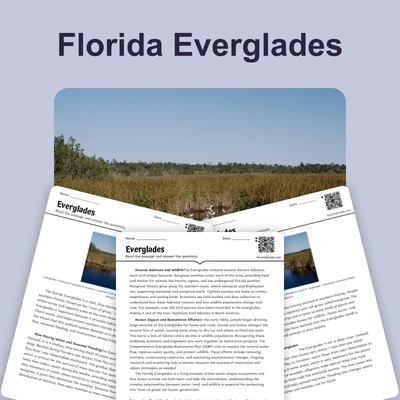
Wetlands act as transitional zones between terrestrial (land) and aquatic (water) systems. When water floods a wetland, oxygen levels in the soil drop, creating anaerobic conditions. Only certain plants, like cattails and mangroves, can survive here because they have specialized adaptations, such as air spaces in their stems or roots that allow oxygen transport. Wetland plants slow water flow, which causes sediments and pollutants to settle out, purifying the water. For example, the Everglades in Florida filter about 2.6 billion gallons of water each day. Wetlands also store excess rainwater, reducing the risk of floods downstream. The interaction between plants, water, and soil forms a complex system that supports a high level of biodiversity.
Adaptations and Global Importance
Plants and animals in wetlands have evolved unique features to survive variable water levels and low oxygen soils. Some wetland plants grow shallow, spreading roots to absorb oxygen from the surface, while others develop thick, waxy leaves to prevent water loss. Animals like beavers and amphibians are specially adapted to live in both water and on land. Globally, wetlands cover about 6% of Earth's land surface but are home to more than 40% of all species. However, wetlands are disappearing at an alarming rate due to human activities such as draining for agriculture and urban development. Loss of wetlands reduces natural flood protection, water quality, and habitats for many species, highlighting the urgent need for conservation.
Wetlands show how interconnected Earth's systems are, serving as natural bridges between land and water. Protecting these unique environments supports biodiversity, improves water quality, and helps people and wildlife adapt to environmental change.
Interesting Fact: Some wetland plants, like the Venus flytrap, have evolved to trap and digest insects to get nutrients in poor, waterlogged soils!
Comprehension quiz (10 questions)
1. What is a wetland?
2. Which of the following is NOT a type of wetland described in the passage?
3. What is the main function of wetland plants in water purification?
4. Which adaptation helps some wetland plants survive in anaerobic soil conditions?
5. Based on the passage, which wetland type is more acidic and rich in peat?
6. What does the term 'biodiversity' mean in the context of wetlands?
7. How do human activities threaten wetlands?
8. Why are wetlands considered transitional zones?
9. Wetlands are home to more than 40% of all species on Earth. (True/False)
10. Wetlands can help reduce the risk of floods downstream. (True/False)
Perfect for the way you teach
- Build comprehension skills
- Auto-graded quiz
- Differentiated reading
- Read together at home
- Improve fluency
- Quiet reading time
- Reading curriculum support
- Independent practice
- Track Lexile growth