What Are Stars Made Of
Interactive passage with audio narration, comprehension questions, and printable PDF.
By completing this purchase you agree to our Terms of Use and Privacy Policy. Your subscription renews automatically until you cancel. You can cancel anytime from your account settings. All sales are final and non-refundable. Digital content is available for download in your account immediately upon purchase.
What's included
What Are Stars Made Of preview and details
About this printable What Are Stars Made Of science reading passage, NGSS-aligned (Grades 5-8)
Sample passage and quiz from What Are Stars Made Of
Reading passage and comprehension quiz preview
What Are Stars Made Of
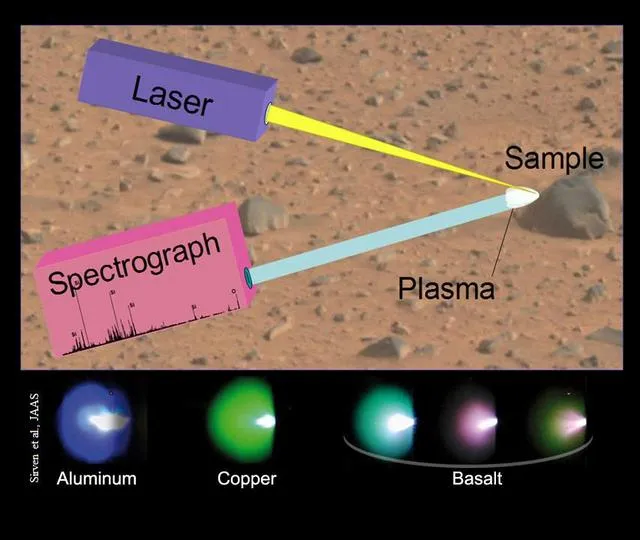
Stars are made mostly of hydrogen and helium, two simple gases. Scientists figured this out without ever visiting a star. They used a clever method called spectroscopy to study starlight from Earth. This technique reveals the exact elements inside distant stars.
Scientists pass starlight through a tool called a prism. The prism splits the light into a rainbow of colors called a spectrum. However, this rainbow is not complete. Dark lines appear in specific places across the colors. These lines are called absorption lines. Each element absorbs certain colors of light and creates its own unique pattern of dark lines.
Scientists compare the patterns in starlight to patterns made by known elements in laboratories. When the patterns match, they can identify which elements exist in the star. Evidence shows that hydrogen creates the strongest lines in most star spectra. Helium creates the second strongest set of lines. Other elements like carbon and oxygen appear in smaller amounts.
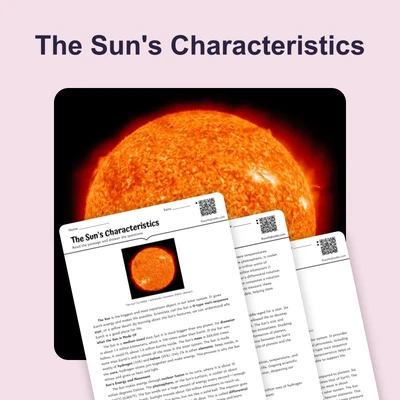
In 1868, scientists discovered helium by studying the Sun's spectrum during an eclipse. They found absorption lines that did not match any known element on Earth. Scientists named the new element helium after the Greek word for Sun. Twenty-seven years later, scientists found helium on Earth for the first time. This discovery showed how powerful spectroscopy can be for learning about the universe.
Understanding what stars are made of helps scientists explain how stars form and change over time. Stars create energy by fusing hydrogen into helium deep in their cores. This process powers all stars and produces the light we see. Scientists also use spectroscopy to study planets, galaxies, and other objects in space. The technique connects what we observe on Earth to the composition of the entire universe.
Interesting Fact: The Sun converts about 600 million tons of hydrogen into helium every second. Despite this huge amount, the Sun has enough hydrogen to keep shining for another 5 billion years.
Comprehension quiz (10 questions)
1. What are stars mostly made of?
2. What tool do scientists use to split starlight into colors?
3. What are the dark lines in a star's spectrum called?
4. In the context of the passage, what does 'spectroscopy' mean?
5. What does the word 'spectrum' refer to in this passage?
6. How did scientists first discover helium?
7. Why do different elements create different patterns of dark lines?
8. If scientists discovered a new pattern of absorption lines in a distant star that doesn't match any known element, what would this most likely suggest?
9. How could spectroscopy be useful for studying planets in other solar systems?
10. True or False: Scientists must visit a star to determine what elements it contains.
Perfect for the way you teach
- Build comprehension skills
- Auto-graded quiz
- Differentiated reading
- Read together at home
- Improve fluency
- Quiet reading time
- Reading curriculum support
- Independent practice
- Track Lexile growth