What Causes Moon Phases
Interactive passage with audio narration, comprehension questions, and printable PDF.
By completing this purchase you agree to our Terms of Use and Privacy Policy. Your subscription renews automatically until you cancel. You can cancel anytime from your account settings. All sales are final and non-refundable. Digital content is available for download in your account immediately upon purchase.
What's included
What Causes Moon Phases preview and details
About this printable What Causes Moon Phases science reading passage, NGSS-aligned (Grades 5-8)
Sample passage and quiz from What Causes Moon Phases
Reading passage and comprehension quiz preview
What Causes Moon Phases
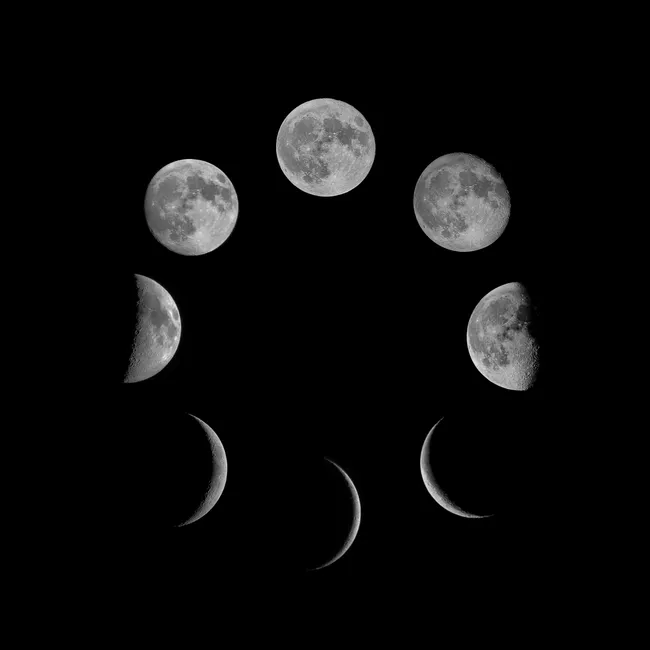
Have you noticed the Moon looks different throughout the month? Sometimes it appears as a thin crescent, other times as a bright full circle. These changes are called moon phases, and they happen because we see different amounts of the Moon's sunlit side as it moves around Earth. The Moon does not produce its own light. Instead, it acts like a mirror, reflecting sunlight back to us.
The Moon completes one orbit around Earth approximately every 29.5 days. During this journey, the Moon's position changes relative to Earth and the Sun. Scientists explain that half of the Moon always faces the Sun and receives light. However, we can only see the portion of that lit half that faces Earth. When the Moon sits between Earth and the Sun, the sunlit side faces away from us. This creates a new moon, when the Moon appears invisible in our sky. As the Moon continues its orbit, we begin to see a sliver of the lit side. This thin curve is called a crescent phase.
About one week after the new moon, the Moon reaches a position where we can see exactly half of its lit side. This is called the first quarter phase, even though it looks like a half moon. The Moon keeps moving, and we see more of the sunlit surface each night. When the Moon moves to the opposite side of Earth from the Sun, the entire lit half faces us. This creates the full moon, the brightest phase. Evidence shows that full moons occur roughly every 29.5 days. After the full moon, the visible lit portion gradually shrinks through phases called waning until the cycle returns to new moon.
Observers throughout history have tracked moon phases to create calendars and predict tides. The lunar cycle remains consistent and predictable because the Moon's orbit follows regular patterns. Understanding moon phases helps scientists study Earth's place in the solar system. This knowledge also connects to practical applications like planning astronomical observations and understanding how the Moon influences ocean tides through gravitational forces.
Interesting Fact: During a full moon, the Moon appears about 14,000 times dimmer than the Sun, even though both appear similar in size from Earth. The Moon only reflects about 12 percent of the sunlight that hits its surface.
Comprehension quiz (10 questions)
1. What causes the Moon to appear bright in the night sky?
2. How long does it take the Moon to complete one orbit around Earth?
3. What is a new moon?
4. In the passage, what does the word 'waning' mean?
5. What does 'orbit' mean in the context of the passage?
6. Why do we see different moon phases throughout the month?
7. If you wanted to observe the brightest moon phase, which phase would you look for?
8. Based on the passage, what can you conclude about the relationship between the Moon's position and the phases we see?
9. The Moon produces its own light just like the Sun does.
10. Half of the Moon always faces the Sun and receives light.
Perfect for the way you teach
- Build comprehension skills
- Auto-graded quiz
- Differentiated reading
- Read together at home
- Improve fluency
- Quiet reading time
- Reading curriculum support
- Independent practice
- Track Lexile growth