What Each Region Sold and Traded — Reading Comprehension
Rate this
Premium Resource
Present
Present in classroom. No work saved
Assign
Classroom with student accounts, Track progress
Quick Play
No student accounts, assign with a link
Grades
3
4
5
Standards
D2.HIS.2.3-5
D2.HIS.3.3-5
RI.4.3
RI.4.4
W.4.2
PRINT+DIGITAL RESOURCE
This learning resource is available in interactive and printable formats. The interactive worksheet can be played online and assigned to students. The Printable PDF version can be downloaded and printed for completion by hand.
This engaging U.S. History reading passage explores the vital role of trade and commerce in the Southern Colonies during Colonial America. Students will learn how the Southern Colonies grew and exported important cash crops like tobacco, rice, and indigo, and how these goods shaped daily life and relationships with other regions and countries. The passage highlights key vocabulary, presents cause-and-effect relationships, and emphasizes the innovation and hard work of colonists. This resource aligns with C3 Framework and Common Core standards, supporting the development of historical literacy and analytical thinking. It includes a glossary, timeline, comprehension questions, a writing activity, and a graphic organizer to deepen understanding. The passage also features a Spanish translation and read aloud audio, making it accessible for diverse learners. Keywords such as colonial America, Southern Colonies, trade, and cash crops enhance discoverability for teachers and students seeking high-quality history materials.
CONTENT PREVIEW
Expand content preview
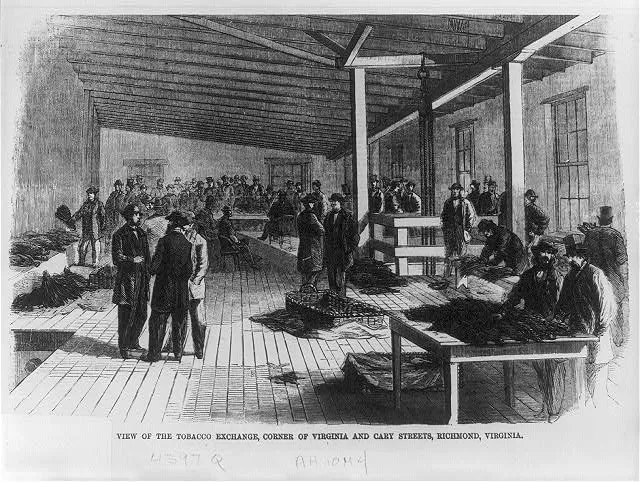
View of the tobacco exchange, corner of Virginia and Cary Streets, Richmond, Virginia. Source: Library of Congress
The thirteen American colonies grew strong through regional trade. Each region—New England, the Middle Colonies, and the Southern Colonies—had special products. These products were exchanged using busy trade routes. Trade connected the colonies and helped them succeed.
New England colonies were known for their rocky soil and cool climate. Farming was hard, so people turned to the sea. Colonists caught large amounts of fish and built ships. Fish was a main export and was sent to other colonies and even to Europe. New England ships also carried goods like timber and furs.
The Middle Colonies, like New York and Pennsylvania, had rich soil. They grew wheat, corn, and other grains. These colonies became the “breadbasket” of America. Grains and flour were traded with both the North and the South. The Middle Colonies also raised livestock and made iron tools.
The Southern Colonies had warm weather and long growing seasons. They used large farms called plantations to grow crops like tobacco, rice, and indigo. Tobacco became the most important cash crop. Southern colonies shipped tobacco to the North and to Europe. In return, they received fish, grain, tools, and other goods.
Trade routes linked the three regions. Ships sailed along the coast, carrying goods to and from each colony. Overland routes carried wagons full of products to market towns and ports. These exchanges helped each region get what it needed. Colonies depended on each other for food, tools, and raw materials.
Regional trade was a cause of unity and growth. It let colonists work together and solve problems. For example, when New England needed food during poor harvests, the Middle Colonies sent grain. When the South needed tools, the North sent iron goods. This cooperation made the colonies stronger and prepared them for future challenges.
Interesting Fact: Some ships from New England carried dried fish all the way to the Caribbean islands, where the fish was traded for sugar and molasses.
What did New England export most?
FishTobaccoRiceSugar
Which colonies were called the 'breadbasket'?
New EnglandMiddle ColoniesSouthern ColoniesCaribbean Islands
What was the main Southern cash crop?
TobaccoFishCornIron
Why did New England trade for grain?
Rocky soil made farming hardThey needed more fishThey grew too much cornThey had too many ships
What effect did trade have on the colonies?
Made them strongerMade them weakerStopped growthCreated new countries
How did colonies help each other?
By trading needed goodsBy fightingBy closing portsBy working alone
Trade routes connected the colonies. True or false?
TrueFalse
What does 'export' mean?
Goods sent away to sellGoods grown at homeGoods bought from othersGoods kept for families
Perfect For:
👩🏫 Teachers
• Reading comprehension practice
• Auto-graded assessments
• Literacy skill development
👨👩👧👦 Parents
• Reading practice at home
• Comprehension improvement
• Educational reading time
🏠 Homeschoolers
• Reading curriculum support
• Independent reading practice
• Progress monitoring
Reading Features:
📖
Reading Passage
Engaging fiction or nonfiction text
❓
Comprehension Quiz
Auto-graded questions
📊
Instant Feedback
Immediate results and scoring
📄
Printable Version
Download for offline reading
🔊
Read Aloud
Voice-over with word highlighting
Reviews & Ratings
No reviews yet. Be the first to share your experience!
Related Content
Native American Tribes Across America
This engaging history reading passage introduces students to Native American tribes across America, focusing on their da...
D2.HIS.1.3-5D2.HIS.2.3-5RI.4.1RI.4.2
Teepees: Homes on the Great Plains
This engaging history reading passage introduces students to teepees, the unique homes of Native American tribes on the ...
D2.HIS.2.3-5D2.HIS.14.3-5RI.4.1RI.4.2RI.4.4
Traditional Native American Clothing
This engaging history passage explores traditional Native American clothing and how it reflected the environment, values...
D2.HIS.2.3-5D2.HIS.3.3-5RI.4.3RI.4.4
The Iroquois Confederacy: A System of Peace
This engaging U.S. History reading passage introduces students to the Iroquois Confederacy, a powerful alliance of Nativ...
D2.HIS.2.3-5D2.HIS.3.3-5RI.4.3RI.4.4
The Cherokee Nation: History and Culture
This reading passage explores the rich history and culture of the Cherokee Nation, one of the largest Native American tr...
D2.HIS.2.3-5D2.HIS.14.3-5RI.4.3RI.4.4RI.4.10
The Sioux: Warriors and Tribal Leaders
This history reading passage explores the Sioux Nation, focusing on their roles as warriors and tribal leaders. Students...
D2.HIS.1.3-5D2.HIS.2.3-5RI.4.1RI.4.3
Native American Respect for Nature
This engaging history reading passage explores Native American respect for nature, emphasizing the close relationship be...
D2.HIS.2.3-5D2.HIS.3.3-5RI.4.3RI.4.4
Jamestown: The First Permanent English Colony
This engaging history passage explores the founding of Jamestown, the first permanent English colony in America. Aligned...
D2.HIS.1.3-5D2.HIS.2.3-5RI.4.3RI.4.4
Pocahontas and the Powhatan People
This engaging reading passage explores the life of Pocahontas and the Powhatan people and their important role in early ...
D2.HIS.1.3-5D2.HIS.2.3-5RI.4.1RI.4.3
Colonial Children: School and Chores
This reading passage explores the daily lives of colonial children, focusing on their experiences at school and their ma...
D2.HIS.2.3-5D2.HIS.3.3-5RI.4.1RI.4.2RI.4.4
Colonial Clothing and Homemade Goods
This engaging U.S. history passage explores the daily life of early American colonists with a focus on colonial clothing...
D2.HIS.2.3-5RI.4.3RI.4.4
Colonial Jobs: Blacksmiths, Bakers, and Craftsmen
This engaging history reading passage explores the vital roles of blacksmiths, bakers, and craftsmen in colonial America...
D2.HIS.2.3-5D2.HIS.3.3-5RI.4.3RI.4.4
Colonial Towns and Village Life
This engaging history reading passage explores the daily life, work, and unity found in colonial towns and villages. Ali...
D2.HIS.1.3-5D2.HIS.2.3-5RI.4.3RI.4.4
Colonial Trade with England and Africa
This history reading passage explores colonial trade between the American colonies, England, and Africa, focusing on the...
D2.HIS.2.3-5D2.HIS.14.3-5RI.4.3RI.4.4
Benjamin Franklin: Printer, Inventor, and Leader
This history reading passage explores the life and achievements of Benjamin Franklin, one of America's most important ea...
D2.HIS.2.3-5D2.HIS.3.3-5RI.4.1RI.4.3
George Washington Leads the Army
This engaging history reading passage explores how George Washington bravely led the Continental Army during the America...
D2.HIS.1.3-5D2.HIS.2.3-5RI.4.3RI.4.4
Women and Children During the Revolutionary War
This reading passage explores the important roles women and children played during the Revolutionary War. Students will ...
D2.HIS.2.3-5RI.4.3RI.5.3
African Americans Fight for Freedom
This educational passage explores the brave and inspiring story of how African Americans fought for freedom in the Unite...
D2.HIS.2.3-5D2.HIS.3.3-5RI.4.3RI.4.4
The Battle of Yorktown Ends War
This engaging U.S. history reading passage explores the Battle of Yorktown, a key event that ended the American Revoluti...
D2.HIS.1.3-5D2.HIS.2.3-5RI.4.1RI.4.3
Loyalists vs. Patriots: Divided Families
This engaging U.S. history reading passage explores the division between Loyalists and Patriots during the American Revo...