What Is a Grassland Biome? — Reading Comprehension
Rate this
Premium Resource
Present
Present in classroom. No work saved
Assign
Classroom with student accounts, Track progress
Quick Play
No student accounts, assign with a link
Grades
5
6
7
8
Standards
MS-LS2-1
PRINT+DIGITAL RESOURCE
This learning resource is available in interactive and printable formats. The interactive worksheet can be played online and assigned to students. The Printable PDF version can be downloaded and printed for completion by hand.
This middle school science passage introduces students to grassland biomes, explaining their defining features, global distribution, and ecological importance. Students will learn about the two major types—tropical savannas and temperate grasslands—and how factors like precipitation and fire shape these ecosystems. The passage explores the interactions between grasses, animals, and environmental conditions, offering real-world examples such as the African savanna and North American prairies. Designed to meet NGSS standard MS-LS2-1, it encourages scientific thinking about system interactions and cause-and-effect relationships. Activities include a glossary, multiple-choice quiz, writing prompts, and graphic organizers. The resource is audio-integrated and includes Spanish translations and differentiated versions for accessibility. Keywords: grassland, biome, ecosystem, NGSS, prairie, savanna.
Grassland biomes are vast regions of the planet where grasses are the dominant plant life and trees are rare. Covering about 25% of Earth's land surface, grasslands are found on every continent except Antarctica. These areas are crucial in supporting biodiversity, providing food for both wild animals and humans, and influencing global climate systems. Scientists study grasslands to understand how plants, animals, and environmental factors interact within these unique ecosystems.
How Grasslands Form and Function
Grasslands usually form in places that receive more precipitation than deserts but less than forests, placing them in the middle of the precipitation gradient. Precipitation in grasslands typically ranges from 250 to 900 millimeters per year. This amount is enough for grasses to thrive but not for many trees to grow. Regular disturbances, such as fire and grazing by large herbivores, are key to maintaining grasslands. Fires, often caused by lightning, remove old plant material and return nutrients to the soil, while grazing animals like bison or zebras prevent shrubs and trees from taking over. Grasslands have deep, rich soils that store large amounts of organic matter, making them some of the most fertile areas for agriculture.
Types of Grasslands: Tropical and Temperate
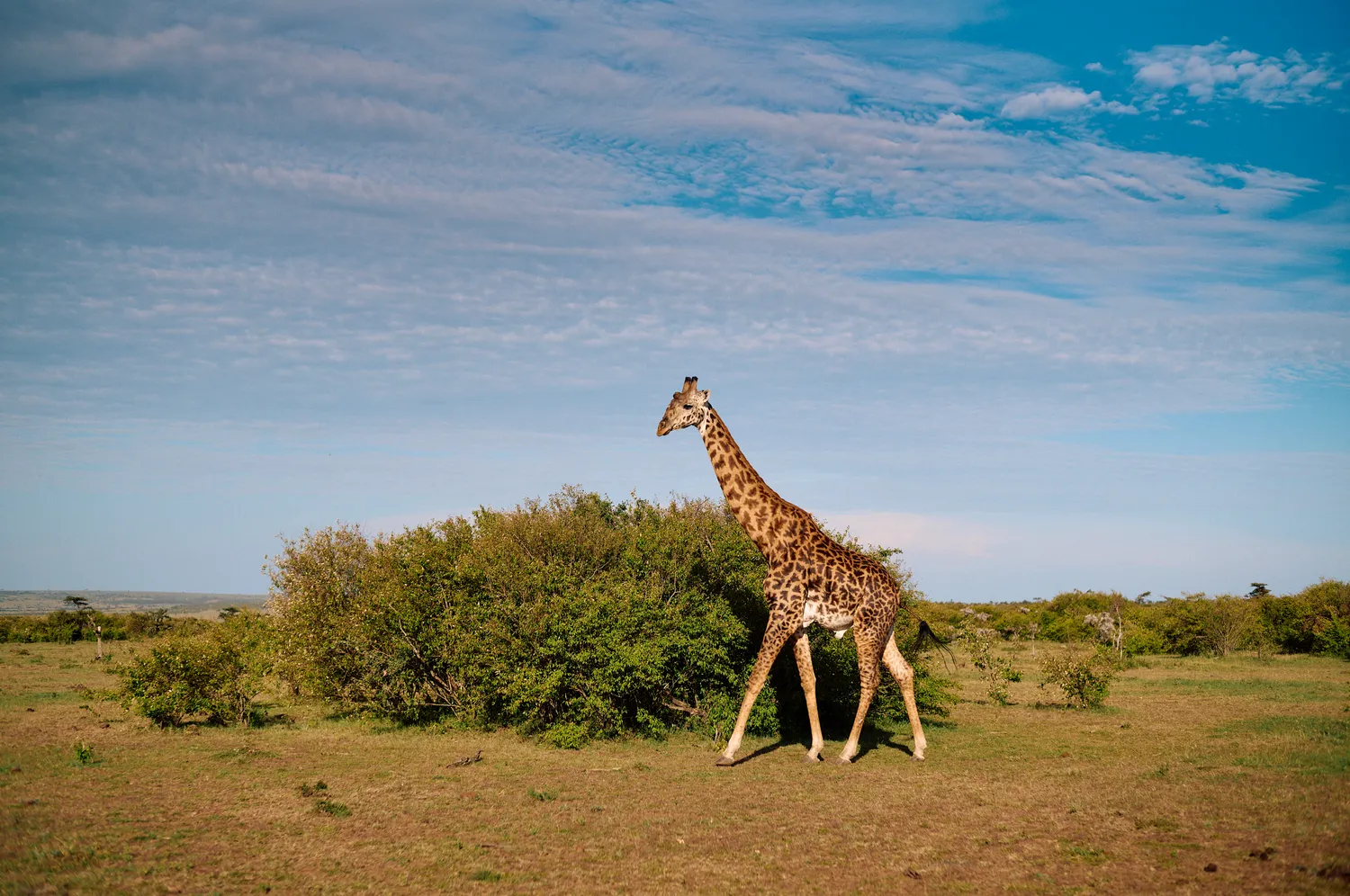
There are two main types of grassland biomes: tropical savannas and temperate grasslands. Tropical savannas, such as those in Africa, South America, and Australia, have warm temperatures year-round and distinct wet and dry seasons. Animals like elephants, lions, and antelope are common in these areas. In contrast, temperate grasslands—like the North American prairie or Eurasian steppe—experience hot summers, cold winters, and moderate rainfall. These grasslands support species such as bison, prairie dogs, and various birds. Both types are located between forests, which need more rain, and deserts, which receive less. This location along the precipitation gradient shapes the unique mix of plants and animals in each grassland.
Grasslands in a Changing World
Grasslands are essential for human societies and natural systems. They provide vital resources such as food, fibers, and grazing land for livestock. However, grasslands face threats from overgrazing, conversion to farmland, and climate change. When grasslands are destroyed, the soil can erode, and biodiversity decreases. To protect these ecosystems, scientists use satellite imagery and field studies to measure changes in grassland area and health. Conservation efforts focus on sustainable grazing, controlled burns, and restoring native grasses. Understanding grasslands helps us recognize their value in global systems and the need to manage them wisely.
In summary, grassland biomes are dynamic ecosystems where grasses dominate due to specific precipitation patterns and ecological interactions. Their location between forests and deserts, along with the role of fire and grazing, determines their unique biodiversity and productivity. Protecting grasslands is critical for ecosystem services and the health of our planet.
Interesting Fact: Some of the richest soils in the world, like those in the American Midwest, formed under ancient grasslands, making them ideal for growing crops today.
What percentage of Earth's land surface do grassland biomes cover?
About 25%About 50%Less than 10%Over 75%
Which plant type is dominant in grassland biomes?
GrassesTreesShrubsCacti
What is one main difference between tropical savannas and temperate grasslands?
Tropical savannas have warm temperatures year-round, while temperate grasslands have hot summers and cold winters.Temperate grasslands have more trees than tropical savannas.Tropical savannas receive less rainfall than temperate grasslands.Temperate grasslands are only found in Africa.
What role does fire play in maintaining grassland ecosystems?
It removes old plant material and returns nutrients to the soil.It destroys all plant life permanently.It increases the number of trees in grasslands.It makes the soil less fertile.
Which of the following is the best definition of 'biodiversity' as used in the passage?
The variety of living things in an area.The amount of rainfall a region gets.The process of burning old plants.The number of trees in a biome.
In the context of the passage, what does 'herbivores' mean?
Animals that eat plants.Animals that eat other animals.Plants that grow in deserts.Animals that live only in forests.
Why are grasslands usually found between forests and deserts?
Because they receive a moderate amount of precipitation—more than deserts but less than forests.Because they have the most trees.Because they always have the coldest temperatures.Because they are at the highest altitudes.
How might converting grasslands to farmland affect the ecosystem?
It can cause soil erosion and reduce biodiversity.It increases the number of wild animals.It makes grasslands more common.It has no effect on the environment.
Grasslands can be found on every continent except Antarctica.
TrueFalse
Grasslands do not support any important ecosystem services.
FalseTrue
Perfect For:
👩🏫 Teachers
• Reading comprehension practice
• Auto-graded assessments
• Literacy skill development
👨👩👧👦 Parents
• Reading practice at home
• Comprehension improvement
• Educational reading time
🏠 Homeschoolers
• Reading curriculum support
• Independent reading practice
• Progress monitoring
Reading Features:
📖
Reading Passage
Engaging fiction or nonfiction text
❓
Comprehension Quiz
Auto-graded questions
📊
Instant Feedback
Immediate results and scoring
📄
Printable Version
Download for offline reading
🔊
Read Aloud
Voice-over with word highlighting
Reviews & Ratings
No reviews yet. Be the first to share your experience!
Related Content
The Narwhal: Arctic’s Unicorn of the Sea
This NGSS-aligned passage (MS-LS2-1) explores how narwhals survive in Arctic ecosystems. Students learn about specialize...
MS-LS2-1RI.6.3RI.7.3RI.8.8
The Blue-Ringed Octopus
This NGSS aligned passage explores how the tiny blue-ringed octopus impacts its ecosystem through predator-prey relation...
MS-LS2-1RI.6.3RI.7.3RI.8.8
Tardigrades: Microscopic Superheroes
Aligned to MS-LS1-1, this passage examines how tardigrade cell structures (TDP proteins, DNA-repair enzymes) allow survi...
MS-LS2-1RI.6.3RI.7.3RI.8.8
The Leafy Sea Dragon: Nature's Living Seaweed
This NGSS-aligned passage explores how leafy sea dragons (Phycodurus eques) demonstrate key life science concepts for mi...
MS-LS2-1RI.6.3RI.7.3RI.8.8
What Do Axolotls Eat?
This science reading passage, titled "What Do Axolotls Eat?", offers an engaging exploration into the feeding habits of ...
MS-LS2-1
Where Do Axolotls Live?
This science reading passage, titled "The Axolotl's Home," delves into the specific natural environment of the fascinati...
MS-LS4-DMS-LS2-1
The Blobfish
This science reading passage, titled "The Blobfish: A Deep-Sea Mystery," introduces students to one of Earth's most pecu...
MS-LS4-DMS-LS2-1
What Do Blobfish Eat?
This science reading passage, titled "What Do Blobfish Eat?", offers an engaging exploration into the feeding habits of ...
MS-LS2-1
Where Do Penguins Live?
This engaging science reading passage, titled "Where Do Penguins Live? A Cold and Coastal World," clarifies the diverse ...
MS-LS2-1
The Emperor Penguin
This science reading passage, titled "The Emperor Penguin: Antarctica's Royal Survivor," introduces students to one of t...
MS-LS2-1
The Adélie Penguin
This engaging science reading passage, titled "The Adélie Penguin: Antarctica's Little Explorer," introduces students to...
MS-LS2-1
How Does Global Warming Affect Adélie Penguins?
This comprehensive science passage, titled "How Does Global Warming Affect Adélie Penguins?", details the significant im...
MS-LS2-1
Desert Birds
This informational passage for grades 6-8 examines how desert birds survive and thrive in some of the harshest environme...
MS-LS2-1MS-LS2-2MS-LS1-4
Abiotic Factors in Ecosystems
This comprehensive informational reading passage is designed for middle school science students and aligns with NGSS sta...
MS-LS2-1
Biomes: Terrestrial Ecosystems
This NGSS-aligned science reading passage for grades 6-8 provides a comprehensive survey of Earth’s major terrestrial bi...
MS-LS2-1
Biomes: Aquatic Ecosystems
This middle school science passage, aligned with NGSS standard MS-LS2-1, introduces students to the key features and mec...
MS-LS2-1
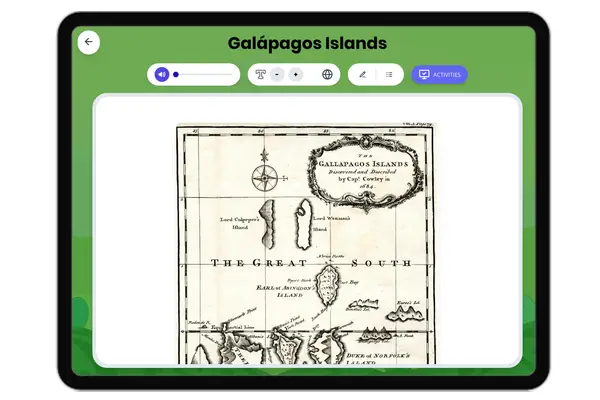
Galápagos Islands
This engaging science passage explores the Galápagos Islands, a volcanic archipelago located off the coast of Ecuador in...
MS-LS2-1MS-LS4-4MS-ESS3-4
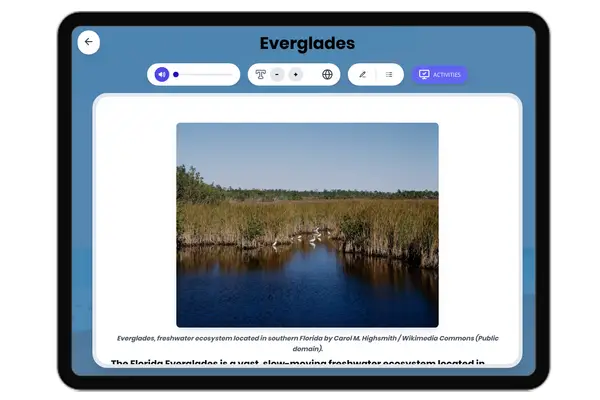
Florida Everglades
This comprehensive passage introduces middle school students to the Florida Everglades, a distinctive wetland ecosystem ...
MS-LS2-1MS-LS2-4MS-ESS3-3MS-ESS3-4
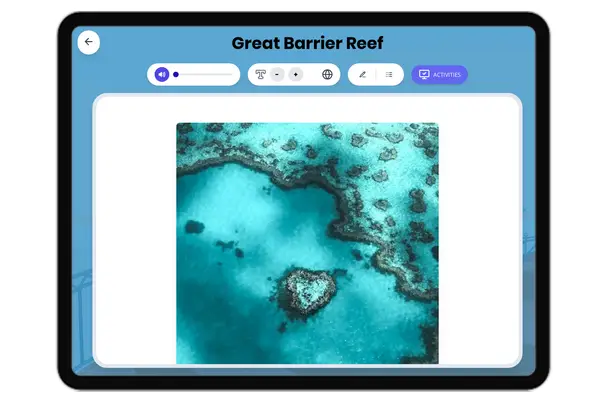
Great Barrier Reef
This passage introduces middle school students to the Great Barrier Reef, the world's largest coral reef system, located...
MS-LS2-1MS-LS2-4MS-ESS3-5
Wetland Biomes
This comprehensive science passage introduces middle school students to the concept of wetland biomes. Aligned with NGSS...