This learning resource is available in interactive and printable formats. The interactive worksheet can be played online and assigned to students. The Printable PDF version can be downloaded and printed for completion by hand.
This comprehensive middle school science passage dives into the fascinating world of amphibians, a group of vertebrates that marked a major evolutionary step by adapting to both aquatic and terrestrial environments. Students will learn about the characteristics that define amphibians, including their ectothermic nature, permeable skin, and unique metamorphic life cycle. The text explains the diversity within the class, describing the orders Anura (frogs and toads), Urodela (salamanders and newts), and Gymnophiona (caecilians), and highlights their roles in ecosystems as pest controllers and environmental indicators. Current threats such as habitat loss, disease, and climate change are explored, along with their broader implications for ecosystems and human society. Students will also find glossary definitions, Spanish translations, comprehension questions, and engaging graphic organizers. Aligned to NGSS MS-LS4-2 and MS-LS4-4, this resource is ideal for classrooms and supports audio integration for diverse learners.
CONTENT PREVIEW
Expand content preview
Vertebrates: Amphibians
Amphibians are a unique group of vertebrates that first appeared over 360 million years ago, representing an important transition from aquatic to terrestrial life. Today, they play a vital role in ecosystems around the world. Scientists recognize amphibians by several key features: they are ectothermic (cold-blooded), have moist, permeable skin, and most undergo a remarkable life cycle called metamorphosis. Understanding amphibians helps us learn about environmental changes and the interconnectedness of life on Earth.
Amphibian Characteristics and Life Cycle
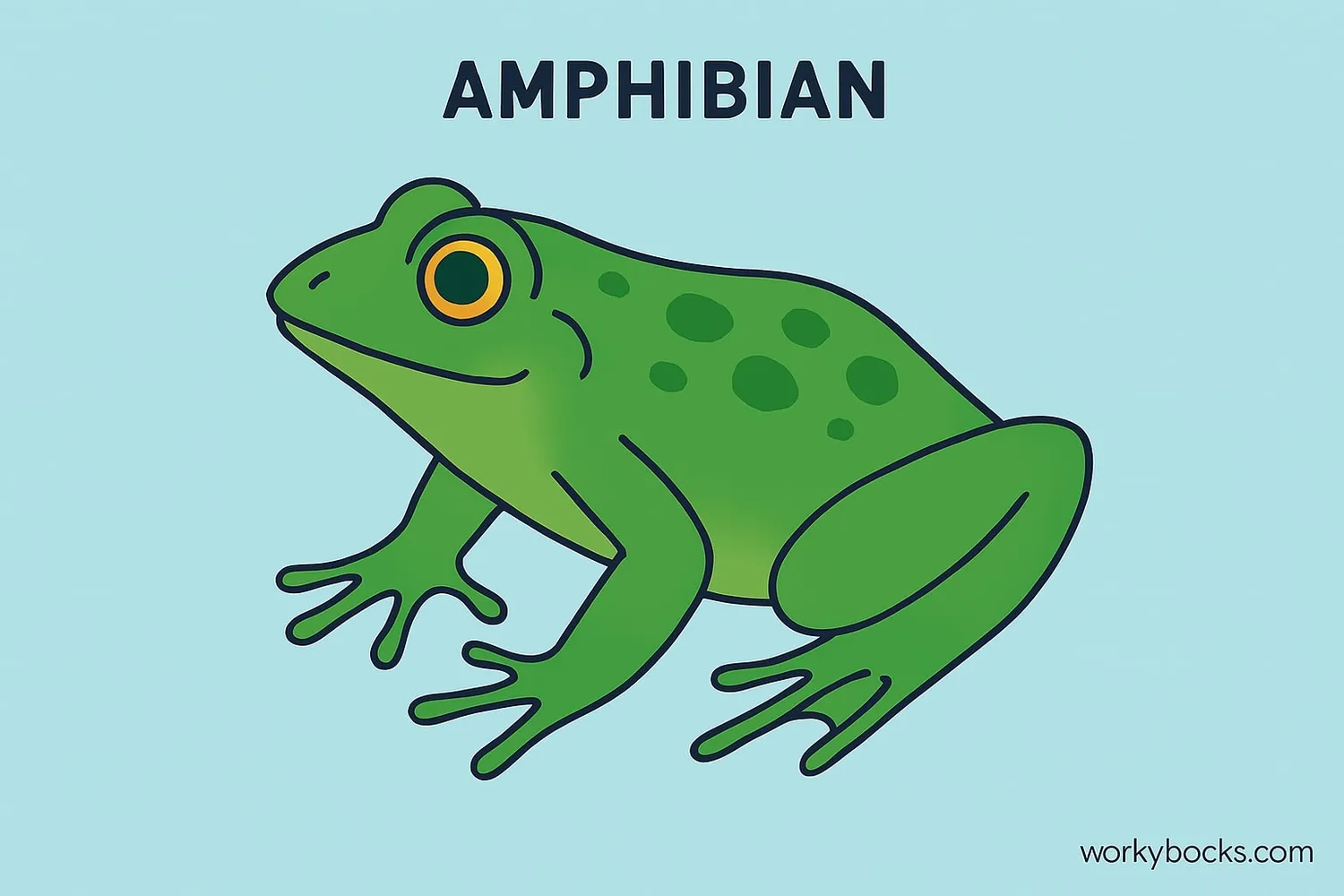
Amphibians include three main orders: Anura (frogs and toads), Urodela (salamanders and newts), and Gymnophiona (caecilians). All amphibians have a backbone, making them vertebrates. Their skin is thin and permeable, allowing water and gases to pass through, which means they often live in moist environments. Most amphibians lay their eggs in water. The eggs hatch into aquatic larvae—such as tadpoles in frogs and toads—that breathe through gills. As they grow, they undergo metamorphosis: their bodies change form, and most develop lungs for breathing air on land. For example, a tadpole transforms into a frog by losing its tail and growing legs. Salamanders keep their tails and four similar limbs, while caecilians are legless, worm-like amphibians adapted to burrowing in tropical soils.
Ecological Importance, Adaptations, and Threats
Amphibians serve as both predators and prey, making them crucial to food webs. Frogs and salamanders help control insect populations, reducing pests that affect crops and spread disease. Their permeable skin also makes them sensitive to pollution, so scientists use amphibians as indicator species to monitor ecosystem health. However, amphibian populations are declining rapidly worldwide. Habitat loss from deforestation and wetland drainage, disease (especially from the chytrid fungus), and climate change threaten their survival. Studies show that over 40% of amphibian species are at risk of extinction, a much higher rate than most other animal groups.
Conservation and Scientific Significance
Efforts to conserve amphibians include protecting habitats, reducing pollution, and researching diseases like chytridiomycosis. Because amphibians bridge aquatic and terrestrial ecosystems, their health reflects changes in both environments. Their evolutionary history reveals how vertebrates adapted to new environments by developing lungs, limbs, and specialized skin. By studying amphibians, scientists gain insights into adaptation, evolution, and the impacts of human activity on biodiversity. Protecting amphibians helps preserve the balance of nature and the health of our planet.
Interesting Fact: Some amphibians, such as the axolotl, can regenerate lost limbs, an ability rare among vertebrates and a subject of ongoing scientific research.
Which of the following is NOT a characteristic of amphibians?
They are warm-bloodedThey have permeable skinThey are vertebratesMost undergo metamorphosis
What is the main reason amphibians are considered indicator species?
They are sensitive to pollution and environmental changesThey are brightly coloredThey live in treesThey can fly
Which order includes animals without legs that burrow in tropical soils?
GymnophionaAnuraUrodelaTadpoles
What happens during metamorphosis in most amphibians?
Larvae develop lungs and legsAdults lose their backbonesEggs turn into plantsThey become mammals
In the passage, what does the word 'permeable' most closely mean?
Allows substances to pass throughVery hard and dryCovered in furNot alive
What does 'ectothermic' mean in the context of amphibians?
Their body temperature depends on the environmentThey can flyThey are always hotThey have feathers
Why are amphibians at high risk of extinction compared to other animals?
They are affected by habitat loss, disease, and climate changeThey live in the oceanThey eat too muchThey have very long lives
How do frogs and salamanders help humans?
By eating insects that are pestsBy making honeyBy growing cropsBy chasing away birds
Over 40% of amphibian species are at risk of extinction. (True/False)
TrueFalse
Amphibians were the first vertebrates to live on land. (True/False)
TrueFalse
Perfect For:
👩🏫 Teachers
• Reading comprehension practice
• Auto-graded assessments
• Literacy skill development
👨👩👧👦 Parents
• Reading practice at home
• Comprehension improvement
• Educational reading time
🏠 Homeschoolers
• Reading curriculum support
• Independent reading practice
• Progress monitoring
Reading Features:
📖
Reading Passage
Engaging fiction or nonfiction text
❓
Comprehension Quiz
Auto-graded questions
📊
Instant Feedback
Immediate results and scoring
📄
Printable Version
Download for offline reading
🔊
Read Aloud
Voice-over with word highlighting
Reviews & Ratings
No reviews yet. Be the first to share your experience!
Related Content
Vertebrates: Fishes
This middle school science reading passage offers an in-depth look at fishes, a major group of vertebrates. It covers fi...
MS-LS4-2MS-LS4-4
Vertebrates: Reptiles
This comprehensive science passage for grades 6-8 introduces students to reptiles, a fascinating class of vertebrates. A...
MS-LS4-2MS-LS4-4
Vertebrates: Birds
This middle school science passage explores birds as vertebrates, focusing on their unique adaptations such as feathers,...
MS-LS4-2MS-LS4-4
Vertebrates: Mammals
This comprehensive passage introduces middle school students to the class Mammalia and their defining characteristics, i...
MS-LS4-2MS-LS4-4
Invertebrates: Sponges and Cnidarians
This passage explores two of the simplest animal phyla: Porifera (sponges) and Cnidaria (jellyfish, corals, and sea anem...
MS-LS4-2
Invertebrates: Worms
This comprehensive passage introduces middle school students to the fascinating world of invertebrate worms, focusing on...
MS-LS4-2
Invertebrates: Arthropods
This comprehensive science passage introduces middle school students to the phylum Arthropoda, the largest and most dive...
MS-LS4-2MS-LS4-4
Invertebrates: Mollusks
This middle school science passage introduces students to the phylum Mollusca, focusing on their body structure, main cl...
MS-LS4-2
Invertebrates: Echinoderms
This comprehensive reading passage, aligned to NGSS standard MS-LS4-2, introduces middle school students to the fascinat...
MS-LS4-2
Human Evolution
This middle school science passage explains the scientific evidence for human evolution, aligning with NGSS standards MS...
MS-LS4-1MS-LS4-2
Evidence for Evolution: Comparative Anatomy
This middle school science reading passage explores the evidence for evolution through comparative anatomy, aligning wit...
MS-LS4-2MS-LS4-3
Bacteria
This comprehensive middle school science passage dives into the fascinating world of bacteria, aligned to NGSS standards...
MS-LS4-2MS-LS1-1
Theory of Evolution
This middle school science passage explains the theory of evolution and the concept of common ancestry, aligning with NG...
MS-LS4-1MS-LS4-2
The Giant Isopod: Biological Evolution
This NGSS passage examines how giant isopods evolved for deep-sea survival, including slow metabolism for food scarcity,...
MS-LS4-4RI.6.3RI.7.3RI.8.8
What Is Biodiversity?
This comprehensive science reading passage for grades 6-8 introduces students to biodiversity and explores its importanc...
MS-LS2-5MS-LS4-4
Biodiversity and Its Importance
This comprehensive middle school science passage explores the concept of biodiversity at the genetic, species, and ecosy...
MS-LS4-4MS-LS2-5
Galápagos Islands
This engaging science passage explores the Galápagos Islands, a volcanic archipelago located off the coast of Ecuador in...
MS-LS2-1MS-LS4-4MS-ESS3-4
Intertidal Zone
This middle school science reading passage introduces students to the intertidal zone, the area between high and low tid...
MS-LS2-1MS-LS4-4
Natural Selection
This comprehensive passage introduces middle school students (grades 6-8) to the concept of natural selection, aligning ...