Vertebrates: Reptiles
Interactive passage with audio narration, comprehension questions, and printable PDF.
By completing this purchase you agree to our Terms of Use and Privacy Policy. Your subscription renews automatically until you cancel. You can cancel anytime from your account settings. All sales are final and non-refundable. Digital content is available for download in your account immediately upon purchase.
What's included
Vertebrates: Reptiles preview and details
About this printable Vertebrates: Reptiles science reading passage, NGSS-aligned (Grades 5-8)
Sample passage and quiz from Vertebrates: Reptiles
Reading passage and comprehension quiz preview
Vertebrates: Reptiles
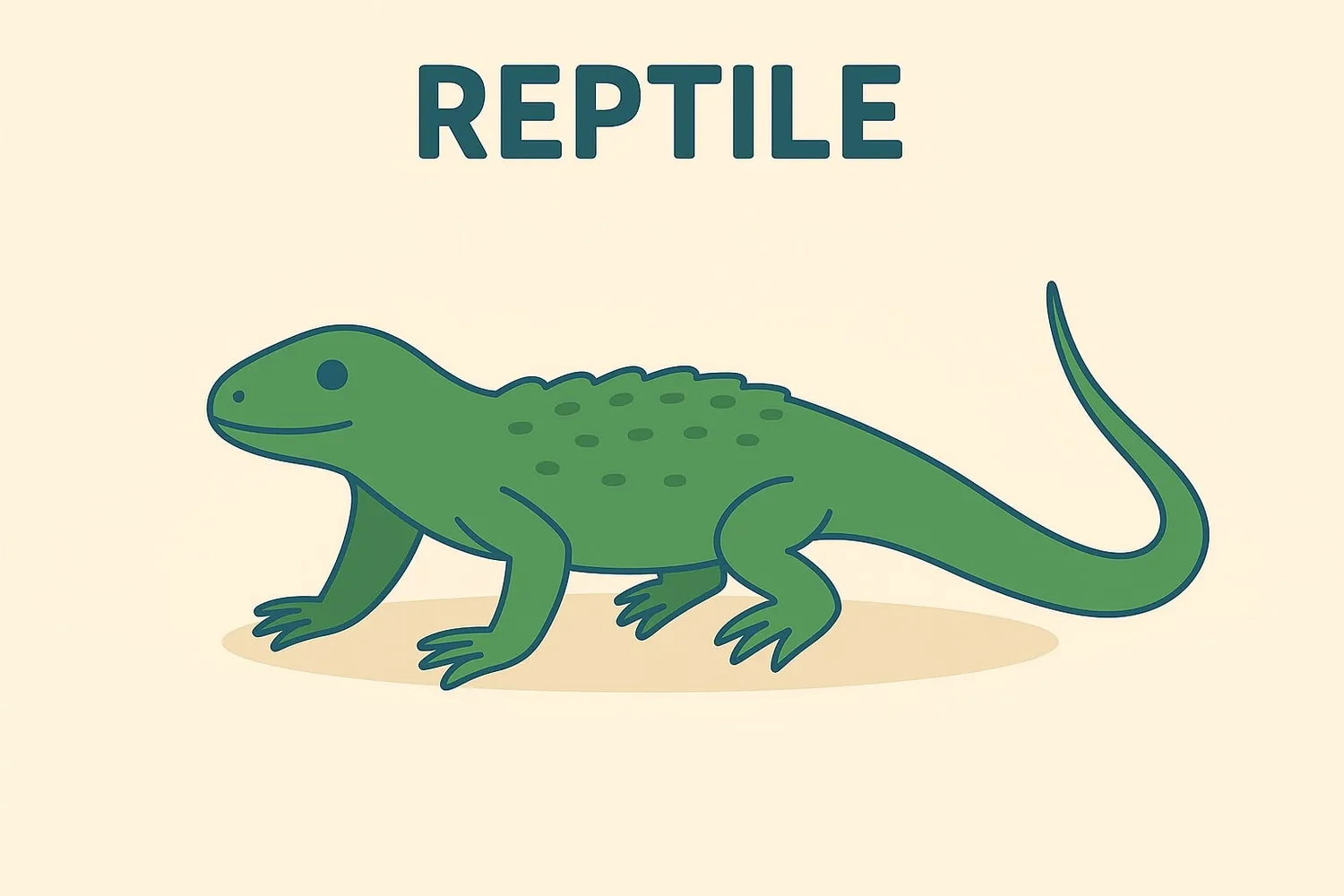
Reptiles are one of the major groups of vertebrates, animals that have a backbone. Found on every continent except Antarctica, reptiles are important members of many ecosystems. Their unique adaptations have allowed them to thrive in deserts, wetlands, forests, and even oceans. Scientists study reptiles to understand how life on land evolved and how species adapt to different environments.
What Makes a Reptile?
Reptiles share several key characteristics. They are ectothermic, meaning they rely on the environment to control their body temperature instead of generating heat internally. Their skin is dry and covered with scales made of keratin, a tough protein. All reptiles breathe with lungs throughout their lives, and most lay amniotic eggs with leathery shells that can survive on land. This adaptation was a major evolutionary step, allowing reptiles to colonize habitats that amphibians could not.
Classification of Reptiles
There are four main living orders of reptiles. Testudines includes turtles and tortoises, which have a shell made of bone and keratin for protection. Squamata is the largest and most diverse order, containing lizards and snakes. Some lizards have lost their legs, making them look similar to snakes, but scientists can tell them apart by differences in their skulls and internal organs. The Crocodilia order includes crocodiles, alligators, and caimans. These reptiles are more closely related to birds than to other reptiles, sharing features like a four-chambered heart. The rare tuatara of New Zealand make up the Rhynchocephalia order and are often called living fossils because they have changed very little in over 200 million years.
Adaptations and Survival
Reptiles have evolved many survival strategies. Some snakes and lizards use venom to capture prey or defend themselves. Many reptiles use camouflage to hide from predators or sneak up on prey. In some species, the sex of the offspring is determined by the temperature at which the eggs develop—a process called temperature-dependent sex determination. This adaptation allows populations to balance the number of males and females depending on environmental conditions. Fossil evidence shows reptiles were the ancestors of dinosaurs, and modern birds evolved from a group of small feathered dinosaurs, linking today’s reptiles to Earth’s ancient past.
Reptiles and Conservation
Many reptiles face threats from habitat loss, pollution, and hunting. For example, sea turtles are endangered because their nesting beaches are destroyed and their eggs are collected by humans. Scientists and conservationists are working to protect these species by creating protected areas and regulating hunting. Studying reptile adaptations helps us develop new technologies and better understand how to protect biodiversity.
Reptiles demonstrate how adaptation and evolution allow life to flourish in diverse environments. Their survival strategies, connections to ancient species, and current conservation challenges highlight the importance of studying and protecting these remarkable animals.
Interesting Fact: The tuatara, found only in New Zealand, is the only surviving member of its order and has a third “parietal” eye on top of its head that senses light!
Comprehension quiz (10 questions)
1. What is a main adaptation that allows reptiles to live on land?
2. Which order includes lizards and snakes?
3. What is the function of scales made of keratin?
4. Reptiles are ectothermic. What does this mean?
5. Based on the passage, what is a likely effect if global temperatures increase on reptile populations with temperature-dependent sex determination?
6. Why are tuataras called 'living fossils'?
7. Which adaptation helps reptiles hide from predators or sneak up on prey?
8. What is one conservation threat to sea turtles mentioned in the passage?
9. True or False: Crocodilians are more closely related to birds than to other reptiles.
10. True or False: All reptiles lay eggs in water.
Perfect for the way you teach
- Build comprehension skills
- Auto-graded quiz
- Differentiated reading
- Read together at home
- Improve fluency
- Quiet reading time
- Reading curriculum support
- Independent practice
- Track Lexile growth