This learning resource is available in interactive and printable formats. The interactive worksheet can be played online and assigned to students. The Printable PDF version can be downloaded and printed for completion by hand.
This middle school science passage explores birds as vertebrates, focusing on their unique adaptations such as feathers, beaks, hollow bones, and efficient lungs. Students will learn about the mechanisms behind bird flight, the diversity of bird species, and the ecological roles birds play, including seed dispersal, pollination, and pest control. The passage also covers flightless birds, migration, and the evolutionary connection between birds and theropod dinosaurs. Designed to align with NGSS standards MS-LS4-2 and MS-LS4-4, this resource includes a reading passage, glossary, Spanish translations, differentiated versions, comprehension questions, writing prompts, and graphic organizers. Integrated audio support makes it accessible for diverse learners. This comprehensive resource supports scientific thinking, evidence-based reasoning, and cross-curricular skills while providing engaging content for grades 6-8 science classrooms.
CONTENT PREVIEW
Expand content preview
Vertebrates: Birds
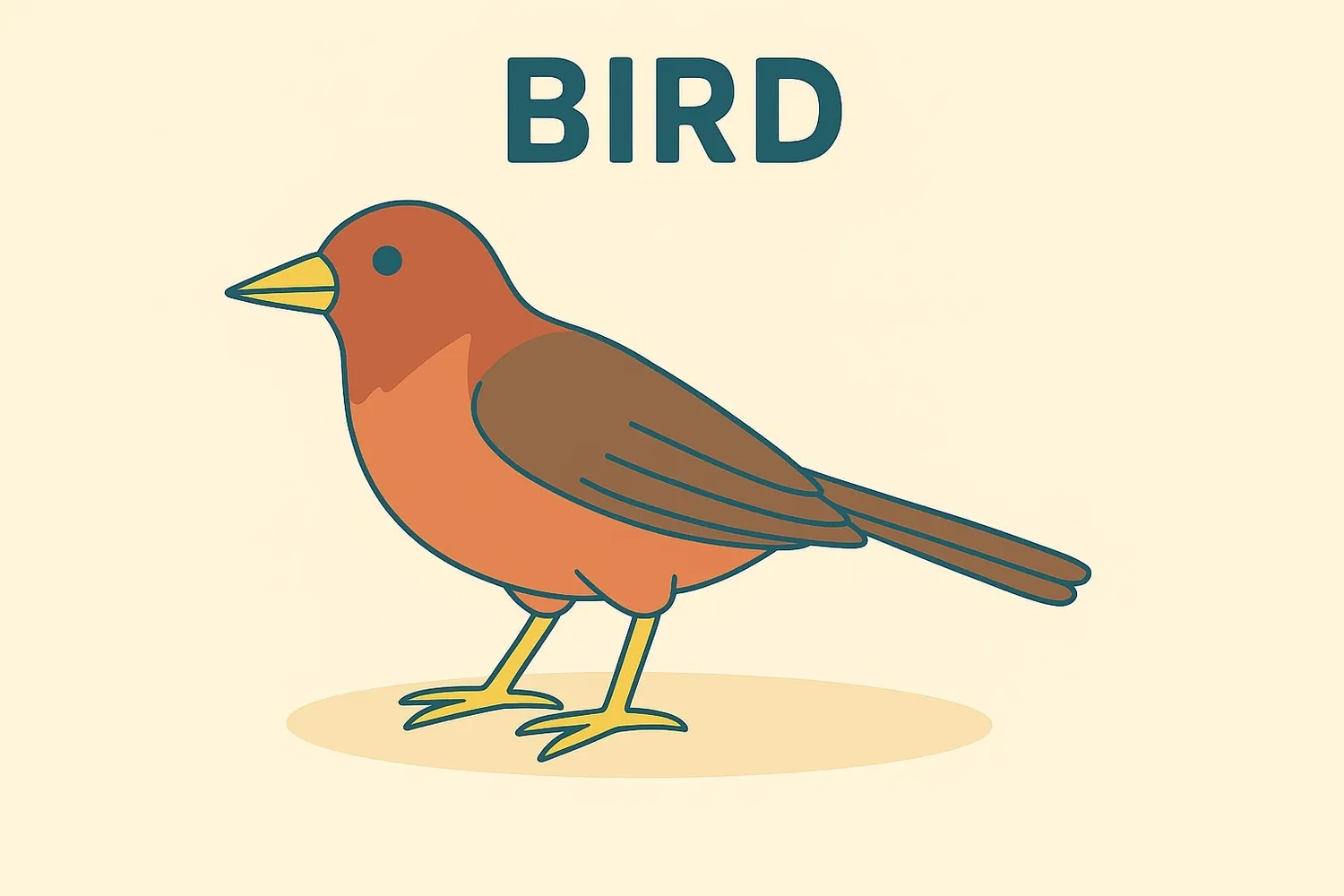
Birds, classified as class Aves, are a diverse group of vertebrates found on every continent. Their defining features—such as feathers, beaks, and the ability to lay hard-shelled eggs—have fascinated scientists for centuries. Bird species, currently numbering over 10,000, play crucial roles in ecosystems worldwide through seed dispersal, pollination, and pest control.
Adaptations for Flight
Most birds are adapted for flight through specialized structures and systems. Their feathers, which are unique to birds, provide both insulation and lift. Birds have lightweight, hollow bones that reduce body mass without sacrificing strength. Instead of teeth, birds possess beaks, which are lighter and more efficient for their feeding needs. Flight muscles, especially the large chest muscles attached to a keeled sternum, generate the power necessary for wing movement. Birds also have a four-chambered heart and highly efficient lungs to meet their high oxygen demands during flight. These adaptations work together to enable flight, which allows birds to escape predators, migrate, and find food across wide areas.
Diversity and Specialization
Not all birds fly. Some, like ostriches, penguins, and kiwis, have adapted to life on land or water. Ostriches use their long legs for rapid running, while penguins have flipper-like wings for swimming. Birds are incredibly diverse: waterfowl like ducks and geese thrive in aquatic habitats, raptors such as eagles are expert hunters, songbirds are known for their vocalizations, and shorebirds have specialized beaks for probing mud or sand. This diversity reflects the evolutionary process of adaptation—birds develop traits that help them survive in specific environments.
Ecological Roles and Evolution
Birds interact with other organisms and their environment in multiple ways. By dispersing seeds and pollinating flowers, they support plant reproduction. Many birds, such as swallows, help control insect populations. Migration is another remarkable behavior, with some species traveling thousands of kilometers and using the sun, stars, and Earth's magnetic field for navigation. Scientific evidence, including fossil discoveries, shows that birds evolved from small theropod dinosaurs about 150 million years ago. This evolutionary link is supported by similarities in bone structure and the presence of feathers in both groups.
Birds illustrate important principles of biological systems: how adaptation, structure, and function are interconnected, and how species change over time. Understanding birds helps us appreciate the complexity and balance of ecosystems, and highlights the importance of biodiversity for a healthy planet.
Interesting Fact: The bar-headed goose can fly over the Himalayas at altitudes of up to 9,000 meters (29,500 feet), where oxygen levels are extremely low.
Which class do birds belong to?
AvesMammaliaReptiliaAmphibia
What is unique to birds and helps them fly?
FeathersScalesFurGills
Which of the following is NOT a function of birds in ecosystems?
Making honeySeed dispersalPollinationPest control
In the passage, what does 'adaptation' mean?
A trait that helps an organism surviveA type of bird callA part of a bird's wingA kind of egg
What is the function of the bird's sternum?
Attachment for flight musclesHelping birds seeFiltering foodProducing eggs
Based on the passage, what is one reason some birds cannot fly?
They have adapted for running or swimming insteadThey do not have feathersThey have teethThey live only in trees
Why do birds have hollow bones?
To reduce body mass and help with flightTo store foodTo make them heavierTo grow feathers
Birds evolved from theropod dinosaurs.
TrueFalse
All birds use their wings to fly.
TrueFalse
Which of the following is an example of a bird adapting to its environment?
Penguins having flipper-like wings for swimmingAll birds eating the same foodBirds having teethBirds living only in forests
Perfect For:
👩🏫 Teachers
• Reading comprehension practice
• Auto-graded assessments
• Literacy skill development
👨👩👧👦 Parents
• Reading practice at home
• Comprehension improvement
• Educational reading time
🏠 Homeschoolers
• Reading curriculum support
• Independent reading practice
• Progress monitoring
Reading Features:
📖
Reading Passage
Engaging fiction or nonfiction text
❓
Comprehension Quiz
Auto-graded questions
📊
Instant Feedback
Immediate results and scoring
📄
Printable Version
Download for offline reading
🔊
Read Aloud
Voice-over with word highlighting
Reviews & Ratings
No reviews yet. Be the first to share your experience!
Related Content
Vertebrates: Fishes
This middle school science reading passage offers an in-depth look at fishes, a major group of vertebrates. It covers fi...
MS-LS4-2MS-LS4-4
Vertebrates: Amphibians
This comprehensive middle school science passage dives into the fascinating world of amphibians, a group of vertebrates ...
MS-LS4-2MS-LS4-4
Vertebrates: Reptiles
This comprehensive science passage for grades 6-8 introduces students to reptiles, a fascinating class of vertebrates. A...
MS-LS4-2MS-LS4-4
Vertebrates: Mammals
This comprehensive passage introduces middle school students to the class Mammalia and their defining characteristics, i...
MS-LS4-2MS-LS4-4
Invertebrates: Sponges and Cnidarians
This passage explores two of the simplest animal phyla: Porifera (sponges) and Cnidaria (jellyfish, corals, and sea anem...
MS-LS4-2
Invertebrates: Worms
This comprehensive passage introduces middle school students to the fascinating world of invertebrate worms, focusing on...
MS-LS4-2
Invertebrates: Arthropods
This comprehensive science passage introduces middle school students to the phylum Arthropoda, the largest and most dive...
MS-LS4-2MS-LS4-4
Invertebrates: Mollusks
This middle school science passage introduces students to the phylum Mollusca, focusing on their body structure, main cl...
MS-LS4-2
Invertebrates: Echinoderms
This comprehensive reading passage, aligned to NGSS standard MS-LS4-2, introduces middle school students to the fascinat...
MS-LS4-2
Human Evolution
This middle school science passage explains the scientific evidence for human evolution, aligning with NGSS standards MS...
MS-LS4-1MS-LS4-2
Evidence for Evolution: Comparative Anatomy
This middle school science reading passage explores the evidence for evolution through comparative anatomy, aligning wit...
MS-LS4-2MS-LS4-3
Bacteria
This comprehensive middle school science passage dives into the fascinating world of bacteria, aligned to NGSS standards...
MS-LS4-2MS-LS1-1
Theory of Evolution
This middle school science passage explains the theory of evolution and the concept of common ancestry, aligning with NG...
MS-LS4-1MS-LS4-2
The Giant Isopod: Biological Evolution
This NGSS passage examines how giant isopods evolved for deep-sea survival, including slow metabolism for food scarcity,...
MS-LS4-4RI.6.3RI.7.3RI.8.8
What Is Biodiversity?
This comprehensive science reading passage for grades 6-8 introduces students to biodiversity and explores its importanc...
MS-LS2-5MS-LS4-4
Biodiversity and Its Importance
This comprehensive middle school science passage explores the concept of biodiversity at the genetic, species, and ecosy...
MS-LS4-4MS-LS2-5
Galápagos Islands
This engaging science passage explores the Galápagos Islands, a volcanic archipelago located off the coast of Ecuador in...
MS-LS2-1MS-LS4-4MS-ESS3-4
Intertidal Zone
This middle school science reading passage introduces students to the intertidal zone, the area between high and low tid...
MS-LS2-1MS-LS4-4
Natural Selection
This comprehensive passage introduces middle school students (grades 6-8) to the concept of natural selection, aligning ...