This learning resource is available in interactive and printable formats. The interactive worksheet can be played online and assigned to students. The Printable PDF version can be downloaded and printed for completion by hand.
This comprehensive science passage introduces middle school students to the phylum Arthropoda, the largest and most diverse animal group on Earth. Covering the key characteristics of arthropods—including their exoskeleton made of chitin, segmented bodies, jointed legs, and growth by molting—students will learn how these traits have allowed arthropods to thrive in nearly every environment. The passage explores major arthropod groups: insects, arachnids, crustaceans, and myriapods, with examples and quantitative data illustrating their diversity and ecological importance. Students will also discover how arthropods contribute to pollination, decomposition, and food webs, connecting these functions to broader scientific principles. Activities include comprehension questions, writing prompts, and graphic organizers, supporting NGSS standards MS-LS4-2 and MS-LS4-4. All resources are audio integrated for accessibility. This resource is ideal for teachers seeking engaging, standards-aligned science materials for grades 6-8.
CONTENT PREVIEW
Expand content preview
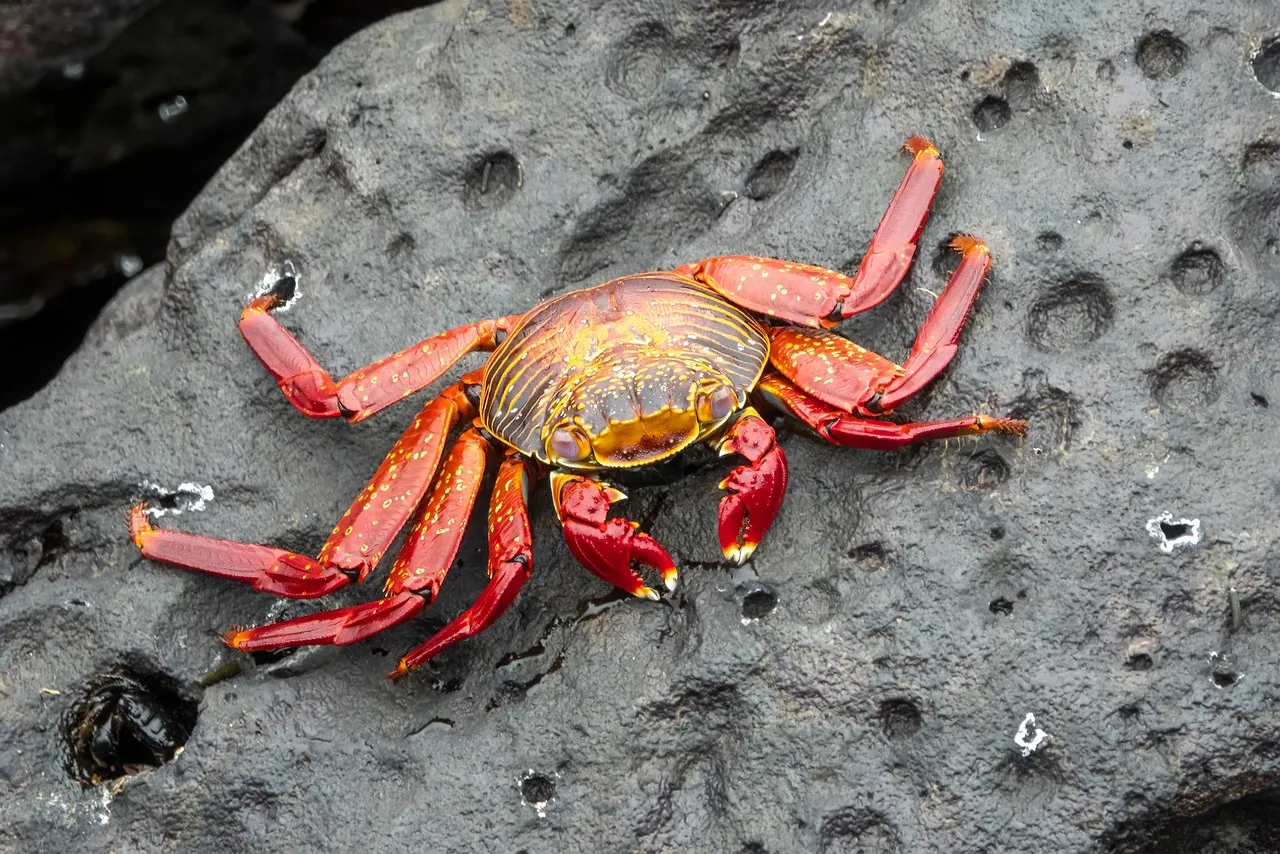
The main feature shared by all arthropods is a hard outer covering called an exoskeleton, made of a strong material called chitin. image by Andrew_Rix / Pixabay.
Arthropods are the most numerous and diverse group of animals on Earth. Over 80% of all known animal species belong to this phylum, including insects, spiders, crabs, and centipedes. Their success raises an important scientific question: How have arthropods become so numerous and adaptable compared to other animals? Understanding their unique body structures and life processes helps explain their dominance in nearly every ecosystem.
Key Features and Mechanisms
The main feature shared by all arthropods is a hard outer covering called an exoskeleton, made of a strong material called chitin. This exoskeleton protects their bodies and prevents water loss, which is especially important for life on land. However, because the exoskeleton does not grow, arthropods must periodically shed it in a process called molting. During molting, the animal forms a new, larger exoskeleton underneath and then splits the old one to escape. Arthropods also have bodies divided into segments and paired, jointed legs. These jointed appendages give them flexibility and allow for complex movement, such as walking, swimming, or flying. Scientists have observed that this combination of features has allowed arthropods to adapt to a wide range of environments, from deep oceans to deserts.
Diversity: Major Groups and Adaptations
Arthropods are divided into four major groups. Insects have three main body segments (head, thorax, abdomen), six legs, and most have wings. Examples include flies, beetles, bees, and butterflies. Insects are especially successful because of their small size, ability to fly, rapid reproduction, and diets that range from plants to other animals. Arachnids include spiders, scorpions, and ticks. They have two body segments and eight legs. Crustaceans, like crabs, lobsters, and shrimp, usually live in water and have variable numbers of legs and two pairs of antennae. Myriapods, such as centipedes and millipedes, have long bodies with many segments and legs. The diversity of arthropods is enormous: scientists estimate over one million insect species alone.
Ecological Importance and Interconnected Systems
Arthropods play vital roles in ecosystems. Insects like bees and butterflies pollinate about 75% of flowering plants, enabling food production for many species, including humans. Other arthropods, such as beetles and certain crustaceans, break down dead plants and animals, recycling nutrients into the environment. Arthropods are also a major food source for birds, fish, and mammals, forming the backbone of many food webs. Their presence or absence can signal the health of an environment, and declines in arthropod populations can disrupt ecosystems. Scientists use data, such as changes in insect populations, to monitor environmental changes and predict ecological impacts.
Arthropods demonstrate how body structure, reproduction, and diverse diets interact to support survival and influence entire ecosystems. Their adaptability exemplifies natural selection and the complex connections among living things described by the Disciplinary Core Ideas (DCIs) in life science.
Interesting Fact: The combined weight of all ants on Earth is estimated to be about the same as the weight of all humans!
What is the main feature all arthropods share?
A hard exoskeleton made of chitinA backboneFeathersScales
Which arthropod group has three body segments and usually wings?
ArachnidsInsectsCrustaceansMyriapods
What process allows arthropods to grow larger?
PhotosynthesisMoltingHibernationMigration
What does the term 'food webs' mean as used in the passage?
Nests made by insectsConnections between who eats whom in an ecosystemMethods of flightWays arthropods grow
What is the function of jointed appendages in arthropods?
To help with movement like walking, swimming, or flyingTo make foodTo store waterTo keep warm
Why are insects especially successful as a group?
They are large and slowThey can fly, reproduce quickly, and eat many kinds of foodThey live only in waterThey have bones
Which of these is NOT an arthropod?
ButterflyCrabSpiderFrog
True or False: All arthropods have backbones.
TrueFalse
True or False: Arthropods play important roles in pollination and decomposition.
TrueFalse
If the number of arthropods in an ecosystem decreases, what is a possible effect?
Pollination and decomposition may decrease, affecting other organismsEcosystem will not changePlants will grow fasterFish will become insects
Perfect For:
👩🏫 Teachers
• Reading comprehension practice
• Auto-graded assessments
• Literacy skill development
👨👩👧👦 Parents
• Reading practice at home
• Comprehension improvement
• Educational reading time
🏠 Homeschoolers
• Reading curriculum support
• Independent reading practice
• Progress monitoring
Reading Features:
📖
Reading Passage
Engaging fiction or nonfiction text
❓
Comprehension Quiz
Auto-graded questions
📊
Instant Feedback
Immediate results and scoring
📄
Printable Version
Download for offline reading
🔊
Read Aloud
Voice-over with word highlighting
Reviews & Ratings
No reviews yet. Be the first to share your experience!
Related Content
Vertebrates: Fishes
This middle school science reading passage offers an in-depth look at fishes, a major group of vertebrates. It covers fi...
MS-LS4-2MS-LS4-4
Vertebrates: Amphibians
This comprehensive middle school science passage dives into the fascinating world of amphibians, a group of vertebrates ...
MS-LS4-2MS-LS4-4
Vertebrates: Reptiles
This comprehensive science passage for grades 6-8 introduces students to reptiles, a fascinating class of vertebrates. A...
MS-LS4-2MS-LS4-4
Vertebrates: Birds
This middle school science passage explores birds as vertebrates, focusing on their unique adaptations such as feathers,...
MS-LS4-2MS-LS4-4
Vertebrates: Mammals
This comprehensive passage introduces middle school students to the class Mammalia and their defining characteristics, i...
MS-LS4-2MS-LS4-4
Invertebrates: Sponges and Cnidarians
This passage explores two of the simplest animal phyla: Porifera (sponges) and Cnidaria (jellyfish, corals, and sea anem...
MS-LS4-2
Invertebrates: Worms
This comprehensive passage introduces middle school students to the fascinating world of invertebrate worms, focusing on...
MS-LS4-2
Invertebrates: Mollusks
This middle school science passage introduces students to the phylum Mollusca, focusing on their body structure, main cl...
MS-LS4-2
Invertebrates: Echinoderms
This comprehensive reading passage, aligned to NGSS standard MS-LS4-2, introduces middle school students to the fascinat...
MS-LS4-2
Human Evolution
This middle school science passage explains the scientific evidence for human evolution, aligning with NGSS standards MS...
MS-LS4-1MS-LS4-2
Evidence for Evolution: Comparative Anatomy
This middle school science reading passage explores the evidence for evolution through comparative anatomy, aligning wit...
MS-LS4-2MS-LS4-3
Bacteria
This comprehensive middle school science passage dives into the fascinating world of bacteria, aligned to NGSS standards...
MS-LS4-2MS-LS1-1
Theory of Evolution
This middle school science passage explains the theory of evolution and the concept of common ancestry, aligning with NG...
MS-LS4-1MS-LS4-2
The Giant Isopod: Biological Evolution
This NGSS passage examines how giant isopods evolved for deep-sea survival, including slow metabolism for food scarcity,...
MS-LS4-4RI.6.3RI.7.3RI.8.8
What Is Biodiversity?
This comprehensive science reading passage for grades 6-8 introduces students to biodiversity and explores its importanc...
MS-LS2-5MS-LS4-4
Biodiversity and Its Importance
This comprehensive middle school science passage explores the concept of biodiversity at the genetic, species, and ecosy...
MS-LS4-4MS-LS2-5
Galápagos Islands
This engaging science passage explores the Galápagos Islands, a volcanic archipelago located off the coast of Ecuador in...
MS-LS2-1MS-LS4-4MS-ESS3-4
Intertidal Zone
This middle school science reading passage introduces students to the intertidal zone, the area between high and low tid...
MS-LS2-1MS-LS4-4
Natural Selection
This comprehensive passage introduces middle school students (grades 6-8) to the concept of natural selection, aligning ...