What Is the SETI Program
Interactive passage with audio narration, comprehension questions, and printable PDF.
By completing this purchase you agree to our Terms of Use and Privacy Policy. Your subscription renews automatically until you cancel. You can cancel anytime from your account settings. All sales are final and non-refundable. Digital content is available for download in your account immediately upon purchase.
What's included
What Is the SETI Program preview and details
About this printable What Is the SETI Program science reading passage, NGSS-aligned (Grades 5-8)
Sample passage and quiz from What Is the SETI Program
Reading passage and comprehension quiz preview
What Is the SETI Program?
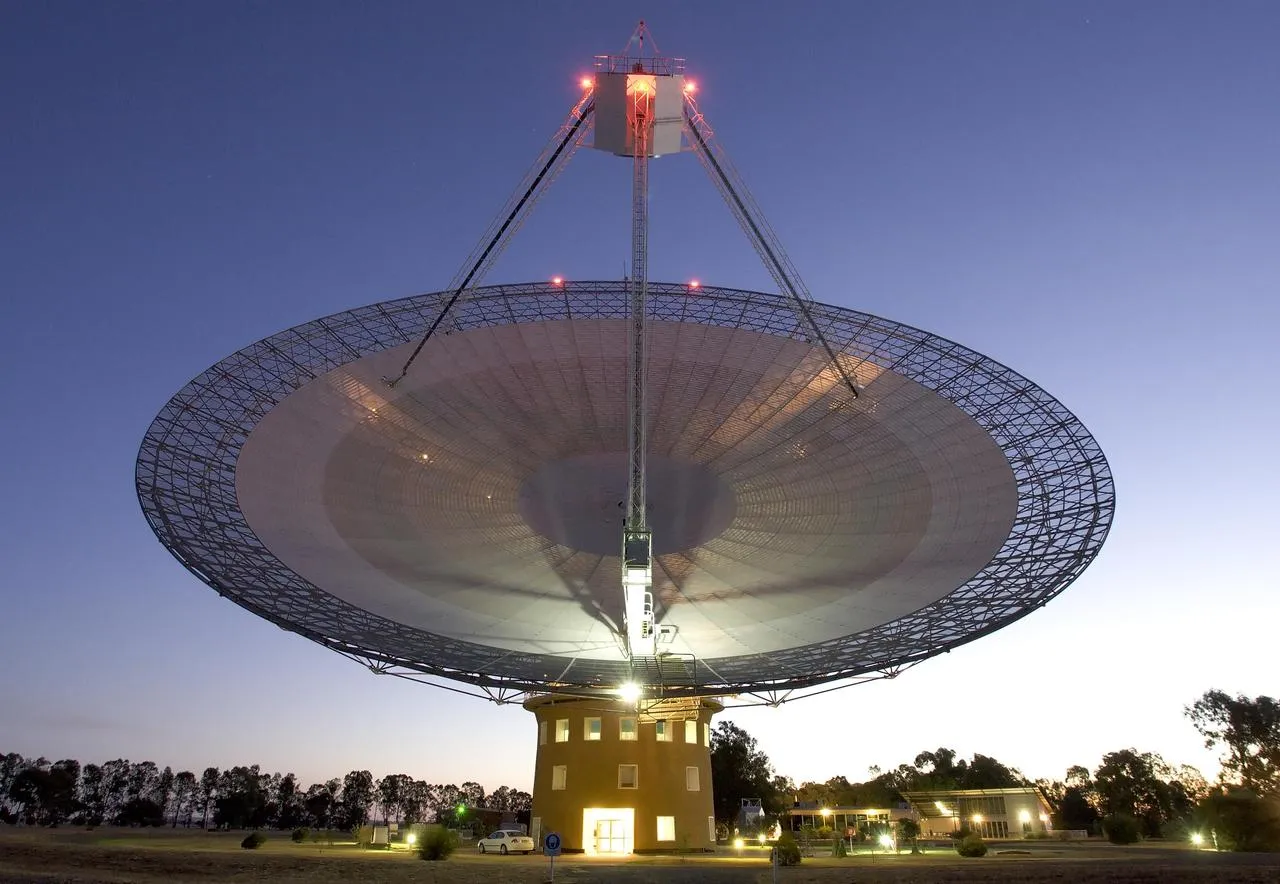
The SETI program stands for the Search for Extraterrestrial Intelligence. Scientists use this program to listen for signals from intelligent alien civilizations beyond Earth. The program relies on giant radio telescopes that scan the sky for patterns in radio waves. These patterns might indicate that intelligent beings are trying to communicate across space.
Radio telescopes work by detecting electromagnetic radiation from space. Natural objects like stars and galaxies produce radio waves randomly. Scientists look for signals that show clear patterns or repetition. These artificial patterns would not occur naturally in space. Computers analyze millions of signals to find anything unusual. The challenge is enormous because space contains countless sources of radio waves.
The SETI program began in 1960 when scientist Frank Drake first pointed a radio telescope toward nearby stars. Since then, scientists have searched continuously with no confirmed contact from alien civilizations. Modern SETI projects use multiple telescopes working together. One famous project called SETI@home allows volunteers to donate their computer processing power. Millions of people worldwide help analyze data collected by telescopes. This distributed computing network processes information that would take decades for scientists alone to examine.
Scientists focus their search on specific frequencies where signals can travel far through space. Water and hydrogen molecules naturally emit radio waves at certain frequencies. Scientists reason that intelligent beings might choose these same frequencies for communication. The bandwidth of a signal also provides clues. Narrow-band signals suggest artificial origins because natural sources produce broad-spectrum noise.
The SETI program matters because discovering extraterrestrial intelligence would answer fundamental questions about life in the universe. Evidence shows that Earth orbits an average star in a typical galaxy. Scientists estimate that billions of planets may exist in habitable zones around other stars. Finding intelligent life would change our understanding of biology, technology, and our place in the cosmos. Even without contact, SETI advances our knowledge of radio astronomy and helps scientists understand how signals travel through space.
Interesting Fact: The famous "Wow! signal" detected in 1977 remains unexplained. This strong radio signal lasted 72 seconds and came from the direction of the constellation Sagittarius, but it never repeated.
Comprehension quiz (10 questions)
1. What does SETI stand for?
2. What do radio telescopes detect from space?
3. When did the SETI program begin searching for alien signals?
4. In the passage, the term 'distributed computing' refers to:
5. Why do scientists search at frequencies where water and hydrogen emit radio waves?
6. Based on the passage, what makes a signal appear artificial rather than natural?
7. What can be inferred about why SETI continues despite no confirmed contact?
8. If scientists detected a narrow-band signal with repeating patterns from a distant star system, what would be the most appropriate next step?
9. How does the SETI@home project help scientists analyze data?
10. True or False: Scientists have confirmed contact with an alien civilization through the SETI program.
Perfect for the way you teach
- Build comprehension skills
- Auto-graded quiz
- Differentiated reading
- Read together at home
- Improve fluency
- Quiet reading time
- Reading curriculum support
- Independent practice
- Track Lexile growth