What Powers Earth's Systems — Reading Comprehension
Rate this
Premium Resource
Present
Present in classroom. No work saved
Assign
Classroom with student accounts, Track progress
Quick Play
No student accounts, assign with a link
Grades
6
7
8
Standards
MS-ESS2-1
PRINT+DIGITAL RESOURCE
This learning resource is available in interactive and printable formats. The interactive worksheet can be played online and assigned to students. The Printable PDF version can be downloaded and printed for completion by hand.
This comprehensive reading passage explores the two fundamental energy sources that power all Earth system processes: solar energy and Earth's internal heat. Aligned with NGSS standard MS-ESS2-1, students learn how solar energy drives weather patterns, ocean currents, and the water cycle, while Earth's internal heat powers volcanic activity, earthquakes, and tectonic plate movement. The passage includes clear explanations of convection currents, radiation, and conduction, with real-world examples that help students understand these abstract concepts. Audio-integrated content supports diverse learners, including English Language Learners and students with reading difficulties. The curriculum includes a simplified differentiated version, Spanish translations, interactive multiple-choice questions, writing activities, and graphic organizers that reinforce understanding of energy transfer and Earth system processes. This resource provides educators with standards-aligned materials that develop scientific literacy and critical thinking skills essential for middle school science education.
CONTENT PREVIEW
Expand content preview
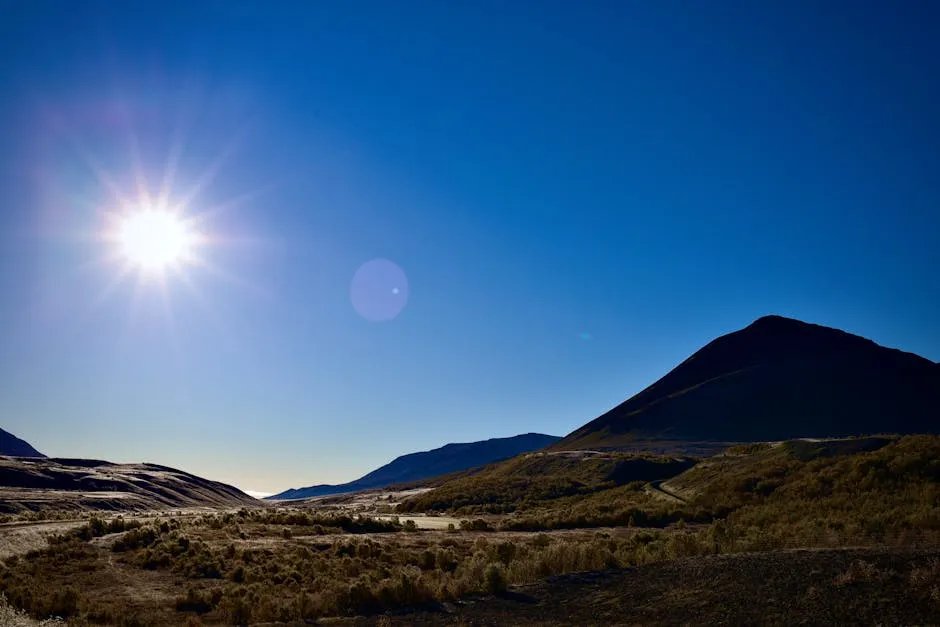
Solar energy is the primary energy source for Earth's surface processes. Image by Erica On The Go / Pexels.
Earth is a dynamic planet with constantly changing systems. All processes on Earth require energy to function. Two main energy sources power everything that happens on our planet: solar energy from the Sun and geothermal energy from Earth's interior. Understanding these energy sources helps us explain weather patterns, ocean currents, earthquakes, volcanic eruptions, and the movement of continents.
Solar energy is the primary energy source for Earth's surface processes. The Sun releases energy through radiation, which travels through space and reaches Earth. This energy heats the atmosphere, land, and oceans unevenly because different surfaces absorb heat at different rates. Dark surfaces like asphalt absorb more solar energy than light surfaces like snow. This uneven heating creates differences in temperature and air pressure, which drive wind patterns and ocean currents. Solar energy also powers the water cycle, causing water to evaporate from oceans and lakes, form clouds, and return to Earth as precipitation. Without solar energy, Earth would be a frozen, lifeless world.
Earth's internal heat provides the second major energy source. This geothermal energy comes from two sources: leftover heat from Earth's formation about 4.6 billion years ago and the continuous decay of radioactive elements in Earth's core and mantle. The temperature at Earth's core reaches approximately 5,400 degrees Celsius, similar to the surface of the Sun. This intense heat creates convection currents in the mantle, where hot material rises toward the surface while cooler material sinks. These currents move very slowly, only a few centimeters per year, but they generate enough force to move entire continents.
The movement of convection currents in the mantle directly affects Earth's surface through plate tectonics. Earth's outer layer, called the lithosphere, is broken into large pieces called tectonic plates. These plates float on the partially molten layer below and move in response to convection currents. When plates collide, they can form mountains like the Himalayas. When plates pull apart, they create rift valleys and allow magma to reach the surface, forming volcanoes. The movement of these plates also causes earthquakes when stress builds up and is suddenly released along plate boundaries.
Both energy sources work together to shape Earth's systems, but they operate on different scales and timescales. Solar energy drives rapid changes we observe daily, such as weather patterns and temperature fluctuations. A thunderstorm can develop in hours, and wind patterns shift throughout the day. In contrast, geothermal energy drives slow changes that occur over millions of years. Mountain ranges take millions of years to form, and continents drift apart at rates measured in centimeters per year. Despite these different timescales, both energy sources are essential for maintaining Earth as a habitable planet.
Scientists study these energy sources to understand and predict natural processes. Meteorologists use knowledge of solar energy to forecast weather patterns. Geologists use understanding of geothermal energy to predict volcanic eruptions and earthquakes. By recognizing that all Earth system processes depend on energy input, scientists can better explain the connections between seemingly unrelated events, such as how ocean temperatures affect hurricane formation or how mantle convection influences the location of volcanic activity.
Interesting Fact: The amount of solar energy that reaches Earth in just one hour is enough to power all human activities for an entire year, yet we currently capture less than one percent of this available energy.
What are the two main energy sources that power Earth's systems?
Solar energy and geothermal energyWind energy and water energyNuclear energy and chemical energyElectrical energy and mechanical energy
How does solar energy reach Earth from the Sun?
Through convection currentsThrough radiationThrough conductionThrough ocean currents
What does the term 'convection currents' mean in the passage?
The flow of water in riversThe movement of air in the atmosphereThe circular movement where hot material rises and cool material sinksThe rotation of Earth on its axis
According to the passage, what causes tectonic plates to move?
Solar energy heating the surfaceOcean currents pushing themConvection currents in the mantleWind patterns on Earth's surface
Why do different surfaces on Earth heat up at different rates?
Because they are at different elevationsBecause they absorb solar energy at different ratesBecause they are different distances from the equatorBecause they have different amounts of water
Based on the passage, which process would STOP if Earth no longer received solar energy?
Volcanic eruptionsEarthquakesThe water cycleMountain formation
What can you infer about the relationship between plate movement and earthquake occurrence?
Earthquakes only happen when plates move apartEarthquakes occur when stress builds up and releases along plate boundariesEarthquakes are caused by solar energyEarthquakes happen randomly with no connection to plates
If you wanted to predict where a volcano might form, which energy source and process would be most important to study?
Solar energy and the water cycleSolar energy and wind patternsGeothermal energy and convection currentsGeothermal energy and ocean currents
True or False: Solar energy drives processes that change quickly, while geothermal energy drives processes that change slowly over millions of years.
TrueFalse
True or False: Earth's core temperature is much cooler than the Sun's surface temperature.
TrueFalse
Perfect For:
👩🏫 Teachers
• Reading comprehension practice
• Auto-graded assessments
• Literacy skill development
👨👩👧👦 Parents
• Reading practice at home
• Comprehension improvement
• Educational reading time
🏠 Homeschoolers
• Reading curriculum support
• Independent reading practice
• Progress monitoring
Reading Features:
📖
Reading Passage
Engaging fiction or nonfiction text
❓
Comprehension Quiz
Auto-graded questions
📊
Instant Feedback
Immediate results and scoring
📄
Printable Version
Download for offline reading
🔊
Read Aloud
Voice-over with word highlighting
Reviews & Ratings
No reviews yet. Be the first to share your experience!
Related Content
Talus Slopes: Formation and Features
This earth science passage explains talus slope formation through mechanical weathering processes, aligning with NGSS MS...
MS-ESS2-1MS-ESS2-2RST.6-8.4
Biological Weathering: Types and Examples
This passage details biological weathering processes, connecting to NGSS MS-ESS2-1 (Earth's systems) and LS2.B (ecosyste...
MS-ESS2-1MS-PS1-2RST.6-8.3
Frost Wedging: How Ice Splits Rock
This passage explains frost wedging as a mechanical weathering process. Aligned with NGSS MS-ESS2-1 (Earth’s systems) a...
MS-ESS2-1MS-ESS2-2RST.6-8.3
Chemical Weathering: The Breakdown of Rocks Through Chemical Reactions
This passage explains chemical weathering processes, aligned with NGSS MS-ESS2-1 (Earth’s systems) and ESS2-2 (surface ...
MS-ESS2-1MS-ESS2-2RST.6-8.4
Limestone Caves: Nature’s Underground Wonders
This passage explains limestone cave formation through carbonation, aligned with NGSS MS-ESS2-1 (Earth’s systems) and L...
MS-ESS2-1LS2.CRST.6-8.7
The Coldest City in the World: Yakutsk
This NGSS-aligned science passage introduces middle school readers to Yakutsk, the coldest city on Earth. Students will ...
MS-ESS2-1
Igneous Rocks
This comprehensive passage introduces middle school students to igneous rocks, focusing on how these rocks form from mol...
MS-ESS2-1MS-ESS3-1
Sedimentary Rocks
This comprehensive middle school science passage introduces students to sedimentary rocks, detailing their step-by-step ...
MS-ESS2-1MS-ESS2-3MS-ESS3-1
Metamorphic Rocks
This engaging middle school science passage introduces students to the fascinating world of metamorphic rocks. Aligned w...
MS-ESS2-1MS-ESS3-1
Scientific Inquiry in Earth Science
This passage explores scientific inquiry in Earth science for grades 6-8, aligned with NGSS standards MS-ESS1-4, MS-ESS2...
MS-ESS1-4MS-ESS2-1MS-ESS3-5SEP
Contour Lines and Elevation
This passage, designed for grades 6-8 and aligned with NGSS standards MS-ESS2-2 and MS-ESS2-1, introduces students to th...
MS-ESS2-2MS-ESS2-1SEP.4SEP.8
Weathering
This comprehensive science reading passage for grades 6-8 focuses on the concept of weathering, aligning with NGSS stand...
MS-ESS2-1
Erosion
This comprehensive middle school science passage explains erosion—the process that transports weathered rock and soil fr...
MS-ESS2-1
Stream Erosion and Deposition
This middle school science passage, aligned to NGSS MS-ESS2-1, introduces students to the dynamic processes of stream er...
MS-ESS2-1
Wind Erosion and Deposition
This comprehensive science reading passage for grades 6-8 explores the processes of wind erosion and deposition, alignin...
MS-ESS2-1
Glacial Erosion and Deposition
This middle school science passage explores glacial erosion and deposition, focusing on the mechanisms by which glaciers...
MS-ESS2-1
Mass Movements
This NGSS-aligned passage introduces middle school students to the science of mass movements—gravity-driven motions of r...
MS-ESS2-1MS-ESS3-2
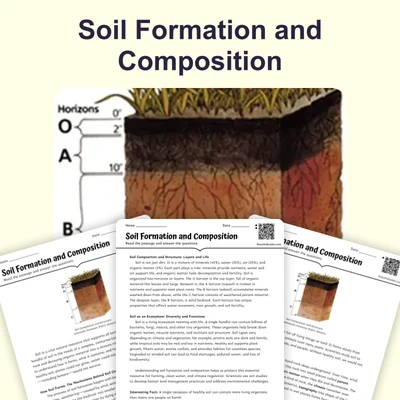
Soil Formation and Composition
This comprehensive middle school science passage explores soil formation and composition, perfectly aligned to NGSS stan...
MS-ESS2-1
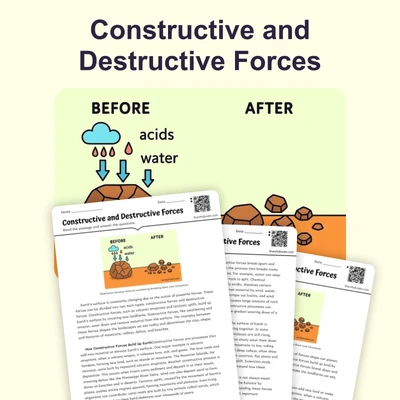
Constructive and Destructive Forces
This middle school science passage explores how Earth's surface is constantly shaped by the interplay of constructive an...
MS-ESS2-1
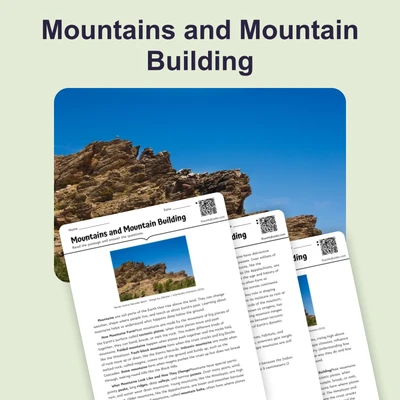
Mountains and Mountain Building
This NGSS-aligned passage for grades 6-8 covers the fascinating processes that create Earth's highest landforms—mountain...