Where Is The Asthenosphere Located
Interactive passage with audio narration, comprehension questions, and printable PDF.
By completing this purchase you agree to our Terms of Use and Privacy Policy. Your subscription renews automatically until you cancel. You can cancel anytime from your account settings. All sales are final and non-refundable. Digital content is available for download in your account immediately upon purchase.
What's included
Where Is The Asthenosphere Located preview and details
About this printable Where Is The Asthenosphere Located science reading passage, NGSS-aligned (Grade 6)
Sample passage and quiz from Where Is The Asthenosphere Located
Reading passage and comprehension quiz preview
Where Is The Asthenosphere Located
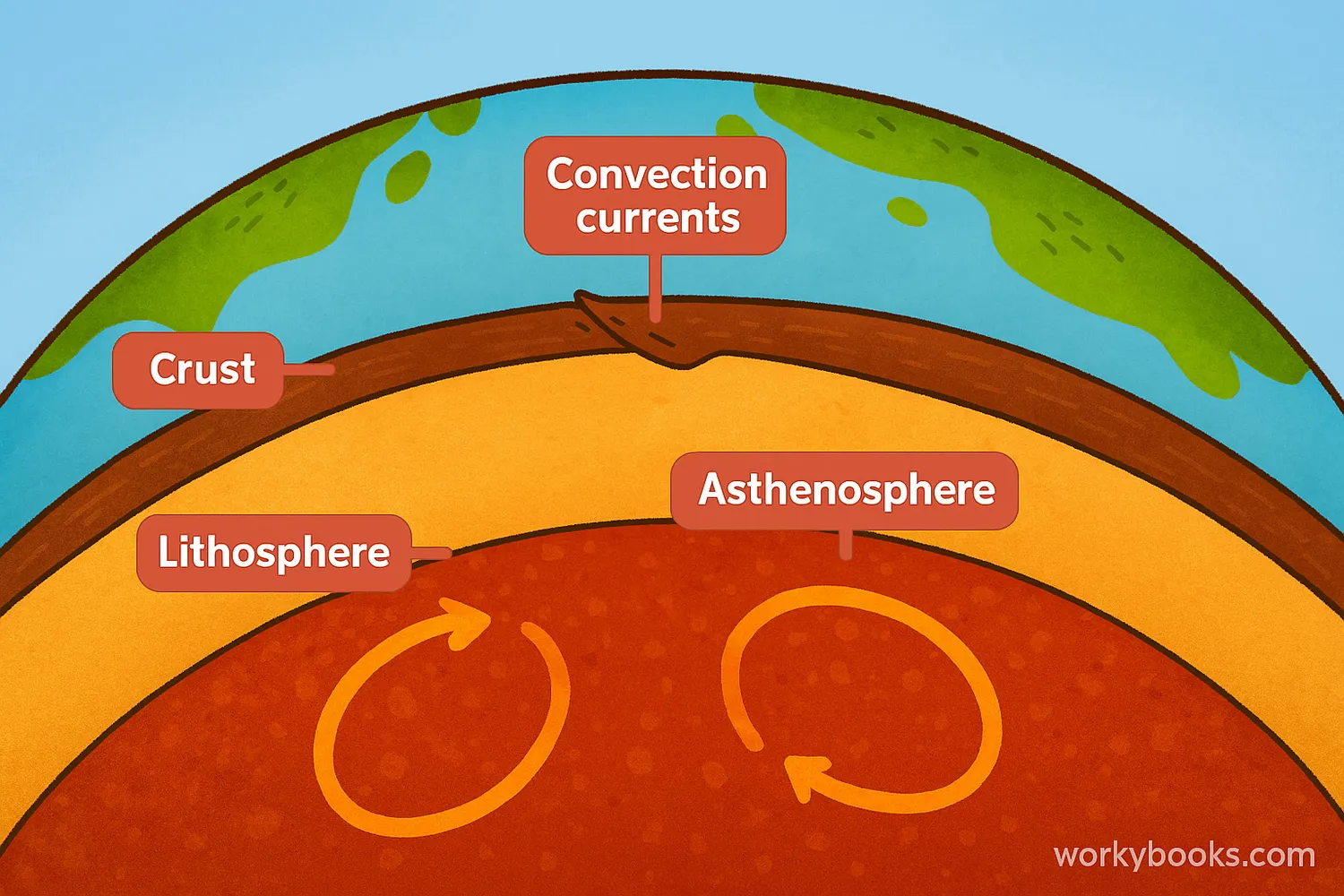
Our planet isn't just a solid ball; it's made of several layers, much like an onion. Understanding these layers helps us comprehend amazing phenomena like earthquakes and volcanoes. One of the most important layers for understanding these events is the asthenosphere. But where exactly is the asthenosphere located?
To find the asthenosphere, we first need to look at Earth's outermost layer, the crust. This is the thin, rocky shell we live on. Below the crust is the mantle, which is the thickest layer of Earth. The mantle is divided into several parts. The uppermost part of the mantle, combined with the crust, forms a rigid layer called the lithosphere. The lithosphere is broken into large pieces known as tectonic plates.
Right beneath the lithosphere, within the upper mantle, lies the asthenosphere. Imagine a layer that is solid but also capable of flowing very slowly, like extremely thick, warm caramel. That's the asthenosphere! It's less rigid and more ductile (meaning it can be deformed without breaking) than the lithosphere above it. This unique property is due to the intense heat and pressure deep within Earth, which makes the rocks in the asthenosphere somewhat soft and pliable. This 'plastic' behavior allows the massive tectonic plates of the lithosphere to slowly slide and move across its surface. This movement of tectonic plates is called plate tectonics.
The asthenosphere plays a crucial role in plate tectonics. Inside the asthenosphere, heat from Earth's core creates convection currents. Picture hot material rising, cooling, and then sinking again, creating a slow-moving conveyor belt.
These convection currents are the primary force that drags and pushes the tectonic plates above, causing continents to drift, mountains to form, and earthquakes and volcanic eruptions to occur along plate boundaries.
Without the flowing asthenosphere, the lithosphere would not be able to move, and Earth's dynamic surface features would not exist. So, the asthenosphere is essentially the slippery layer that allows our continents to move and reshape the planet over millions of years.
Interesting Fact: The word "asthenosphere" comes from Greek words: "asthenēs," meaning weak, and "sphaira," meaning sphere, perfectly describing its less rigid nature.
Comprehension quiz (10 questions)
1. What is the outermost layer of Earth called?
2. Which layer is described as thick, warm caramel?
3. True or False: The asthenosphere is more rigid than the lithosphere.
4. What is the meaning of "ductile" in the passage?
5. The lithosphere is formed by the crust and what other part?
6. What drives the movement of tectonic plates?
7. Why is the asthenosphere described as 'plastic'?
8. If the asthenosphere didn't flow, what would happen?
9. Which Earth process would likely stop without convection currents?
10. If you could drill deep, what would you find after the lithosphere?
Perfect for the way you teach
- Build comprehension skills
- Auto-graded quiz
- Differentiated reading
- Read together at home
- Improve fluency
- Quiet reading time
- Reading curriculum support
- Independent practice
- Track Lexile growth